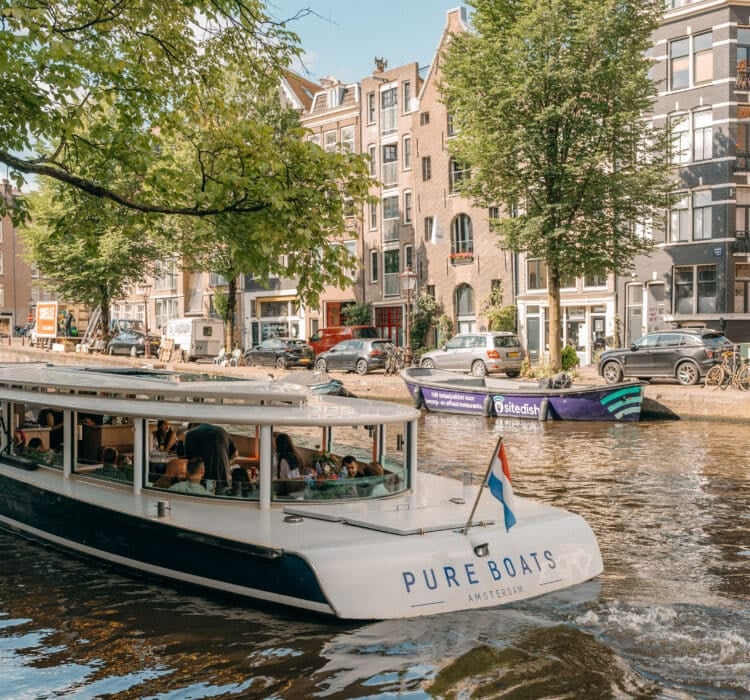
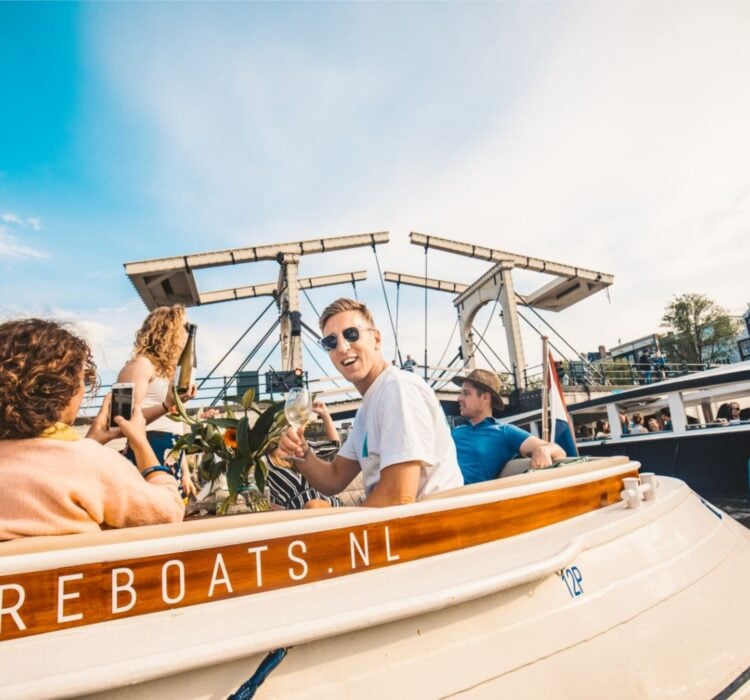
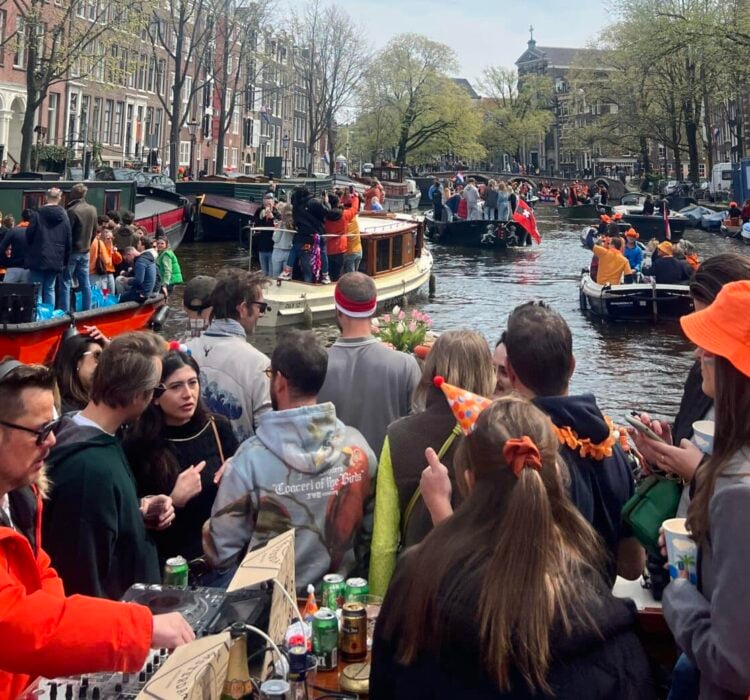
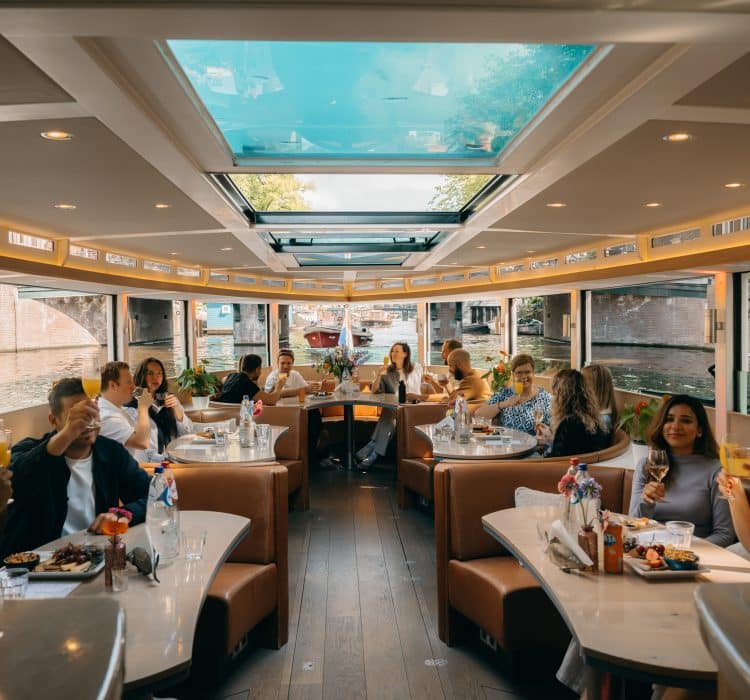
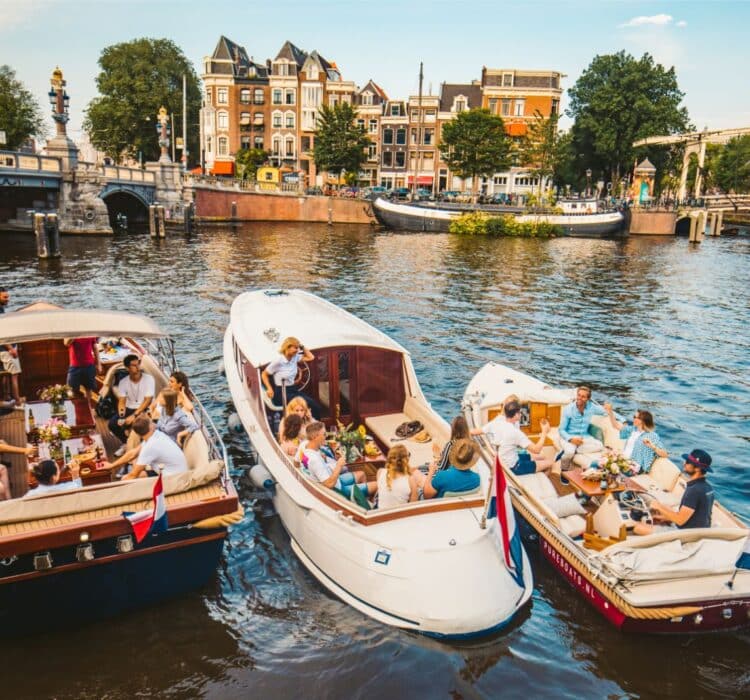
Electric canal boats in Amsterdam work by using battery-powered motors instead of traditional diesel engines to glide quietly through the city’s historic waterways. These vessels store energy in onboard battery banks, which power electric motors connected to the propeller. The result is a smooth, silent cruise with zero direct emissions, making them ideal for Amsterdam’s UNESCO-listed canals. Below, we answer the most common questions about how these remarkable boats operate.
What makes electric canal boats different from traditional diesel boats?
Electric canal boats use battery-powered motors that operate almost silently, produce no exhaust fumes, and create minimal vibration compared with diesel-powered vessels. Traditional diesel boats rely on internal combustion engines that burn fuel, generating noise, emissions, and the familiar rumble that travels through the hull. Electric boats eliminate all of these, creating a fundamentally different cruising experience.
The propulsion system is where the biggest difference lies. Diesel engines work through controlled explosions of fuel, which create mechanical noise and vibration. Electric motors, by contrast, use electromagnetic force to spin the propeller shaft smoothly and quietly. You might hear a gentle hum if you listen carefully, but nothing like the constant drone of a combustion engine.
For Amsterdam’s canal environment, these differences matter enormously. The historic canal houses, many dating back centuries, sit just metres from the water. Diesel exhaust can discolour building facades and affect air quality for residents and visitors alike. Electric boats produce no tailpipe emissions whatsoever, helping preserve the character of these treasured neighbourhoods.
Passenger comfort improves dramatically as well. Without engine noise competing for attention, guests on an Amsterdam canal cruise can chat naturally, hear their guide’s stories clearly, and appreciate the ambient sounds of the city, from church bells to street musicians.
How do the batteries and motors power an electric canal boat?
Electric canal boats store energy in large battery banks, typically lithium-ion or lead-acid, which feed electricity to one or more electric motors connected to the propeller. The captain controls speed using a throttle that regulates how much power flows from the batteries to the motor, just as a car’s accelerator pedal works in an electric vehicle.
The battery bank is usually located low in the hull to maintain stability. Modern lithium-ion batteries offer excellent energy density, meaning they can store substantial power without excessive weight. Lead-acid batteries remain common in older conversions due to their lower cost and proven reliability, though they are heavier for the same capacity.
When the captain pushes the throttle forward, the motor draws current from the batteries and converts electrical energy into rotational force. This spins the propeller, pushing water backwards and moving the boat forward. Reversing works the same way, with the motor simply spinning in the opposite direction.
Some electric boats feature regenerative capabilities, capturing energy when slowing down or travelling with currents. This recovered power returns to the batteries, extending range slightly. Amsterdam has developed charging infrastructure along the canals, allowing boats to top up between cruises. A well-maintained electric canal boat can typically cruise for a full day of tours on a single charge, covering all the routes needed for multiple Amsterdam canal cruise departures.
Why are electric boats better for Amsterdam’s canals and environment?
Electric boats protect Amsterdam’s canal ecosystem by eliminating exhaust emissions, preventing fuel and oil contamination in the water, reducing noise pollution in residential areas, and minimising vibration damage to historic canal walls. These benefits align perfectly with Amsterdam’s ambitious sustainability goals and help preserve the tranquil character of the city’s smaller waterways.
Zero direct emissions mean no carbon monoxide, nitrogen oxides, or particulate matter entering the air above the canals. This matters particularly in narrow canal streets where buildings trap pollution close to ground level. Residents, pedestrians, and café patrons all benefit from cleaner air.
Water quality improves too. Diesel boats can leak fuel and lubricating oil, creating rainbow sheens on the water surface and harming aquatic life. Electric boats have no fuel to spill and use sealed, non-toxic lubricants for their simpler mechanical systems.
The noise reduction transforms the canal experience for everyone. In quiet residential neighbourhoods, diesel boat engines can disturb sleep and daily life. Electric boats pass by almost unnoticed, preserving the peaceful atmosphere that makes Amsterdam’s smaller canals so special.
Historic canal walls, some built hundreds of years ago, suffer from constant vibration. Over time, diesel engine rumble can loosen mortar and accelerate deterioration. The smooth, low-vibration operation of electric motors helps protect this irreplaceable heritage infrastructure for future generations.
What does it feel like to cruise on an electric canal boat?
Cruising on an electric canal boat feels remarkably peaceful, with quiet operation allowing natural conversation, smooth movement without engine vibration, no fuel odours, and the ability to hear Amsterdam’s ambient sounds clearly. Many guests describe it as gliding through the city rather than motoring, creating a more intimate connection with the surroundings.
The absence of engine noise changes everything about the experience. On our Ultimate Canal Cruise, guests can speak at normal volume with their companions and hear every word from our knowledgeable captains sharing stories about Amsterdam’s history. There’s no need to raise voices or lean in to catch important details.
Without vibration travelling through the deck, the ride feels genuinely smooth. You can set down a glass of wine without worrying about it dancing across the table. This comfort makes longer cruises more enjoyable and allows guests to truly relax rather than unconsciously bracing against engine tremor.
The lack of exhaust fumes means breathing fresh canal air, catching the scent of flowers from houseboats, and enjoying food and drinks without diesel undertones. Guests notice sounds they would otherwise miss, from ducks splashing to cyclists chatting on bridges overhead.
Electric boats can also navigate narrower waterways where larger motorised vessels cannot fit or are not permitted. This opens up hidden corners of Amsterdam, quiet residential canals far from tourist crowds, where the city reveals its most authentic character.
How are vintage canal boats converted to electric power?
Converting a vintage canal boat to electric power involves carefully removing the old diesel engine and fuel systems, then installing modern electric motors, battery banks, and control systems while preserving the vessel’s historic appearance and structural integrity. The process requires specialised craftsmanship to balance authentic aesthetics with contemporary sustainable technology.
The conversion begins with a thorough assessment of the existing hull and structure. Classic wooden canal boats, some over a century old, need careful inspection to ensure they can support the weight and configuration of battery banks. Skilled craftspeople then remove the diesel engine, fuel tank, exhaust system, and associated plumbing.
Installing the new electric system requires thoughtful placement. Batteries are positioned low in the hull for stability, often in the same location as the old fuel tank. The electric motor connects to the existing propeller shaft when possible, minimising modifications to the historic drivetrain.
Control systems and wiring must be integrated without compromising the boat’s original character. This means concealing modern components beneath period-appropriate woodwork and fittings. The goal is a vessel that looks exactly as it did decades ago while operating with zero emissions.
We take pride in our fleet of restored classic electric boats, each transformed from complete restoration projects into stunning, fully electric vessels. Our in-house team of superyacht designers ensures every boat maintains its unique heritage charm while meeting modern environmental standards. The result is a collection of genuine eye-catchers, some with histories stretching back more than a hundred years, now cruising Amsterdam’s canals sustainably for generations to come.
Whether you’re curious about sustainable boating technology or simply seeking a quieter, more refined way to experience Amsterdam’s waterways, electric canal boats offer the perfect combination of heritage, comfort, and environmental responsibility. Our two-hour Ultimate Canal Cruise showcases everything these remarkable vessels can offer, gliding past hidden gems and iconic landmarks aboard beautifully restored electric boats that honour the past while protecting the future.