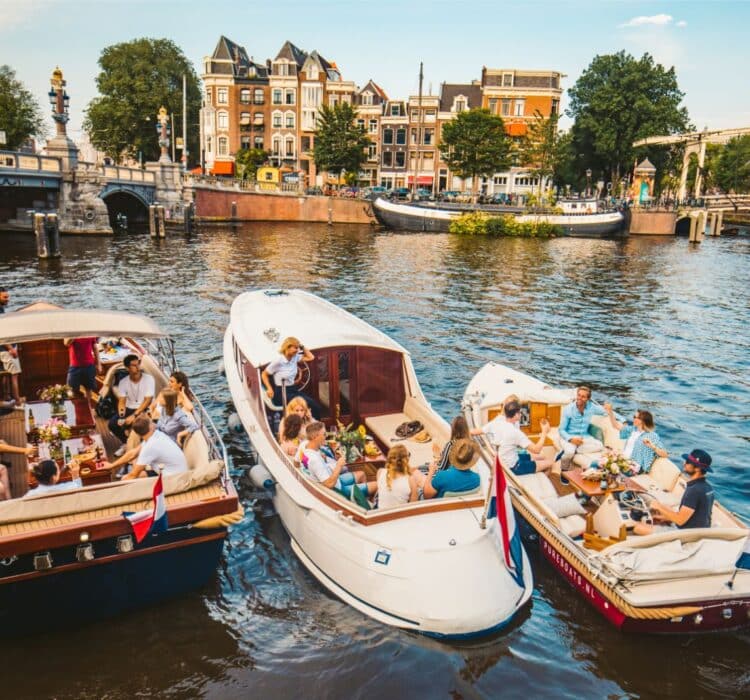
An Amsterdam sightseeing cruise takes you past dozens of iconic landmarks, including 17th-century Golden Age canal houses, the Westerkerk tower, the Skinny Bridge (Magere Brug), the Anne Frank House, the Rijksmuseum, and the grand facades of the Amstel River. The exact landmarks depend on the route, but most cruises cover the UNESCO-listed Canal Ring and its surrounding highlights.
What makes viewing these Amsterdam canal cruise highlights from the water so special is the perspective. You see the city the way it was originally designed to be seen: from its waterways. Below, we break down the most notable landmarks you can spot along the route, from historic canal houses and famous bridges to hidden gems tucked away in the smaller waterways.
Which Historic Canal Houses Stand Out Along the Route?
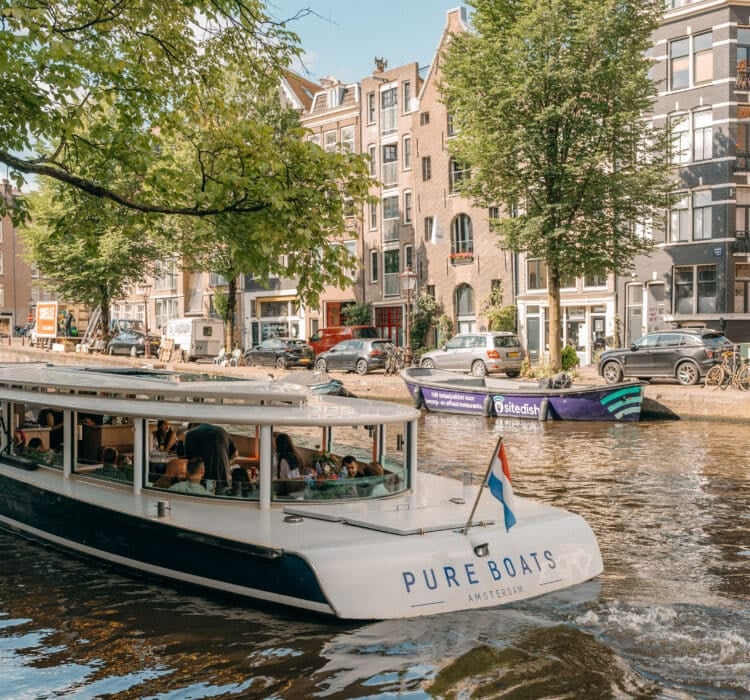
The most striking historic canal houses visible from an Amsterdam boat tour include the ornate Golden Age merchant houses lining the Herengracht, Keizersgracht, and Prinsengracht. These 17th-century facades, with their distinctive gable styles and narrow frontages, form the backbone of Amsterdam’s UNESCO World Heritage Canal Ring and are among the most photographed Amsterdam canal landmarks in the world.
As your boat glides through the Herengracht, keep your eyes open for the “Golden Bend,” a stretch between Leidsestraat and Vijzelstraat where the wealthiest merchants once built their grandest homes. These double-wide houses were a deliberate show of wealth, featuring ornamental neck gables, bell gables, and elaborate sandstone carvings that still look remarkable centuries later.
Along the Prinsengracht, the Anne Frank House stands as one of the most emotionally significant buildings you will pass. While you cannot enter from the water, seeing the building from canal level gives you a powerful sense of how ordinary it looks from the outside, which is precisely what made it effective as a hiding place during World War II.
One thing many visitors notice is that Amsterdam’s canal houses lean slightly forward. This is intentional: the forward tilt allowed residents to hoist furniture and goods through upper-floor windows using a beam and hook, many of which are still visible today. It is one of those small architectural details that becomes obvious once you are looking up from a boat rather than walking past at street level.
What Famous Bridges Can You See From a Canal Boat?
Amsterdam has more than 1,500 bridges, and a canal cruise passes under dozens of them. The most famous is the Magere Brug (Skinny Bridge) over the Amstel River, a white wooden drawbridge that dates back to the 1690s and is beautifully illuminated at night. Other standout bridges include the Blauwbrug, the Torensluis, and the elegant “Seven Bridges” view along the Reguliersgracht.
The Magere Brug and the Amstel
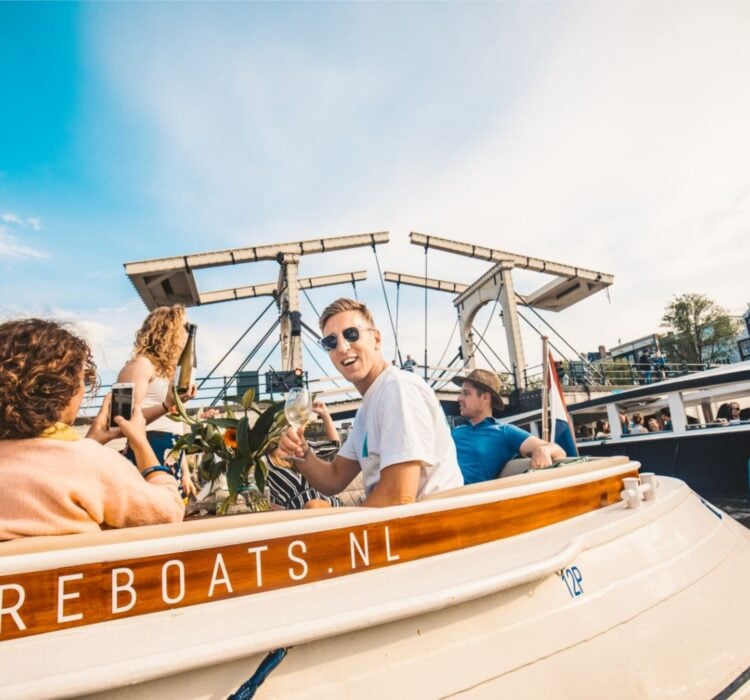
The Magere Brug is arguably the most romantic spot on Amsterdam’s waterways. Originally built as a narrow footbridge for two sisters who lived on opposite sides of the Amstel, today’s version is a fully operational drawbridge that still opens for passing boats. At dusk, its 1,200 small lights create a stunning reflection on the water, making it a favorite landmark for couples and photographers alike.
The Seven Bridges of Reguliersgracht
One of the most beloved Amsterdam cruise route attractions is the view down the Reguliersgracht, where you can see seven arched bridges stacked in a row, each framing the next. This perspective is only possible from water level, and experienced captains know exactly where to position the boat for the best view. It is the kind of sight that makes you understand why Amsterdam earned its nickname “Venice of the North.”
The Blauwbrug, modeled after the Pont Alexandre III in Paris, is another highlight. Spanning the Amstel near the Stopera opera house, its ornate lampposts and imperial crown decorations are best appreciated when you are floating directly beneath them.
Are Major Museums and Cultural Sites Visible From the Water?
Yes, several of Amsterdam’s major museums and cultural landmarks are visible from a canal boat, though you see them from a unique vantage point rather than the typical street view. The Rijksmuseum, the Hermitage Amsterdam, the Stopera (City Hall and Opera House), and the Maritime Museum can all be spotted from the water, depending on the route your cruise follows.
The Rijksmuseum is perhaps the most dramatic sight. Cruises that pass through the Singelgracht approach the museum’s imposing red-brick facade from the south, and some routes take you through the underpass beneath the building itself. Seeing this 19th-century architectural masterpiece from water level emphasizes its sheer scale in a way that standing in Museumplein simply cannot match.
Along the Amstel, you will pass the Stopera, Amsterdam’s combined city hall and national opera and ballet venue. Its modern curved-glass facade contrasts sharply with the surrounding historic architecture, creating a visual conversation between old and new Amsterdam. Nearby, the Hermitage Amsterdam occupies a grand 17th-century building originally built as a home for elderly women.
The National Maritime Museum (Het Scheepvaartmuseum) sits prominently on the eastern waterfront. If your route passes through the Oosterdok, you will also see the full-scale replica of the VOC ship “Amsterdam” moored outside, a vivid reminder of the city’s seafaring past.
What Hidden Gems Do Smaller Canal Routes Reveal?
Smaller canal routes reveal a quieter, more authentic Amsterdam that most visitors never see: tucked-away houseboats covered in flower gardens, tiny hidden courtyards (hofjes) visible through alleyway openings, street art, and centuries-old warehouses converted into loft apartments. These narrow waterways in the Jordaan and beyond the main canal ring are where the real character of the city lives.
The Jordaan neighborhood, once a working-class district and now one of Amsterdam’s most charming areas, is best explored through its narrow side canals. Boats small enough to navigate these waterways pass under low bridges where you can practically touch the brickwork, gliding past windows where locals are cooking dinner or reading on their sofas. It is an intimate view of daily Amsterdam life that feels worlds away from the busy Damrak.
One question visitors often ask is why Amsterdam residents rarely close their curtains. Captains on small-group boat tours love sharing the answer: it traces back to a Calvinist tradition of demonstrating you have nothing to hide. Whether or not that explanation is entirely accurate, the open windows certainly give canal cruisers a fascinating peek into beautifully designed Dutch interiors.
Other hidden gems include the Brouwersgracht, often called the most beautiful street in Amsterdam, where former brewery warehouses now serve as luxury residences. You might also spot the narrowest house in Amsterdam (just one meter wide) or pass through the Entrepotdok, a stunning row of former shipping warehouses that stretches for nearly half a kilometer.
How Does the Amsterdam Light Festival Change the Landmark Experience?
The Amsterdam Light Festival transforms the city’s familiar landmarks into an entirely different experience by draping the canal ring in large-scale light art installations created by international artists. Running annually from late November through mid-January, the festival turns a standard canal cruise into an open-air gallery where bridges, canal houses, and waterways become canvases for illuminated sculptures and projections.
During the festival, the landmarks you would normally see during daytime take on new meaning. A bridge that looks charming by day might be wrapped in a light installation that comments on climate change or human connection. The reflections of these artworks on the dark canal water double the visual impact, creating a surreal, almost dreamlike atmosphere that is impossible to replicate on foot.
The Water Colors route, accessible only by boat, is the festival’s signature experience. It winds through the UNESCO-listed canals past installations that change every year, meaning even repeat visitors discover something new. The combination of Amsterdam’s historic architecture bathed in artistic light makes this one of the most popular winter activities in the city.
For couples or anyone seeking a romantic Amsterdam experience, the Light Festival season adds an extra layer of magic. Imagine gliding through illuminated canals with mulled wine in hand, surrounded by glowing artworks reflected in the water below. It is the kind of moment that stays with you long after you leave Amsterdam.
How Pure Boats Helps You See Amsterdam’s Best Landmarks
We designed every one of our luxury canal cruises to showcase Amsterdam’s most remarkable landmarks from the best possible vantage point. Here is what sets the experience apart:
- Customized routes through smaller canals where larger tour boats cannot go, revealing hidden gems in the Jordaan and beyond the main canal ring
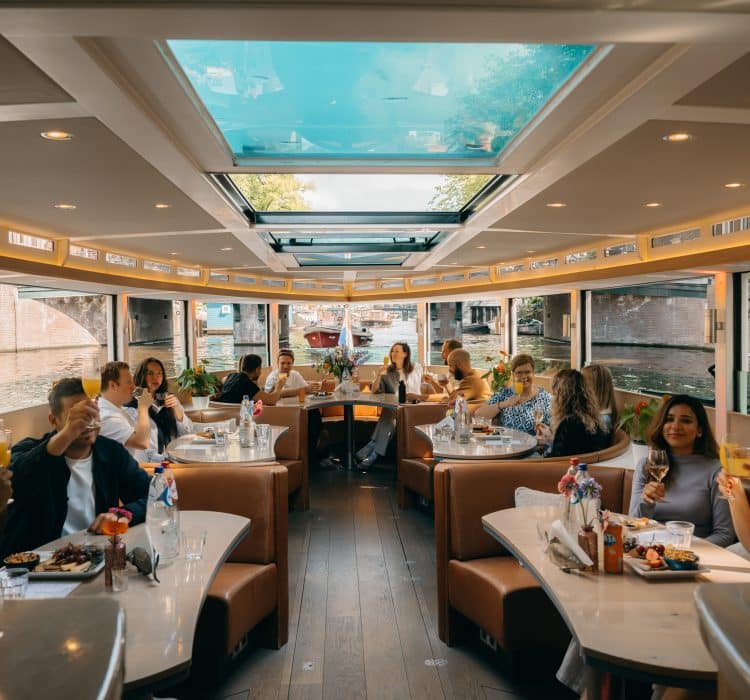
- Intimate groups of 6 to 24 guests aboard beautifully restored, fully electric boats designed by our in-house superyacht team
- Live commentary from knowledgeable captains who share real stories about the landmarks you pass, with the freedom to make detours based on what you want to see
- Local food and drinks including Dutch farmhouse cheese, seasonal craft beers, and European wines so you can taste Amsterdam while you see it
- Seasonal Amsterdam Light Festival tours with mulled wine, Dutch snacks, and open bar service for the ultimate winter canal experience
Ready to see Amsterdam’s landmarks the way they were meant to be seen? Browse our cruise options and book your spot today.