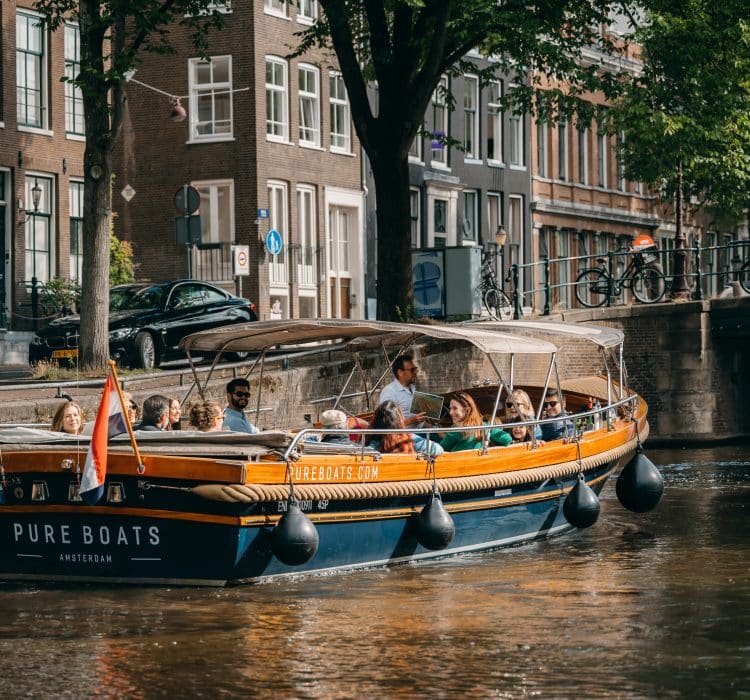
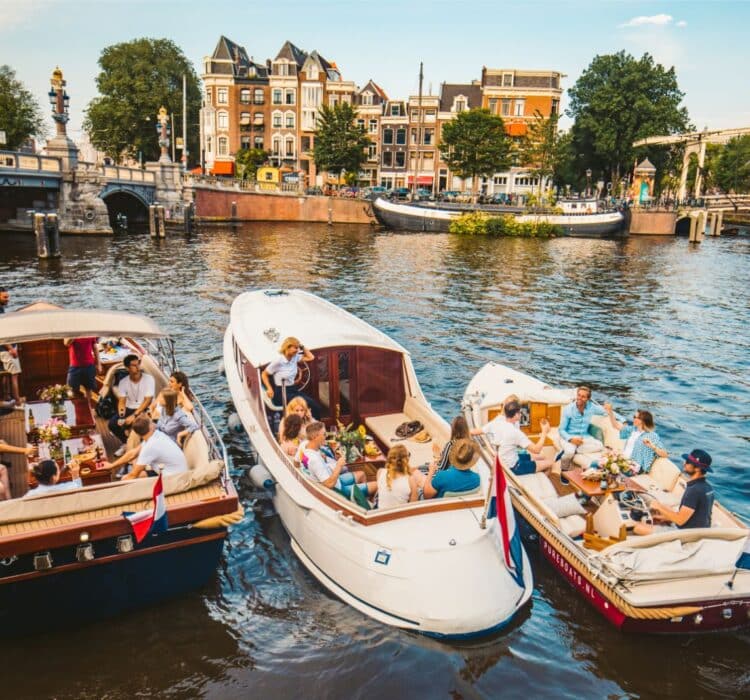
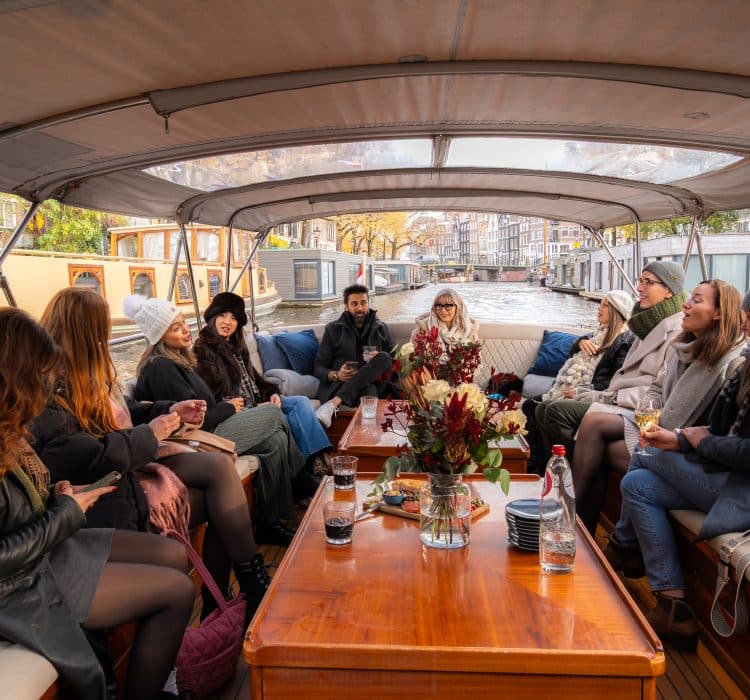
Private canal cruises are generally quieter than public tours, primarily because they carry fewer passengers, use smaller vessels, and skip the loudspeaker audio systems common on large sightseeing boats. The overall noise level on any canal cruise depends on boat type, group size, engine technology, and how commentary is delivered to guests.
Whether you are planning a romantic evening on the water or simply want to enjoy Amsterdam’s canals without competing with crowd noise, understanding what drives sound levels can help you choose the right experience. Below, we break down the key factors that determine how loud or peaceful your canal cruise will be.
What Actually Affects Noise Levels on a Canal Cruise?
Four main factors determine how loud a canal cruise feels: the propulsion system (diesel versus electric), the number of passengers on board, the method of commentary delivery, and the physical design of the boat itself. Each of these elements contributes independently, and together they create the overall acoustic atmosphere of your experience.
Engine noise is the most constant source of sound. A diesel engine produces a low, persistent rumble that passengers feel through the hull and hear throughout the journey. Electric motors, by contrast, run almost silently, which means conversations happen naturally without anyone needing to raise their voice.
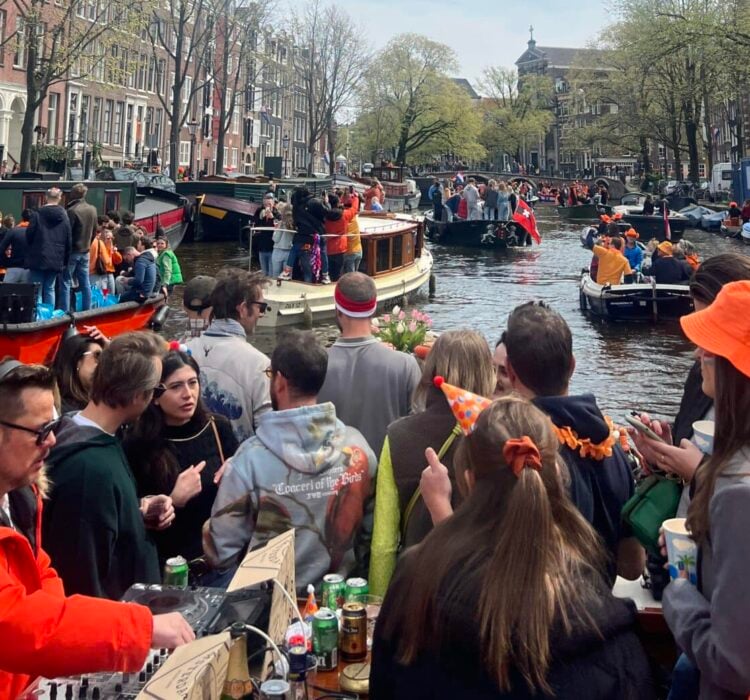
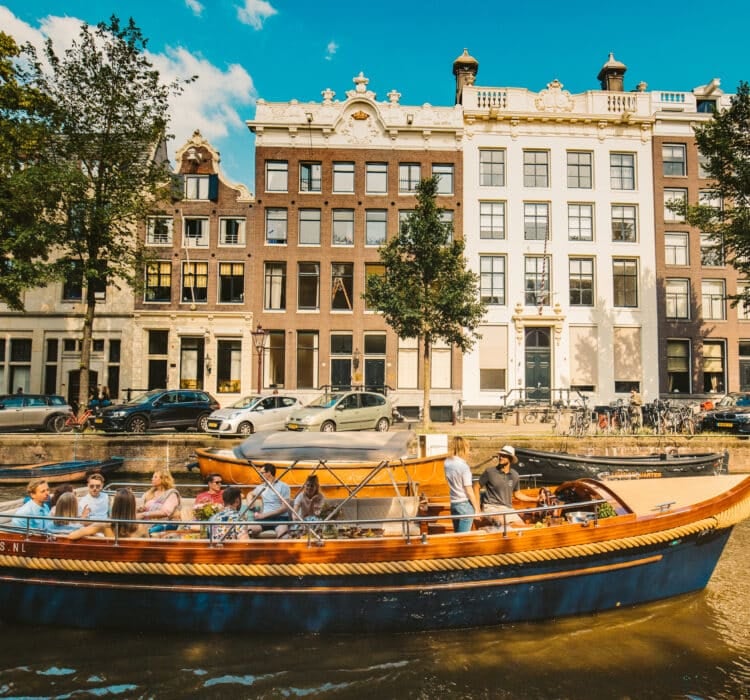
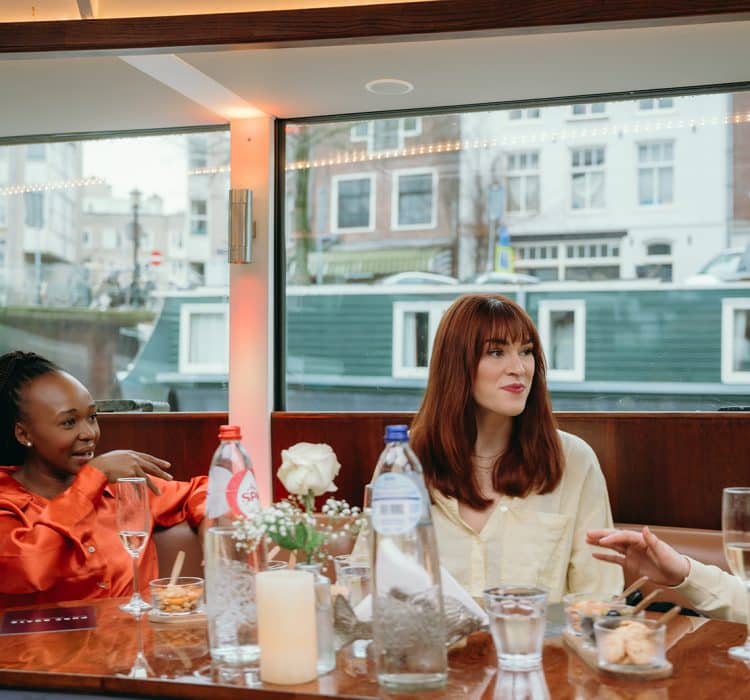
Group size matters more than most people realize. A boat carrying 50 or more passengers generates a baseline hum of chatter, laughter, and movement that is simply unavoidable. Even when everyone speaks at a normal volume, the cumulative effect is significant. Smaller groups of 6 to 24 people create a noticeably calmer environment where you can actually hear the water lapping against the hull.
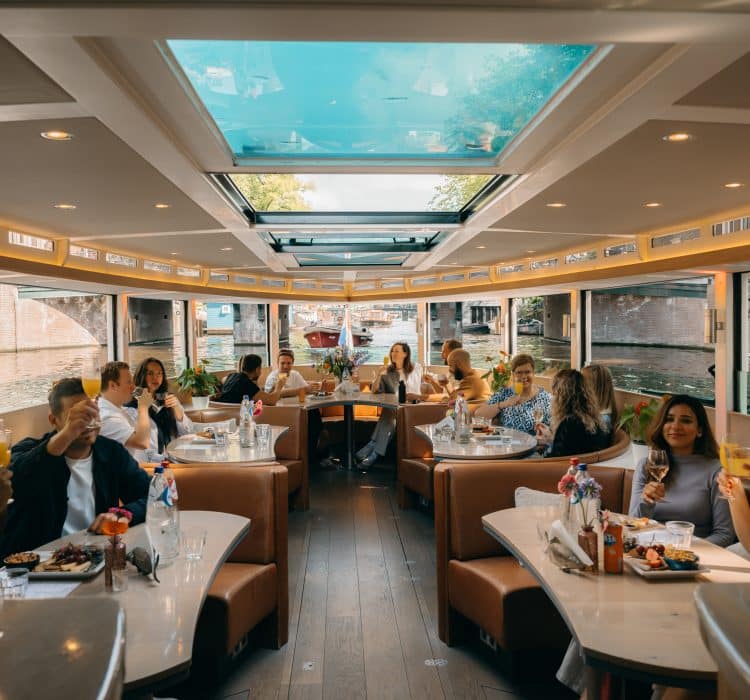
Finally, the boat’s construction plays a role. Open-deck designs allow sound to dissipate into the air, while enclosed cabins can amplify noise. Well-designed boats balance these elements so that guests enjoy shelter from the weather without feeling trapped in an echo chamber.
How Do Electric Boats Compare to Diesel Boats for Noise?
Electric boats are dramatically quieter than diesel boats. A diesel canal boat engine typically produces noticeable vibration and a constant mechanical hum, while a fully electric motor operates in near silence, allowing passengers to hear birdsong, church bells, and normal conversation without strain.
This difference is not subtle. On a diesel vessel, the captain or guide often needs to speak louder or use amplification to be heard over the engine. That amplification adds another layer of noise, creating a cycle where everything gets progressively louder. On an electric boat, a captain can speak in a relaxed, conversational tone and be heard clearly by everyone on board.
Beyond noise, electric propulsion eliminates exhaust fumes, which means guests can enjoy the open air without the smell of diesel. For anyone seeking a quiet canal cruise in Amsterdam, electric boats represent a meaningful upgrade in comfort. They also produce zero direct emissions, making them the more sustainable choice for exploring the city’s UNESCO-listed waterways.
The shift toward electric vessels is accelerating across the canal tourism industry, but not all operators have made the transition. If a peaceful experience matters to you, confirming that your boat runs on electric power is one of the simplest and most impactful things you can check before booking.
Why Are Smaller Group Sizes Usually Quieter?
Smaller group sizes are quieter because fewer people generate less ambient noise, require less amplification, and naturally encourage intimate, low-volume conversation rather than the raised voices needed to communicate in a crowd. A group of 10 guests produces a fundamentally different soundscape than a group of 75.
The Physics of Crowd Noise
When many people gather in a confined space, a phenomenon sometimes called the cocktail party effect takes hold. Each person unconsciously raises their voice to be heard above the surrounding chatter, which in turn raises the overall volume for everyone else. On a large public canal tour packed with dozens of passengers, this effect is almost guaranteed, especially when multiple languages are being spoken simultaneously.
The Social Dynamic of Small Groups
On a private canal tour, the social dynamic shifts entirely. With a smaller number of guests, there is no need to compete for auditory space. People settle into quiet, genuine conversations. The captain can share stories about Amsterdam’s history and hidden corners in a natural speaking voice, creating an atmosphere that feels personal rather than performative. This is one reason why a small-group canal tour consistently delivers a more relaxed and memorable experience than a large-scale sightseeing operation.
Do Audio Guides Make Public Tours Louder Than Private Ones?
Yes, audio guides and PA systems on public tours add a significant layer of noise that most private cruises avoid entirely. Large public boats typically broadcast pre-recorded commentary through overhead speakers at a volume designed to reach every seat, creating a constant stream of amplified sound that passengers cannot control or escape.
On many public canal tours, the audio guide cycles through multiple languages, meaning the commentary runs almost continuously. Even passengers who are not listening to the guide hear the broadcast as background noise. Combined with the chatter of a full boat, this creates an environment where quiet moments are rare.
Private and small-group cruises take a completely different approach. Instead of loudspeakers and scripted recordings, a knowledgeable captain or host delivers live commentary in a conversational style. This means the storytelling adapts to the group, pauses happen naturally, and the volume stays at a comfortable, human level. Guests can ask questions, request detours through smaller canals, and enjoy stretches of peaceful silence when they simply want to take in the scenery.
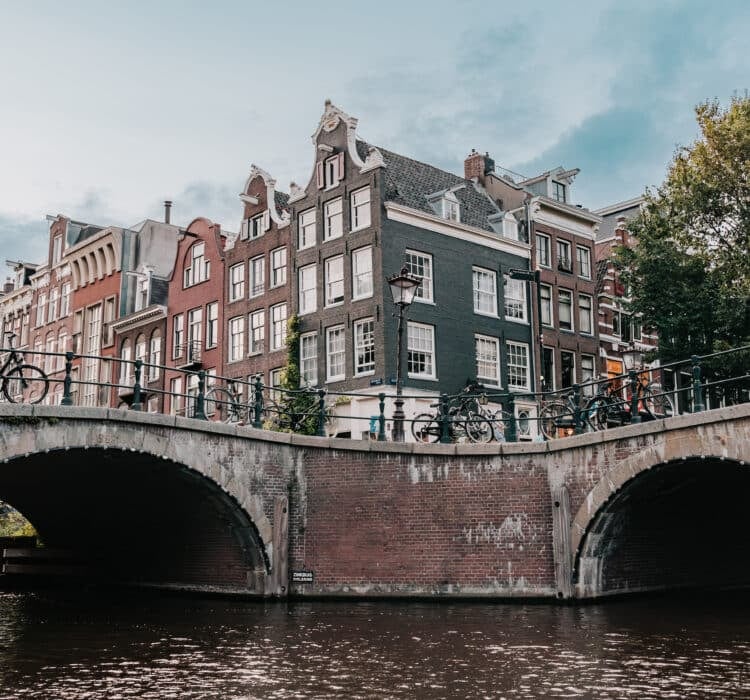
The difference in commentary style is one of the clearest distinctions between a public canal tour noise level and the atmosphere aboard a private cruise. If you value being able to hear yourself think while gliding past 17th-century canal houses, live commentary from a real person will always be preferable to a speaker system broadcasting on repeat.
What Should You Look for in a Quiet Canal Cruise?
To find a genuinely quiet canal cruise in Amsterdam, look for four things: fully electric propulsion, small maximum group sizes, live rather than recorded commentary, and routes that include narrower, less trafficked canals away from the busiest waterways.
- Electric boats only. Confirm the vessel runs on electric power. This eliminates engine noise and vibration, which are the most persistent sources of unwanted sound on the water.
- Small group capacity. Choose cruises that cap their guest numbers. Boats designed for 6 to 24 passengers offer a dramatically different acoustic environment compared to vessels carrying 50 or more.
- Live, personal commentary. Opt for experiences where a captain or host shares stories in person rather than through a PA system. Live commentary is naturally quieter and far more engaging.
- Thoughtful routing. The best operators navigate through Amsterdam’s smaller, quieter canals rather than sticking exclusively to the busy main waterways. These intimate routes offer less boat traffic and a more serene atmosphere.
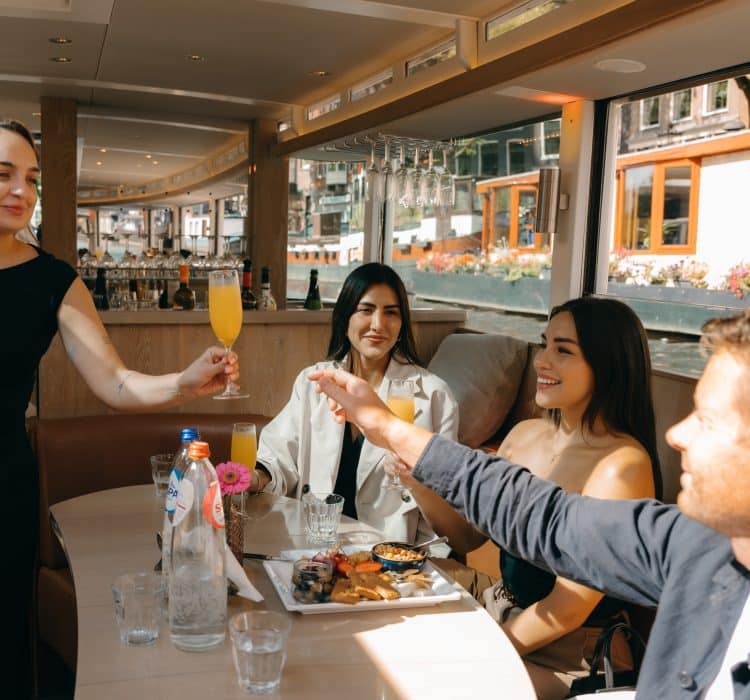
- Quality food and drink service. This might seem unrelated to noise, but boats that serve curated local products tend to attract guests who are there for the experience rather than just ticking off a tourist checklist, which contributes to a more relaxed onboard atmosphere.
Reading recent reviews can also give you a sense of what to expect. Guests who value tranquility tend to mention it specifically, so look for words like “peaceful,” “intimate,” or “relaxing” in feedback from previous visitors.
How Pure Boats Delivers a Quiet, Luxurious Canal Cruise Experience
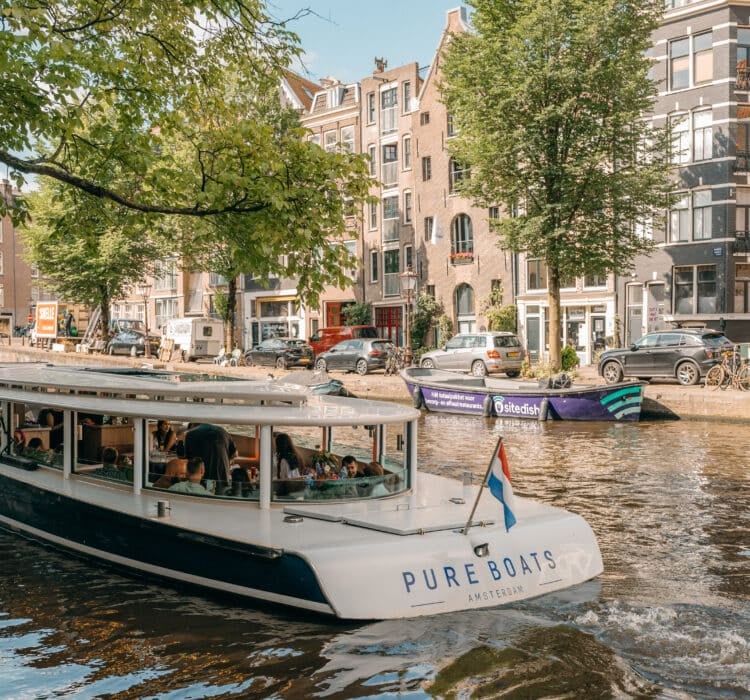
At Pure Boats, we have designed every element of our Amsterdam canal cruise experience to prioritize comfort, intimacy, and peace on the water. Here is what sets us apart:
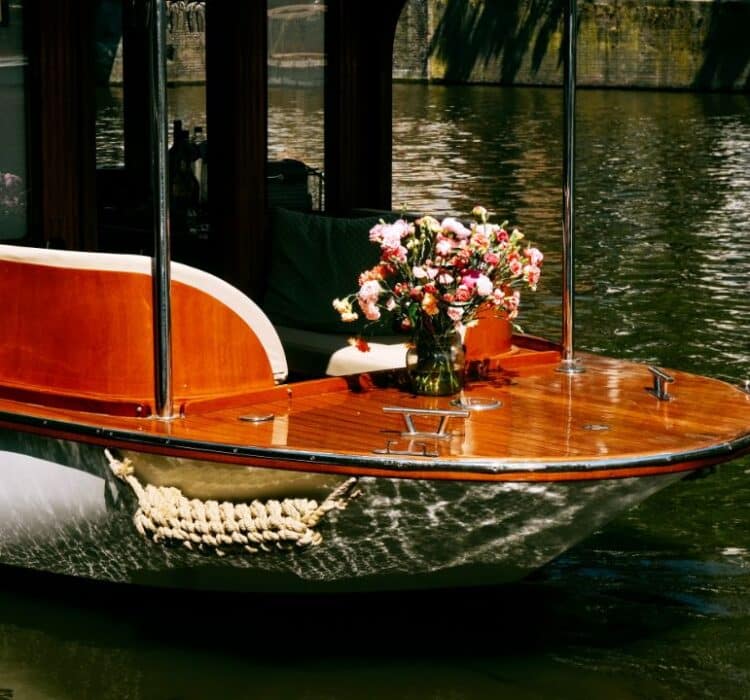
- Fully electric fleet: All of our carefully restored classic boats run on silent electric motors, meaning zero engine noise and zero emissions.
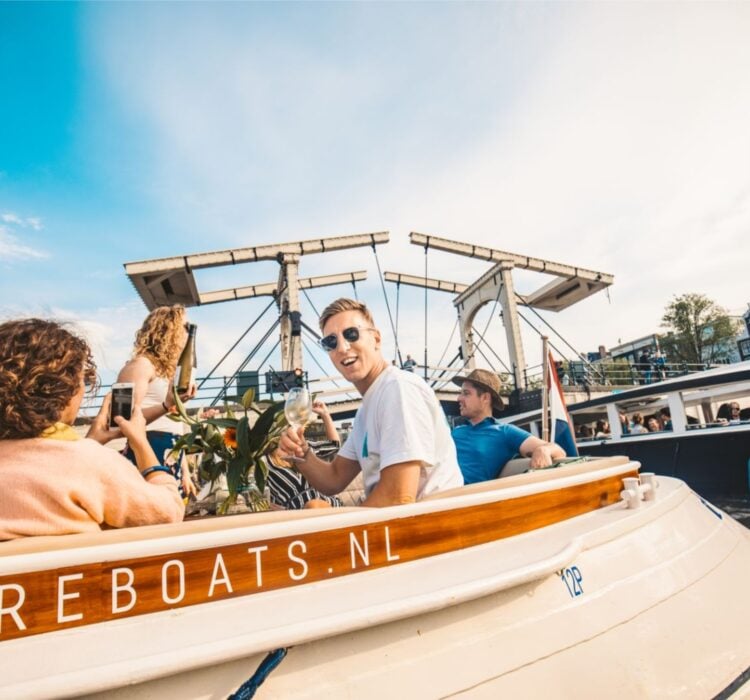
- Intimate group sizes: Each of our boats accommodates between 6 and 24 guests, ensuring a calm, personal atmosphere on every cruise.
- Live, conversational storytelling: Our captains share Amsterdam’s history and hidden gems in their own words, with no loudspeakers or scripted recordings.
- Exclusive routes: We sail through smaller canals where larger tour boats cannot go, offering a quieter and more authentic perspective on the city.
- Locally sourced refreshments: Enjoy seasonal craft beers, European wines, and Dutch farmhouse cheese while gliding through Amsterdam’s UNESCO-listed canal belt.
Whether you are planning a romantic escape or a refined outing with friends, we would love to welcome you aboard. Browse our cruise options and book your quiet, luxurious canal experience today.