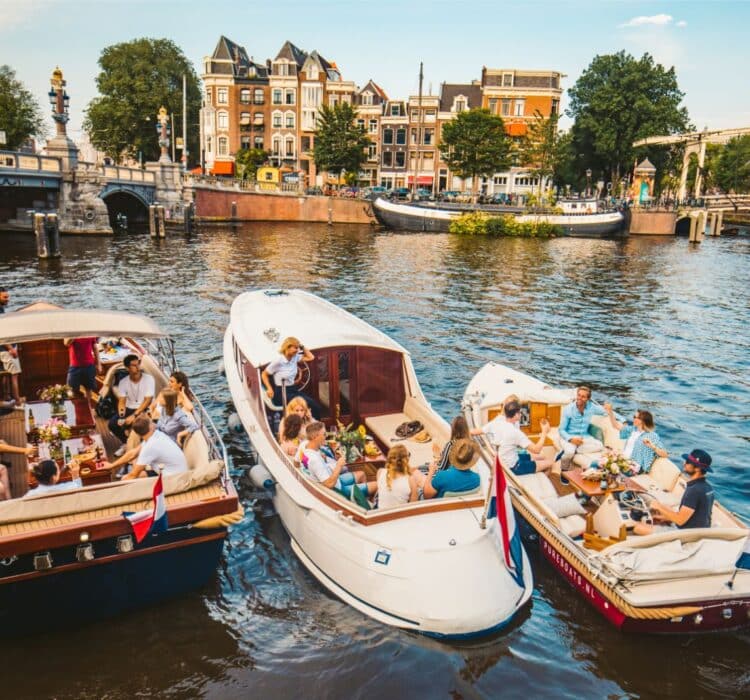
Amsterdam reveals its true character from the water. While most visitors experience the city from crowded streets and busy bridges, the canals offer perspectives that simply cannot be seen from land. The Dutch capital’s 165 waterways wind past hidden gardens, centuries-old architecture, and secret corners that remain invisible to pedestrians rushing overhead. These Amsterdam canal highlights transform an ordinary sightseeing trip into something genuinely memorable.
Why Amsterdam’s Best Views Are on the Water
The city was built around its canals, not despite them. During the Golden Age, Amsterdam’s wealthiest merchants constructed their mansions to face the water because that was where business happened, where goods arrived, and where prestige was displayed. Today, this means the most impressive facades, the most intricate architectural details, and the most carefully maintained gardens all orient toward the canals rather than the streets.
From water level, you experience Amsterdam at the pace and perspective its builders intended. The gentle movement of a boat allows time to notice details that walking tourists miss entirely: a carved stone face above a doorway, a reflection dancing across a window, or the subtle lean of a 400-year-old building that has settled gracefully into the soft Amsterdam soil.
1: Hidden Gardens Behind Golden Age Mansions
Amsterdam’s canal houses guard a secret that street-level visitors never discover. Behind many of these narrow facades lie surprisingly expansive gardens, invisible from the road but perfectly visible from the water. These private outdoor spaces, some dating back to the 17th century, feature manicured hedges, ancient trees, and flowering plants that spill over garden walls toward the canal.
The gardens exist because Amsterdam’s wealthy merchants wanted outdoor space despite building on narrow, expensive canal frontage. They extended their properties backward, creating long, deep lots with formal gardens at the rear. From a boat, you can peer through wrought-iron gates and over low walls to glimpse these hidden green spaces, many maintained by the same families for generations.
Spring and summer offer the most spectacular garden views, when roses climb trellises and wisteria drapes over canal-side walls. These Amsterdam secret spots remain one of the city’s best-kept treasures, accessible only to those who take to the water.
2: The Leaning Houses of the Jordaan
Every visitor to Amsterdam notices that many buildings appear to tilt forward, backward, or sideways. From the water, this architectural quirk becomes dramatically apparent. The Jordaan neighbourhood, with its narrow waterways and densely packed 17th-century buildings, showcases some of the most pronounced leans in the city.
Some tilting is intentional. Builders deliberately angled facades forward so that goods hoisted by rope and pulley would not scrape against the building’s surface. The forward lean also helped rainwater run off more efficiently. However, much of the tilting results from Amsterdam’s soft, marshy ground. Buildings rest on wooden pilings driven deep into the earth, and over centuries, some of these foundations have shifted.
Cruising through the Jordaan’s smaller canals brings you close enough to truly appreciate these architectural survivors. You will notice how neighbouring buildings lean in opposite directions, sometimes appearing to support each other like old friends. This Amsterdam canal architecture tells the story of a city that has spent 800 years negotiating with water and soft ground.
3: Ornate Gable Stones That Tell Stories
Before Amsterdam had street numbers, residents identified their homes through decorative gable stones mounted on facades. These carved or painted plaques depicted the homeowner’s profession, religious beliefs, or simply something memorable. From street level, most gable stones sit too high to appreciate properly. From the water, they come into perfect view.
A boat tour reveals hundreds of these historical markers: a carved ship indicating a merchant’s trade, a painted swan marking a former inn, or religious imagery showing the family’s faith. Some gable stones tell stories, depicting biblical scenes or local legends. Others served as early forms of advertising, showing potential customers exactly what business operated within.
The tradition continues today, with some homeowners commissioning modern gable stones that reflect contemporary life. Spotting and interpreting these decorative elements becomes a rewarding game during any Amsterdam boat tour, connecting you to centuries of residents who called these canal houses home.
4: What Happens Under Amsterdam’s 1,500 Bridges?
Amsterdam contains more bridges than Venice, with over 1,500 spanning its canals. From above, these bridges appear as simple crossings. From below, they reveal intricate engineering, historical graffiti, and architectural details that pedestrians never see. Passing under Amsterdam’s bridges offers a perspective reserved exclusively for those on the water.
Each bridge tells a story through its construction. Some feature elegant stone arches dating to the 17th century, while others showcase the iron and steel engineering of the industrial era. The undersides often display unexpected details: carved keystones, original builder’s marks, or layers of paint accumulated over decades.
The smaller canals, inaccessible to large tour boats, feature the most intimate bridge experiences. Here, you can reach up and nearly touch the underside of bridges that have supported Amsterdam’s foot traffic for centuries. These Amsterdam waterway attractions offer a completely different understanding of how the city was constructed and how it continues to function.
5: Houseboats and Their Floating Gardens
Amsterdam’s approximately 2,500 houseboats form a community within the city, and their residents have transformed these floating homes into remarkable expressions of personal style. From land, you see only the rooftops and occasional deck furniture. From the water, the full creativity of houseboat living comes into view.
Many houseboat owners have created elaborate floating gardens, with planters overflowing with flowers, herbs, and even small trees. Some boats feature miniature greenhouses, while others have constructed deck gardens that rival any terrestrial backyard. Cats lounge on sunny decks, bicycles lean against railings, and the details of daily life unfold at water level.
The variety of houseboat styles surprises most visitors. Historic cargo barges converted to homes sit alongside purpose-built modern vessels. Some houseboats have remained in families for generations, while others serve as studios, galleries, or even small hotels. This Amsterdam from the water experience reveals a floating neighbourhood invisible from the streets above.
6: Historic Warehouse Facades Along the Brouwersgracht
The Brouwersgracht, or Brewer’s Canal, consistently ranks among Amsterdam’s most beautiful waterways. Named for the breweries that once lined its banks, this canal showcases some of the finest warehouse architecture in the city. These buildings, originally used to store goods arriving by boat, feature massive hoisting beams, oversized shutters, and facades designed to impress trading partners.
From the water, the scale and craftsmanship of these warehouses becomes apparent. Many retain their original hoisting equipment, wooden beams projecting from the top floor that once lifted heavy cargo from boats below. The shutters, often painted in traditional Amsterdam green, cover windows large enough to accommodate bales of goods being swung inside.
Today, these warehouses have been converted into some of Amsterdam’s most desirable residential properties. The canal cruise views along the Brouwersgracht reveal how beautifully these industrial buildings have been preserved and adapted, their commercial past still visible in every architectural detail.
7: Wildlife Habitats in the City Centre
Amsterdam’s canals support a surprising ecosystem right in the heart of the city. From the water, you encounter wildlife that remains hidden from street-level observers. Herons stand motionless on canal walls, waiting to strike at fish. Coots and moorhens nest in reeds along quieter waterways. Cormorants dry their wings on mooring posts, and the occasional kingfisher flashes electric blue between the boats.
The canal walls themselves have become habitats. Moss and ferns grow in the cracks between bricks, while small fish shelter in the shadows beneath bridges. In spring, you might spot ducklings following their mothers through the waterways, navigating around boats with surprising confidence.
This urban wildlife thrives partly because Amsterdam’s commitment to clean, quiet waterways has improved water quality significantly in recent decades. Electric boats, which produce no emissions and minimal noise, allow passengers to observe wildlife without disturbing it. The hidden Amsterdam canals in residential neighbourhoods often offer the best wildlife-watching, far from the busier tourist routes.
8: The Skinny Bridge at Golden Hour
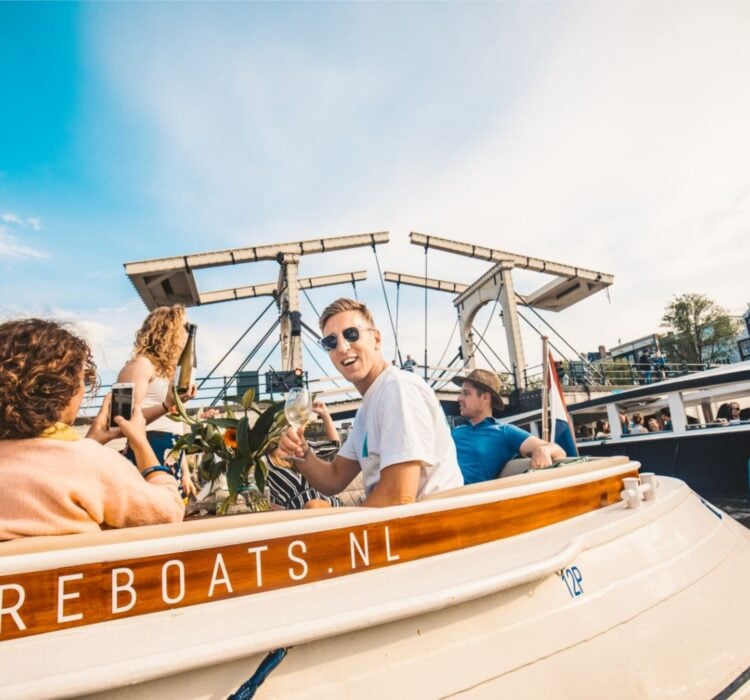
The Magere Brug, or Skinny Bridge, is Amsterdam’s most photographed bridge, and for good reason. This white wooden drawbridge spanning the Amstel River looks beautiful from any angle, but approaching it by boat as the sun sets transforms it into something magical. The warm light catches the white-painted wood, creating a glow that photographers travel from around the world to capture.
The bridge earned its name from its original narrow width, though the current structure, rebuilt in 1934, is considerably wider than its predecessor. At night, over 1,200 lights illuminate the bridge’s outline, creating one of Amsterdam’s most romantic sights. From the water, you can pass directly beneath the bridge and appreciate both its elegant engineering and its perfect setting on the Amstel.
Timing a canal cruise to coincide with golden hour, roughly an hour before sunset, ensures you experience the Skinny Bridge at its most photogenic. A premium cruise departing from Hotel De L’Europe offers the perfect opportunity to witness this spectacle. The reflection of the illuminated bridge on the calm evening water doubles the visual impact, creating Amsterdam boat tour sights that remain vivid in memory long after the trip ends.
9: Reflections of the UNESCO Canal Ring
Amsterdam’s 17th-century canal ring earned UNESCO World Heritage status for good reason. This masterpiece of urban planning, comprising the Herengracht, Keizersgracht, and Prinsengracht, represents one of the most ambitious hydraulic engineering projects in history. From the water, you experience this achievement as its creators intended.
The reflections on calm water double the beauty of every building, every tree, and every bridge. On still mornings or quiet evenings, the canal surface becomes a perfect mirror, creating symmetrical images that seem almost unreal. The interplay of light, architecture, and water changes constantly throughout the day, meaning no two canal cruises ever offer identical views.
The UNESCO designation recognizes not just individual buildings but the entire system: the way canals, bridges, and buildings work together as a unified whole. This Amsterdam canal cruise experience provides the best possible understanding of why this 400-year-old urban design continues to inspire city planners around the world.
How Pure Boats Helps You Experience These Highlights
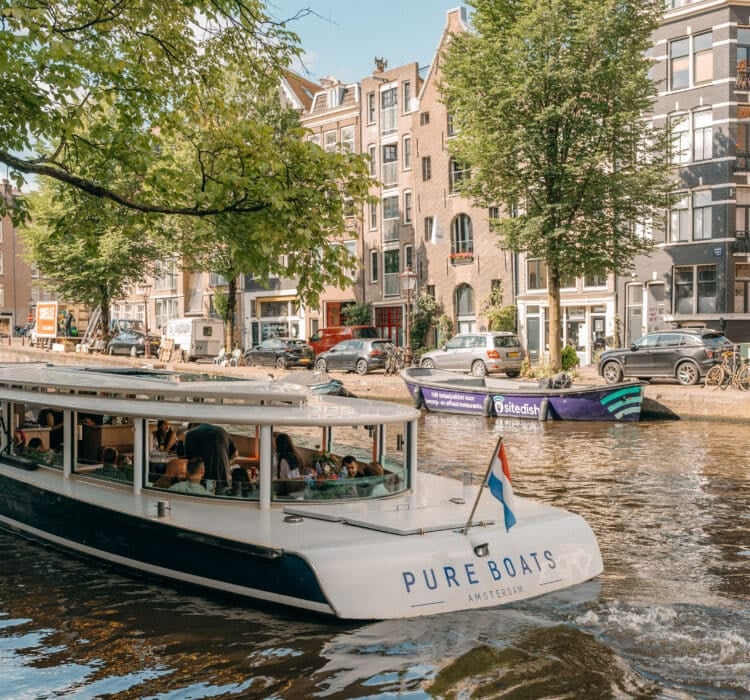
We designed our cruises specifically to reveal these Amsterdam canal highlights that larger tour boats simply cannot access. Our intimate vessels navigate the smaller waterways where hidden gardens, leaning houses, and wildlife habitats await discovery. Rather than following crowded routes with scripted commentary, our captains take you through quiet neighbourhoods and share genuine stories about the city they love.
Our semi private cruise departing from Hotel De L’Europe offers the perfect way to experience Amsterdam from the water:
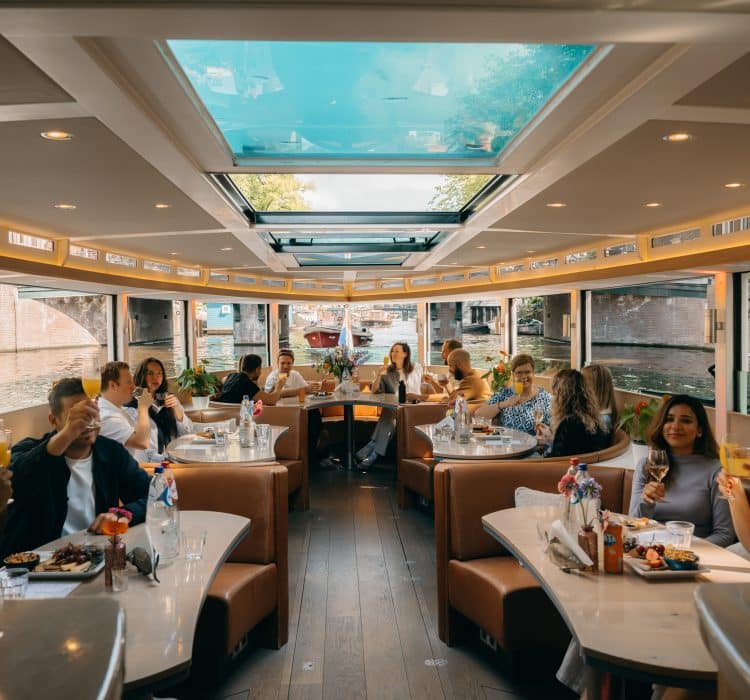
- Small group setting aboard the Stan Huygens, once the personal favourite vessel of Freddy Heineken
- 90 minutes of cruising through UNESCO-listed canals with thoughtful, unscripted commentary
- Two premium drinks and complimentary nibbles included throughout your journey
- Choice between shared or private booth seating for your preferred level of intimacy
- Fully electric boats that allow close wildlife observation without noise or emissions
Book your cruise today and discover the Amsterdam that exists only on the water. Whether you choose a shared experience or reserve a private cabin for your group, you will return to shore having seen a side of the city that most visitors never encounter.