You experience Amsterdam like a local by stepping away from the main tourist routes and into the city’s quieter neighborhoods, smaller canals, and neighborhood cafes where Amsterdammers actually spend their time. This means exploring at a slower pace, embracing the city’s cafe culture, and discovering the hidden waterways that larger tour boats cannot reach.
The difference between a tourist visit and a local experience comes down to perspective and access. Locals know that the best views come from the water, that the Jordaan is more than just the Anne Frank House, and that a proper borrel (Dutch drinks and snacks) beats any tourist trap restaurant. Below, we answer the questions that help you unlock this authentic side of Amsterdam.
What Do Locals Actually Do on Amsterdam’s Canals?
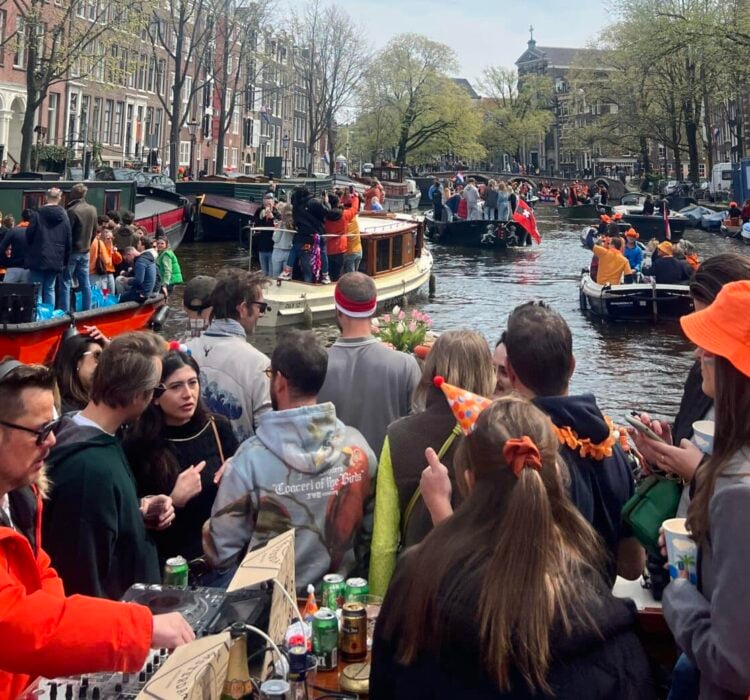
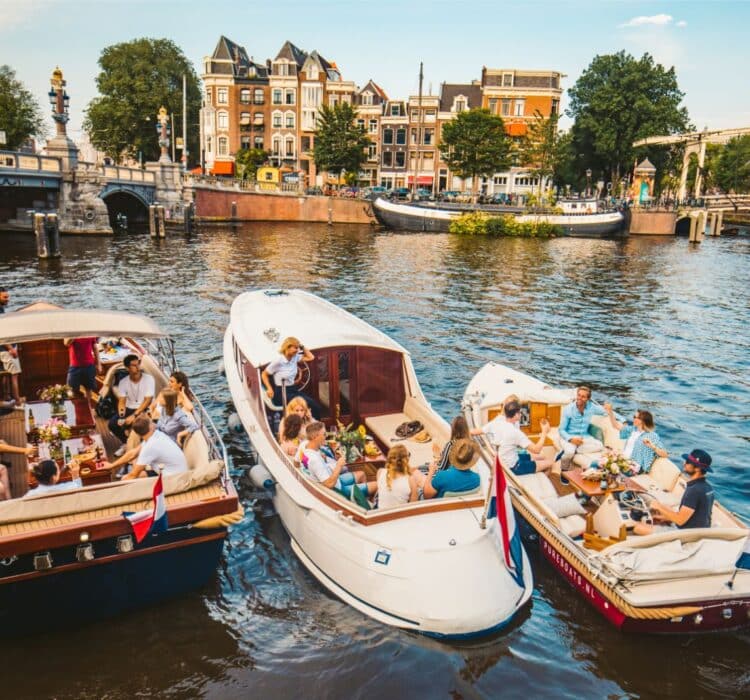
Locals use Amsterdam’s canals as extensions of their living rooms, gathering on small boats with friends for drinks, picnics, and leisurely cruises through their own neighborhoods. Unlike tourists who photograph the canals from bridges, Amsterdammers experience them from the water itself, often on warm evenings or weekend afternoons.
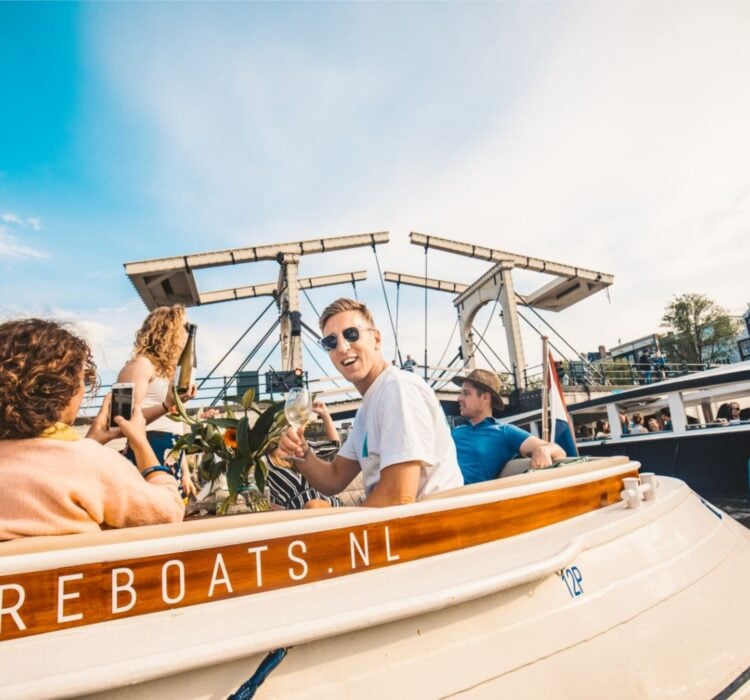
The canal culture here is deeply social. You will see groups of friends on small boats passing bottles of wine and cheese platters, couples enjoying quiet evening cruises, and families teaching children to navigate the waterways. This is not sightseeing but rather a way of life that has developed over centuries in a city built around its waterways.
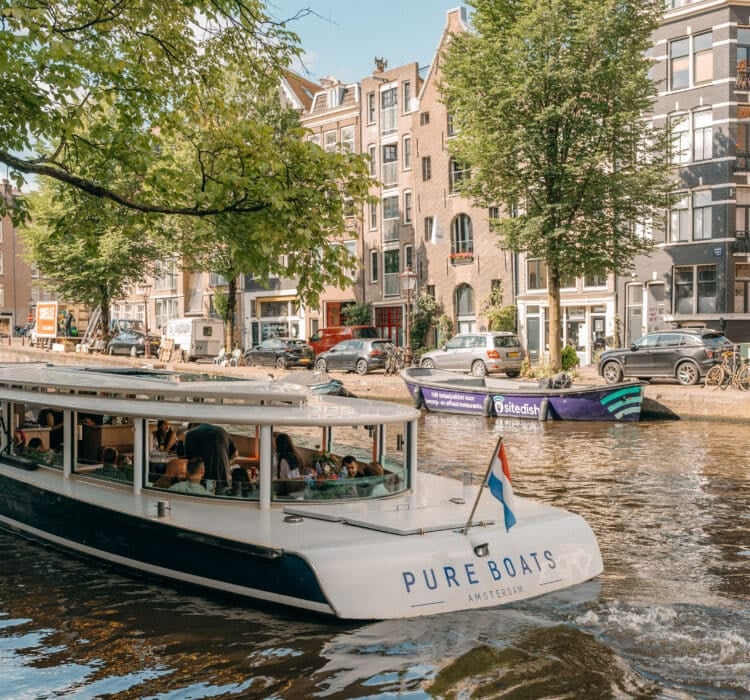
What makes this culture distinctive is the intimacy of the experience. Locals prefer smaller vessels that can navigate the narrow waterways where the large tour boats cannot fit. They choose routes through residential areas rather than the main tourist thoroughfares, and they stop at waterside cafes that only locals know about.
To experience this yourself, seek out smaller boat experiences that mirror how Amsterdammers actually use their canals. The key is finding vessels small enough to access the hidden waterways and captains who know the city well enough to share genuine stories rather than scripted commentary.
Which Amsterdam Neighborhoods Feel Most Authentic?
The Jordaan, De Pijp, and Amsterdam Noord offer the most authentic neighborhood experiences, each with a distinct character that reveals different aspects of local life. These areas have strong community identities, independent shops, and the kind of neighborhood cafes where regulars know each other by name.
The Jordaan: Historic Charm Without the Crowds
The Jordaan remains Amsterdam’s most beloved neighborhood among locals, despite its proximity to the city center. Once a working-class area, it now blends historic architecture with independent boutiques, cozy brown cafes, and hidden courtyards called hofjes. The smaller canals here, like the Bloemgracht and Egelantiersgracht, are where you find the real neighborhood atmosphere.
What makes the Jordaan feel authentic is its scale. The streets are narrow, the canals intimate, and the shops family-run. Locals still live here, do their shopping at the Noordermarkt on Saturdays, and gather at corner cafes that have served the neighborhood for generations.
De Pijp: The Multicultural Heart
De Pijp represents modern Amsterdam at its most diverse. The Albert Cuyp Market has served the neighborhood since 1905, and walking its length gives you a genuine sense of how Amsterdammers actually shop. The surrounding streets are filled with restaurants representing cuisines from around the world, reflecting the city’s immigrant communities.
This neighborhood feels lived in rather than preserved. The buildings are not as photogenic as the canal ring, but the energy is authentic. Young professionals, families, and longtime residents share the streets, and the cafe terraces fill with locals rather than tour groups.
How Do You Find the Small Canals Tourists Miss?
The small canals tourists miss are found in the residential areas just beyond the main tourist routes, particularly in the Jordaan, the Western Islands (Prinseneiland, Bickerseiland, and Realeneiland), and the eastern canal ring. These waterways are too narrow for large tour boats, keeping them quiet and genuinely local.
The Western Islands deserve special attention. These three small islands were originally industrial areas that have transformed into quiet residential neighborhoods with some of the most picturesque canal views in the city. Prinseneiland in particular offers a glimpse of Amsterdam before mass tourism, with houseboats, small bridges, and almost no other visitors.
Another overlooked area is the Plantage neighborhood, where the canals run alongside botanical gardens and historic buildings that most tourists never see. The Entrepotdok, a former warehouse district, now features converted loft apartments along a wide canal that feels worlds away from the crowded center.
The best way to discover these hidden waterways is from the water itself. Small electric boats can navigate passages that larger vessels cannot enter, revealing a network of canals that most visitors never realize exists. An exclusive canal tour through these areas on our boutique boat Danique for intimate cruises shows you the city as locals experience it, not as tourists photograph it.
What Local Food and Drink Traditions Should You Try?
The essential local food and drink traditions to try are borrel (Dutch drinks with snacks), bitterballen (deep-fried meat ragout balls), Dutch farmhouse cheeses, and seasonal craft beers from Amsterdam’s growing brewery scene. These are what Amsterdammers actually eat and drink when gathering with friends.
The Art of Borrel
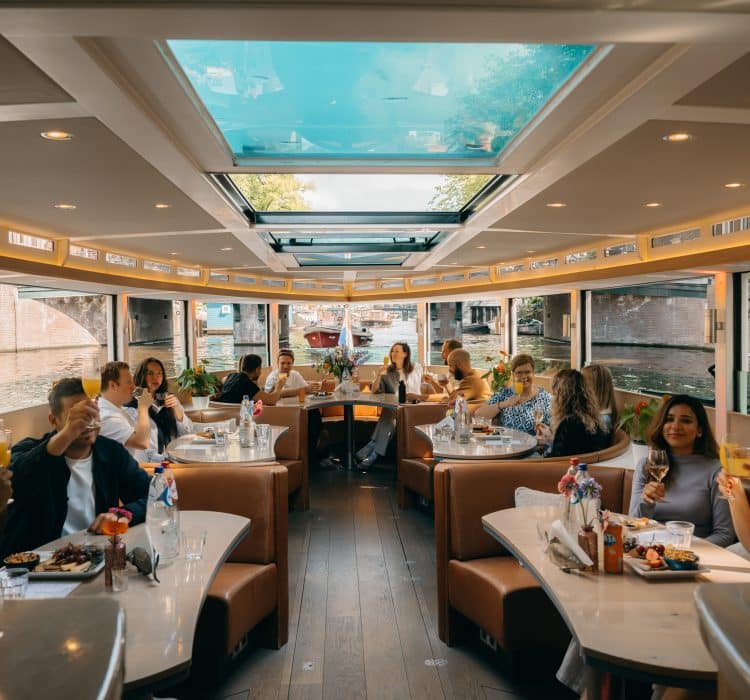
Borrel is not just a drink but a social ritual. It typically happens in the late afternoon or early evening, involves drinks (often beer or wine) with small snacks, and is fundamentally about connection rather than consumption. The snacks, called borrelhapjes, include bitterballen, cheese cubes, nuts, and olives.
What makes borrel authentic is the setting. Locals gather at brown cafes (traditional Dutch pubs with dark wood interiors), at home, or increasingly on boats during warmer months. The key is the relaxed atmosphere and the emphasis on conversation over consumption.
Local Products Worth Seeking Out
Dutch farmhouse cheeses, particularly aged Gouda and young cheeses from local farms, are significantly better than what you find in tourist shops. Look for cheese shops in neighborhoods rather than the center, where quality is higher and prices are lower.
Amsterdam’s craft beer scene has exploded in recent years, with local breweries producing seasonal beers that rival anything from Belgium. Ask for recommendations at neighborhood cafes rather than defaulting to mass-produced options. The same applies to Dutch gin (jenever), which has been produced here for centuries and varies significantly in quality.
When Is the Best Time to See Amsterdam Without Crowds?
The best times to see Amsterdam without crowds are early mornings before 10 AM, weekday evenings after 7 PM, and during the shoulder seasons of late autumn and early spring. The city transforms dramatically when the tour groups retreat, revealing the peaceful atmosphere that locals enjoy daily.
Morning light on the canals, particularly between 7 and 9 AM, creates the Amsterdam you see in photographs but rarely experience in person. The water is still, the bridges are empty, and you can actually hear the birds. This is when locals walk their dogs, cycle to work, and enjoy their city before it fills with visitors.
Seasonal timing matters significantly. The winter months, particularly November through February, see far fewer tourists while offering their own rewards. The Amsterdam Light Festival transforms the canals with illuminated artworks, and the cozy brown cafes feel more inviting than ever. A premium canal cruise Amsterdam during this season shows you the city at its most atmospheric.
Even during peak summer, timing your activities around local rhythms helps. Amsterdammers avoid the center on weekend afternoons but embrace it on weekday evenings. Following this pattern puts you in sync with local life rather than fighting against the tourist tide.
How Pure Boats Helps You Experience Amsterdam Like a Local
We designed our Amsterdam experience specifically to give you access to the local side of the city that most visitors never see. Our small, handcrafted electric boats navigate the narrow canals where larger tour vessels cannot go, and our captains share genuine stories rather than scripted commentary.
- Small group sizes of 6 to 24 guests create an intimate atmosphere that mirrors how locals actually cruise the canals
- Customized routes through residential neighborhoods like the Jordaan and Prinseneiland reveal hidden waterways
- Local products including Dutch farmhouse cheeses, seasonal craft beers, and quality European wines let you taste Amsterdam authentically
- Fully electric boats mean a quiet, sustainable experience on the historic waterways
- Knowledgeable captains who live in Amsterdam share real insights about the city and its culture
Whether you join us for a shared group tour or a private cruise aboard our boutique boat Danique, you will experience the canals the way Amsterdammers do: relaxed, social, and genuinely connected to the city around you.