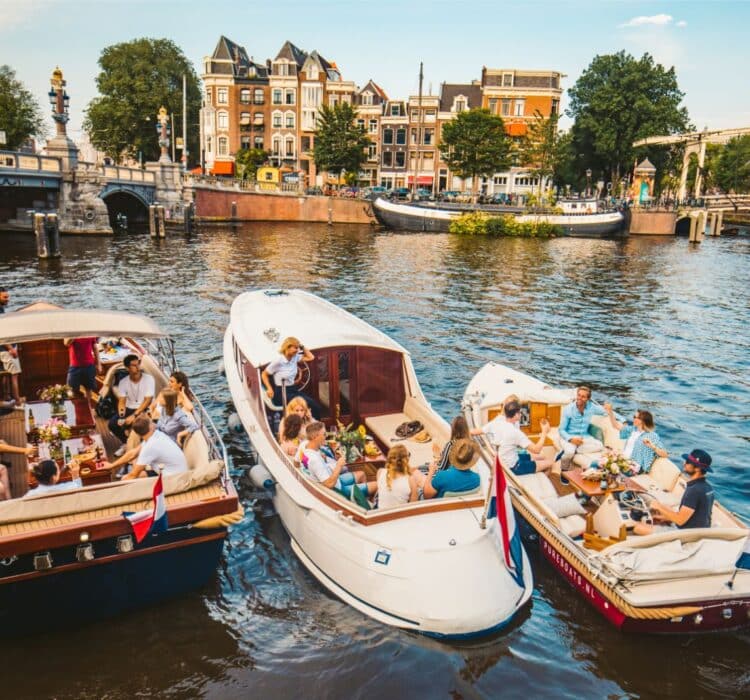
An Amsterdam cruise offers a fundamentally different perspective than a walking tour: you see the city from water level, gliding past hidden houseboats, garden facades, and architectural details invisible from the street. Walking tours excel at street-level immersion and spontaneous detours into shops or cafes, while canal cruises reveal the interconnected waterway system that defines Amsterdam’s UNESCO-listed historic centre.
The best choice depends on your priorities, physical preferences, and how much time you have. Many visitors discover that the two experiences complement rather than compete with each other, each revealing aspects of Amsterdam the other cannot. Below, we explore the key differences to help you decide which suits your visit or whether combining both creates the complete Amsterdam experience.
What Can You See From a Canal Boat That You Can’t See on Foot?
From a canal boat, you see Amsterdam’s hidden water-facing architecture, private gardens backing onto canals, houseboats with rooftop terraces, and the ornate gables of merchant houses designed to be viewed from the water. Street-level walking simply cannot reveal these perspectives because buildings were historically constructed to impress visitors arriving by boat.
The canal network itself becomes part of the experience. Narrow waterways too tight for large tour boats connect to wider canals, creating an intimate journey through neighbourhoods where pedestrians rarely venture. You’ll notice details like:
- Original cargo hoisting beams still mounted on historic warehouse facades
- Water-level cellar windows that once served as merchant loading bays
- Bridge undersides featuring centuries-old stonework and engineering
- Private garden gates and terraces accessible only from the water
- The famous leaning houses, whose dramatic angles become truly apparent from canal level
Walking tours naturally focus on street-facing elements: doorways, storefronts, and public squares. But Amsterdam’s merchant elite built their homes to face the canals, which served as the city’s primary transport network during the Dutch Golden Age. A cruise reveals the city as its original architects intended it to be experienced.
How Does the Pace of Each Experience Affect What You Learn?
A canal cruise creates a slower, more contemplative pace where you absorb information while relaxing, whereas walking tours demand active attention while navigating crowds and traffic. This difference fundamentally changes how deeply you process what you’re learning about Amsterdam’s history and culture.
On foot, guides must compete with street noise, construction, and the practical demands of keeping groups together at crossings. Your attention splits between listening and watching where you step. The pace quickens through busy areas and slows at designated stops, creating an uneven rhythm.
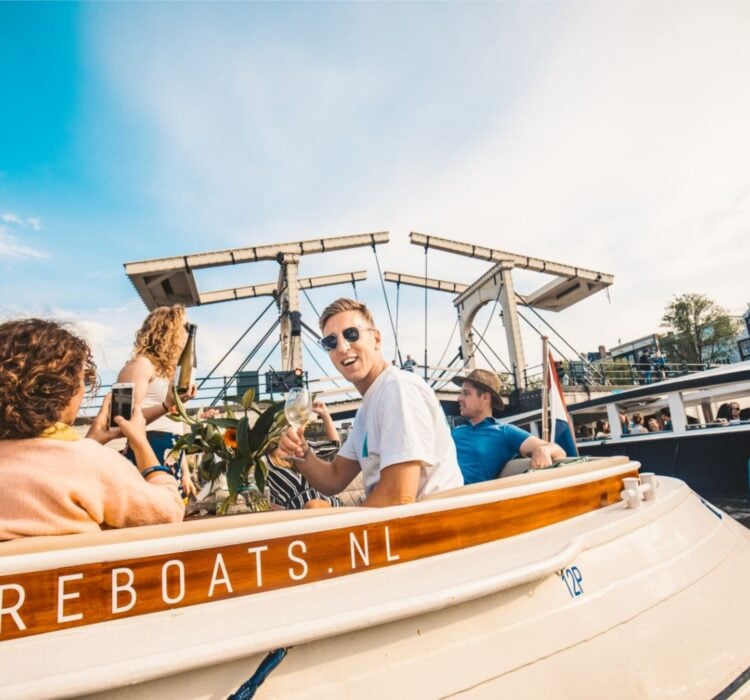
By contrast, cruising allows continuous, uninterrupted storytelling. Knowledgeable captains and hosts can share insights about passing landmarks without rushing, and passengers absorb information while seated comfortably with a drink in hand. The gentle movement of water creates a meditative state that actually enhances memory retention.
Walking tours typically cover more individual stops but with less time at each. Canal cruises cover fewer discrete locations but allow deeper exploration of each neighbourhood you pass through. If you prefer breadth, walk. If you prefer depth and reflection, cruise.
Which Option Works Better for Different Weather Conditions?
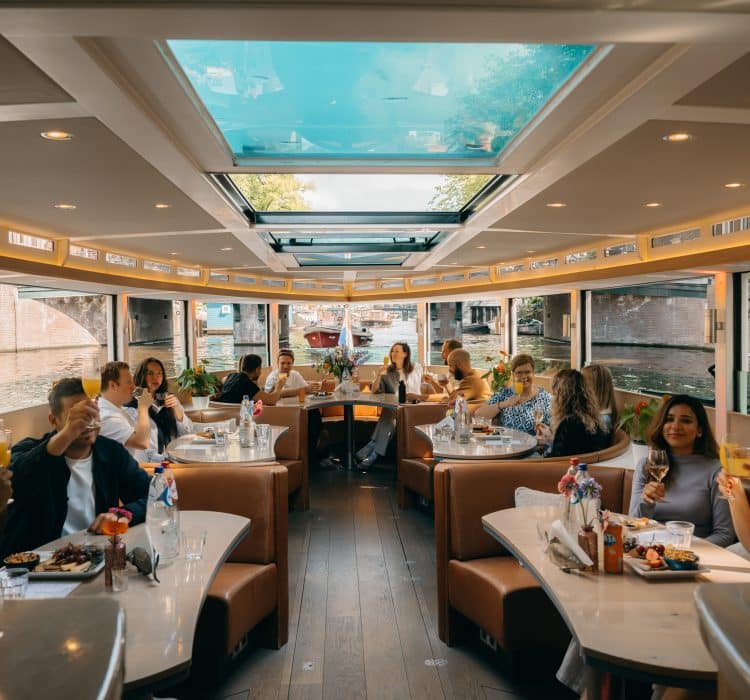
Canal cruises offer significant advantages in rain, cold, or intense summer heat because most quality boats provide covered or enclosed seating with climate control. Walking tours leave you exposed to Amsterdam’s famously unpredictable weather, which can shift from sunshine to rain within minutes.
Amsterdam experiences approximately 130 rainy days annually, making weather protection a practical consideration for any visitor. During winter months, temperatures regularly drop below freezing, and the wind off the canals adds a sharp chill that makes extended outdoor walking uncomfortable.
Summer brings its own challenges. Midday heat combined with crowded streets can make walking exhausting, particularly for those unaccustomed to European summers without air conditioning. A canal boat catches cooling breezes off the water and offers shade from direct sun.
That said, walking tours shine on mild spring and autumn days when Amsterdam’s weather cooperates. The freedom to duck into a cafe for shelter or extend time in a sunny square adds flexibility that fixed boat routes cannot match. For weather-dependent planning, cruises provide more predictable comfort regardless of conditions.
What’s the Difference in Physical Comfort and Accessibility?
Canal cruises require minimal physical exertion and accommodate mobility limitations far better than walking tours, which typically cover three to five kilometres over two to three hours. For visitors with joint issues, fatigue concerns, or those simply preferring relaxation, cruising offers the more comfortable experience.
Amsterdam’s historic centre presents genuine accessibility challenges on foot. Cobblestone streets, steep bridge arches, and narrow pavements crowded with cyclists create obstacles for wheelchairs, pushchairs, and those with unsteady footing. Many historic buildings lack step-free access.
Quality canal boats typically feature:
- Comfortable seating with cushions and back support
- Covered areas protecting from sun and rain
- Onboard refreshments eliminating the need to carry water
- Toilet facilities on longer cruises
- Level boarding from accessible dock points
Walking tours suit active visitors who enjoy physical movement and want the freedom to photograph spontaneously or explore side streets. But for families with young children, older travellers, or anyone recovering from injury, the seated comfort of a cruise removes physical strain from the sightseeing equation entirely.
Can You Combine Both for a Complete Amsterdam Experience?
Yes, combining a canal cruise with a walking tour creates the most comprehensive Amsterdam experience, as each reveals aspects of the city the other cannot. The ideal approach involves cruising first to understand the city’s layout and canal system, then walking to explore specific neighbourhoods in depth.
Starting with a cruise provides an excellent orientation. You’ll see how the concentric canal rings connect, identify neighbourhoods you want to explore further, and gain context that makes subsequent walking more meaningful. The bird’s-eye view from water level creates a mental map that enhances everything you see on foot afterward.
Consider this practical combination for a full day:
- Morning cruise to see the city before crowds peak
- Lunch at a waterfront terrace spotted during the cruise
- Afternoon walking tour through a specific neighbourhood
- Evening stroll along canals you now recognise from the water
This approach prevents the fatigue that comes from walking all day while maximising what you see and learn. The cruise provides rest and refreshment between active exploration, and the perspectives complement each other beautifully.
How Pure Boats Helps You Experience Amsterdam by Water
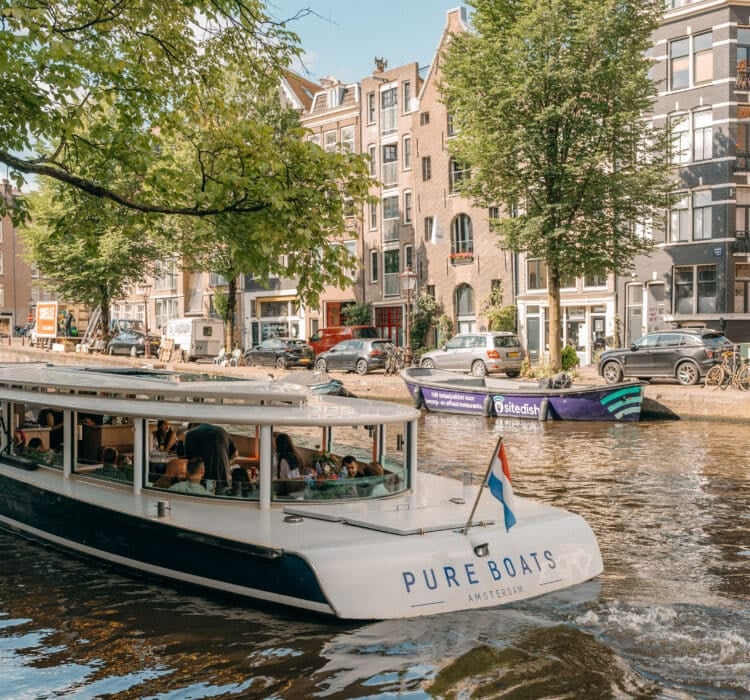
We offer an intimate alternative to crowded large-boat tours, providing the canal cruise experience that discerning visitors seek. Our semi-private cruise departing from Hotel De L’Europe showcases exactly what makes Amsterdam’s waterways special.
What sets our approach apart:
- Small groups of limited guests rather than shoulder-to-shoulder seating
- Captains who navigate narrow canals inaccessible to larger vessels
- Thoughtful storytelling rather than scripted audio guides
- Premium drinks and local Dutch refreshments included
- Historic vessels including the Stan Huygens, once Freddy Heineken’s personal favourite
- Fully electric boats for a quiet, sustainable experience
Whether you choose a 90-minute journey or our comprehensive two-hour Ultimate Canal Cruise, you’ll discover the Amsterdam that exists beyond the tourist trail. Book your cruise today and see the city as it was meant to be seen: from the water.