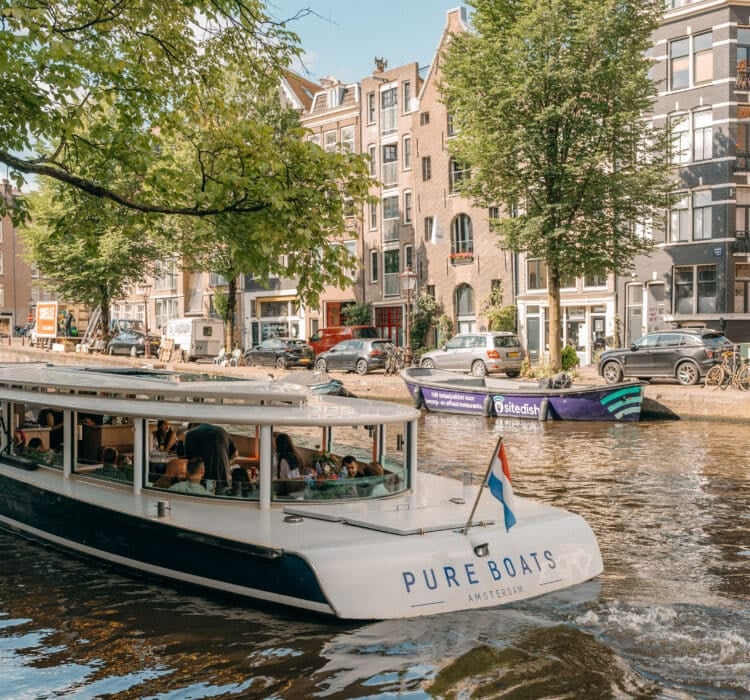
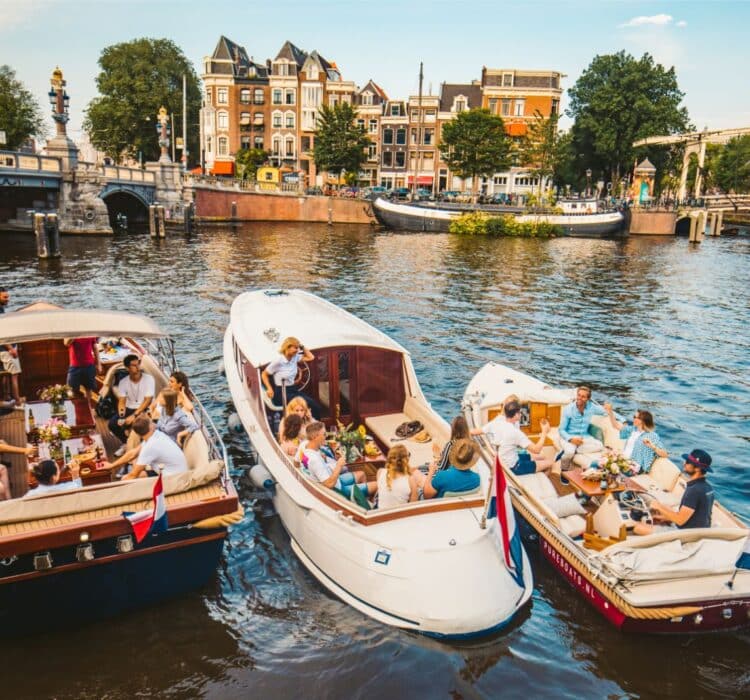
A 90-minute Amsterdam cruise covers between 15 and 20 major landmarks, including the Anne Frank House, Westerkerk, the Golden Bend, and the historic Seven Bridges, while also passing through quieter residential canals inaccessible to larger tour boats. This duration hits the sweet spot between a quick overview and a lengthy excursion, giving you enough time to absorb the city’s UNESCO-listed waterways without feeling rushed or restless.
The exact number of highlights depends on your route, the size of your vessel, and whether your captain takes detours through hidden passages. Below, we break down exactly which landmarks you can expect, which secret canals become accessible on smaller boats, how this compares to other cruise lengths, and when to book for the best experience.
Which iconic landmarks can you see from the water?
A 90-minute Amsterdam cruise typically passes 15 to 20 iconic landmarks, including the Anne Frank House, the Westerkerk tower, the Magere Brug (Skinny Bridge), the Golden Bend’s grand merchant houses, and the famous Seven Bridges viewpoint on Reguliersgracht. You also glide past the Hermitage Amsterdam, the Stopera opera house, and rows of 17th-century canal houses with their distinctive gabled facades.
The route through Amsterdam’s canal ring, a UNESCO World Heritage Site since 2010, reveals architecture spanning four centuries. Along the Herengracht, you encounter the so-called Golden Bend, where wealthy merchants built their most impressive residences during the Dutch Golden Age. These double-wide mansions, with their ornate cornices and manicured gardens, remain among the most expensive real estate in the Netherlands.
The Prinsengracht offers a different character entirely. Here, you pass houseboats, converted warehouses, and the unmistakable spire of the Westerkerk, where Rembrandt was buried in 1669. Just around the corner sits the Anne Frank House, instantly recognizable from the water by the queue that typically stretches along the canal.
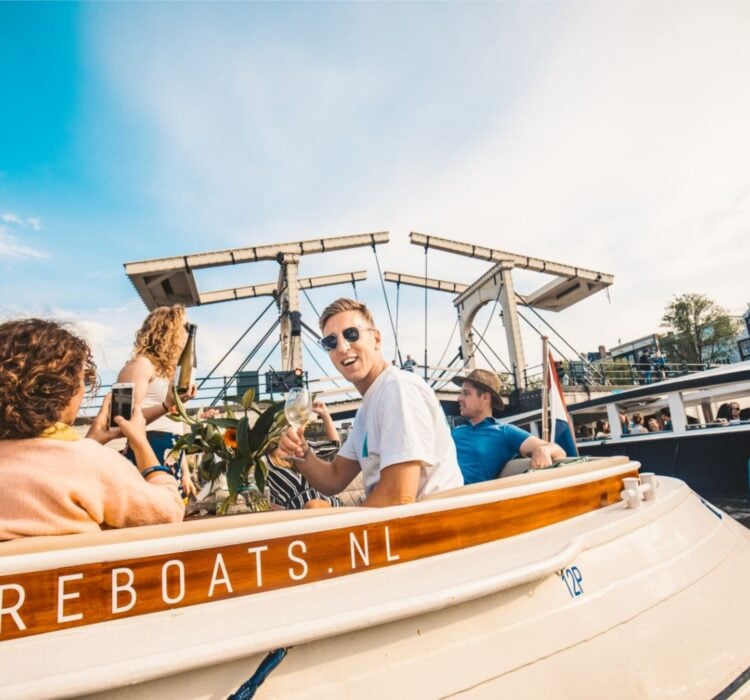
Heading toward the Amstel River, you encounter the Magere Brug, Amsterdam’s most photographed bridge. This white wooden drawbridge, illuminated by over 1,200 lights at night, has spanned the Amstel since 1691. From here, the skyline opens up, revealing the distinctive green dome of the Stopera and the classical facade of the Hermitage.
Perhaps the most Instagram-worthy moment comes at Reguliersgracht, where you can photograph seven consecutive bridges stretching into the distance, each framing the next in perfect alignment.
What hidden canals are only accessible by smaller boats?
Smaller boats can navigate narrow waterways like the Bloemgracht, Egelantiersgracht, and the intimate passages of the Jordaan neighbourhood, where low bridges and tight turns exclude the larger tour vessels entirely. These quieter canals reveal residential Amsterdam, complete with houseboats covered in flower pots, locals cycling along towpaths, and the kind of authentic neighbourhood atmosphere that mass tourism rarely reaches.
The difference comes down to physics. Large canal boats, some carrying 50 to 100 passengers, require deeper drafts and wider turning circles. They stick to the main arteries: the Herengracht, Prinsengracht, Keizersgracht, and the Amstel. Smaller vessels, particularly those designed for intimate groups, slip through passages where the bridges hang barely a metre above the water.
The Jordaan’s secret waterways
The Jordaan district, originally built as a working-class neighbourhood in the 17th century, contains some of Amsterdam’s most picturesque small canals. The Bloemgracht, once called the Herengracht of the Jordaan for its relative grandeur, features stepped gable houses reflected in still water. The Egelantiersgracht winds past hidden courtyards and the entrance to the Claes Claeszhofje, a secret garden courtyard dating from 1616.
These canals feel genuinely local. You pass residents tending window boxes, children playing on houseboats, and cafes with waterside terraces where regulars wave as boats drift past. It is a stark contrast to the busier main canals, where selfie sticks outnumber locals.
Eastern docklands and beyond
Some routes venture into the Eastern Docklands, where 19th-century warehouses have been converted into apartments and creative studios. The Entrepotdok, once the largest warehouse complex in Europe, stretches along the water with each building named after a different city. This area rarely appears on standard tourist itineraries, yet it offers striking examples of Amsterdam’s industrial heritage and contemporary urban renewal.
How does a 90-minute cruise compare to shorter or longer options?
A 90-minute cruise offers the ideal balance between comprehensive sightseeing and comfortable pacing, covering significantly more ground than a 60-minute tour while avoiding the potential fatigue of a two-hour excursion. Shorter cruises feel rushed and skip hidden canals, while longer options work best for special occasions like the Light Festival or private celebrations rather than standard sightseeing.
One-hour cruises typically stick to the main canal ring, hitting the major landmarks but leaving little time for detours or storytelling. You see the highlights, but the experience feels more like a checklist than an immersion. There is no time to linger at the Seven Bridges or explore the quieter Jordaan passages.
At 90 minutes, captains can take the scenic route. They navigate through narrow side canals, pause to point out architectural details, and share stories about why Amsterdam residents never close their curtains (a tradition rooted in Calvinist transparency and the practical need to prove you had nothing to hide from tax collectors). The extra 30 minutes transform a tour into an experience.
Two-hour cruises suit specific purposes. During the Amsterdam Light Festival, running from late November through January, the extended duration allows you to appreciate each illuminated artwork properly. For private celebrations or corporate gatherings, the longer format provides space for conversation, toasts, and unhurried enjoyment. For standard sightseeing, however, 90 minutes delivers more value per minute than either shorter or longer alternatives.
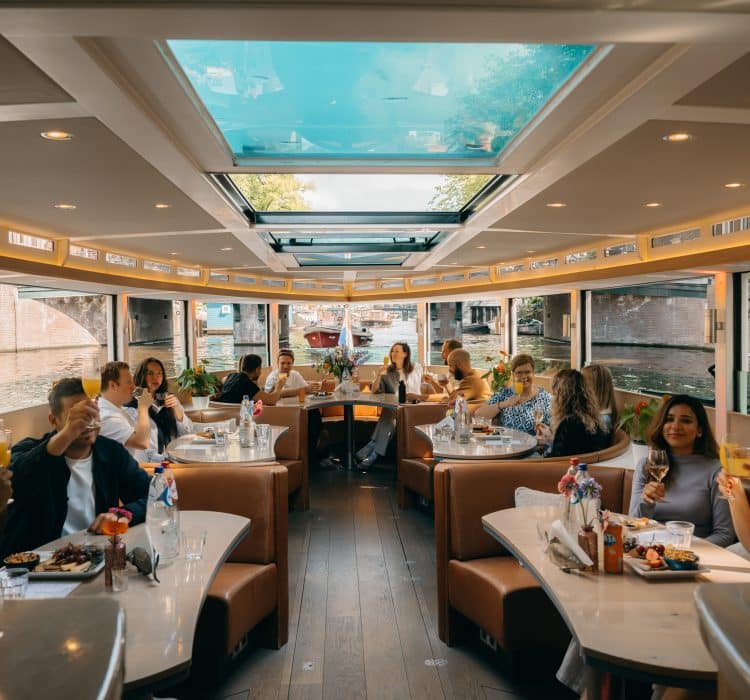
The 90-minute format also typically includes extras that one-hour cruises omit. Complimentary drinks, Dutch snacks, and more personalised commentary become possible when the schedule is not squeezed to the absolute minimum.
What’s the best time of day for a 90-minute canal cruise?
Late afternoon, roughly 90 minutes before sunset, offers the best lighting and atmosphere for a 90-minute Amsterdam cruise. The golden hour casts warm light across the canal houses, crowds thin as day-trippers head home, and you may catch the transition into early evening when cafe terraces fill and the city takes on a more relaxed character.
Morning cruises, particularly before 11:00, appeal to photographers seeking mirror-still water and minimal boat traffic. The canals reflect the gabled houses with postcard clarity, and you often have entire stretches of water to yourself. However, the light tends toward flat and cool, lacking the drama of later hours.
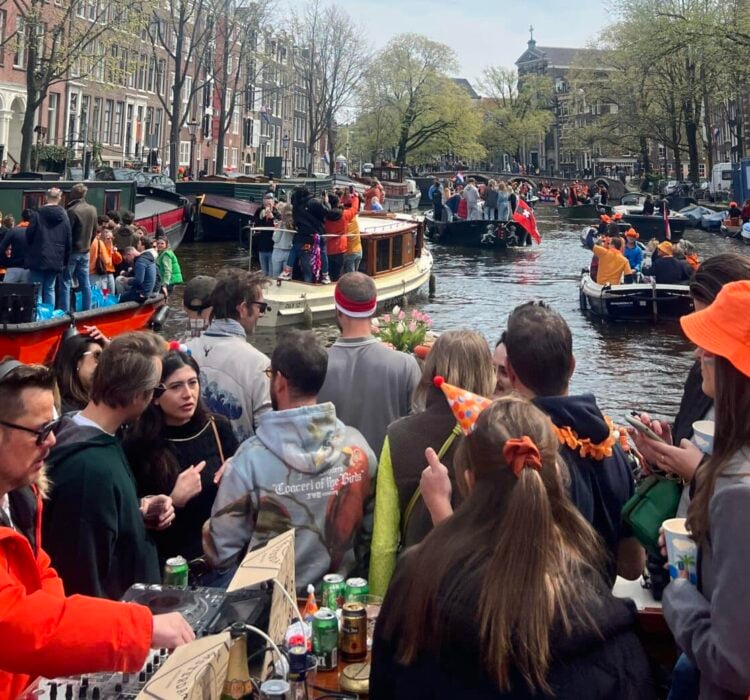
Midday cruises work well for families or visitors with limited schedules, though summer months bring peak crowds on the water. You will share the canals with other tour boats, delivery barges, and recreational vessels. The experience remains enjoyable, but the sense of exclusivity diminishes.
Evening cruises during winter months coincide with the Amsterdam Light Festival, transforming the canals into an outdoor gallery of illuminated artworks. Artists from around the world create installations specifically for the waterways, and viewing them from a heated boat with mulled wine in hand has become one of Amsterdam’s signature winter experiences.
For special occasions, sunset cruises create memorable moments. Watching the sky change colour above the Westerkerk spire, then seeing the city lights flicker on along the Herengracht, provides a natural narrative arc to your time on the water.
How Pure Boats helps you experience Amsterdam’s canals
We designed our semi-private cruise specifically for travellers who want the comprehensive 90-minute experience without the crowds and scripted commentary of standard canal tours. Our approach combines historic vessels, intimate group sizes, and local expertise to create something genuinely different.
- Small groups of 6 to 24 guests maximum, ensuring space, comfort, and genuine conversation
- Access to narrow canals where larger tour boats cannot navigate
- Captains who customise routes based on what you want to see, not a fixed script
- Two premium drinks and Dutch snacks included throughout your journey
- Departures from Hotel De L’Europe, one of Amsterdam’s most prestigious waterfront locations
- Fully electric, restored classic boats designed by our in-house superyacht team
Our Stan Huygens, once the personal favourite vessel of Freddy Heineken, who chartered it weekly, offers the most refined way to experience those 15 to 20 landmarks we mentioned earlier. From €62.50 per person for shared seating or €250 for a private cabin, you can book directly through our website and secure your preferred time slot before they fill.