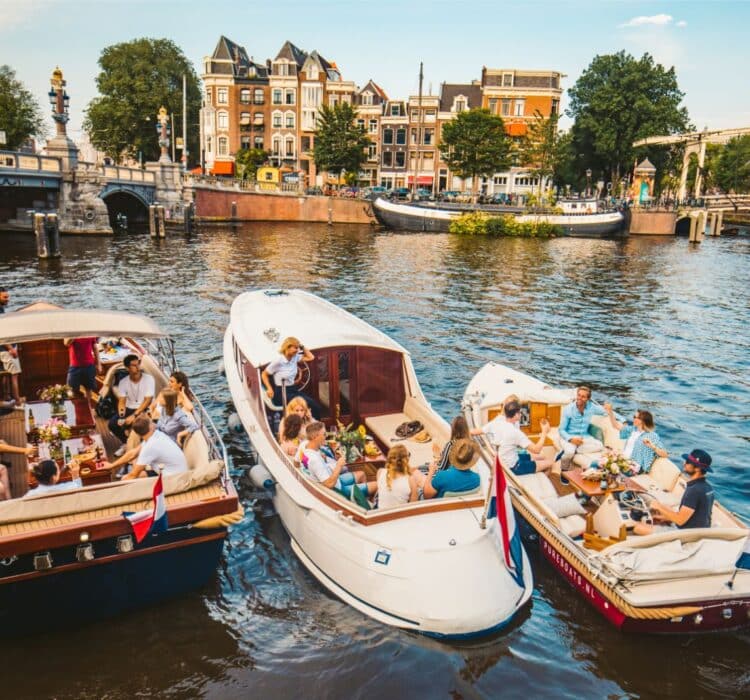
An Amsterdam canal tour reveals a living tapestry of 17th century merchant houses, historic bridges, hidden garden courtyards, and UNESCO World Heritage architecture that stretches across multiple distinct neighbourhoods. From the water, you see the city exactly as it was designed to be experienced: facades built to impress arriving visitors, secret houseboats tucked into quiet corners, and architectural details invisible from street level.
The canals connect Amsterdam’s most celebrated landmarks with its best kept secrets, offering perspectives that walking tours simply cannot match. Below, we answer the most common questions about what awaits you on the water.
Which Amsterdam neighbourhoods can you explore by canal boat?
A canal tour can take you through six to eight distinct Amsterdam neighbourhoods, including the historic Centrum, the elegant Grachtengordel (canal ring), the artistic Jordaan, the maritime Eastern Docklands, and the stately Museum Quarter waterways. Each neighbourhood reveals a different chapter of Amsterdam’s 800 year story.
The Grachtengordel forms the heart of most canal routes. This crescent of concentric waterways, including Herengracht, Keizersgracht, and Prinsengracht, was constructed during the Dutch Golden Age to house wealthy merchants and their trading empires. Gliding along these canals, you pass narrow gabled houses with ornate facades, each one competing for attention with its neighbours.
The Jordaan, once a working class district, now charms visitors with its intimate scale. Smaller boats can navigate the narrow waterways here, passing converted warehouses, floating flower markets, and tiny bridges that larger vessels cannot reach. This neighbourhood feels like stepping back in time, with houseboats lining the banks and locals cycling along cobblestone paths.
Beyond the centre, the Eastern Docklands reveal Amsterdam’s maritime heritage. Former shipping warehouses have transformed into striking modern architecture, and the contrast between 17th century canal houses and contemporary design creates a visual narrative of the city’s evolution.
What famous landmarks are visible from the water?
Amsterdam’s most photographed landmarks are visible from canal level, including the Anne Frank House, the Westerkerk tower, the Skinny Bridge (Magere Brug), the Hermitage Amsterdam, the Royal Theatre Carré, and the distinctive facades along the Golden Bend. Many of these structures were specifically designed to be admired from the water.
The Westerkerk, with its distinctive blue crown tower, dominates the Prinsengracht skyline. From a boat, you can appreciate its full height and the way it anchors the surrounding neighbourhood. Nearby, the Anne Frank House sits quietly on the canal, its significance marked only by the queues that form along the waterfront.
The Golden Bend on Herengracht represented Amsterdam’s most prestigious address during the Golden Age. Here, the wealthiest merchants built double wide houses with elaborate sandstone facades, gardens extending to the rear, and coach houses accessible by water. From your boat, these grand residences reveal their intended splendour, their reflections shimmering in the canal below.
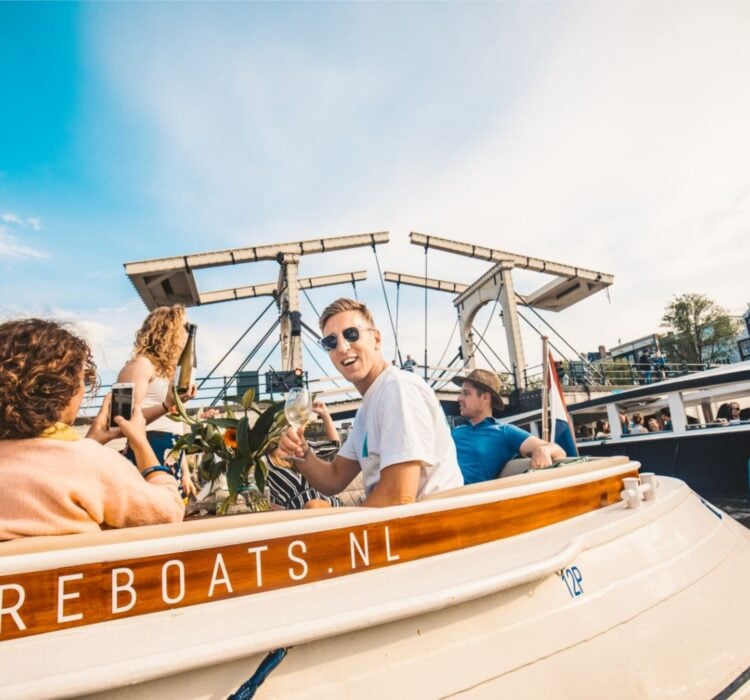
The Magere Brug, or Skinny Bridge, offers one of Amsterdam’s most romantic views, especially when illuminated by 1,200 lights after dark. Passing beneath this white wooden drawbridge connects you to a tradition stretching back to 1691.
What hidden spots do canal tours reveal that you cannot see on foot?
Canal tours reveal secret garden courtyards behind merchant houses, underwater foundations showing how Amsterdam was built on wooden piles, hidden houseboats in residential stretches, and architectural details like hoisting beams and gable stones that remain invisible from street level. The water offers access to Amsterdam’s private side.
Perhaps most surprising are the hofjes, hidden courtyard gardens tucked behind unassuming canal house entrances. From the water, you occasionally glimpse these green sanctuaries through gaps between buildings, secret oases that most pedestrians walk past without knowing they exist.
The houseboats themselves tell stories. Amsterdam has approximately 2,500 registered houseboats, and from the canal, you see how residents have transformed these floating homes into gardens, studios, and family residences. Some boats have been moored in the same spot for generations, their owners maintaining traditions that date back decades.
Look up as you cruise, and you will notice hoisting beams extending from nearly every historic building. These practical devices, still used today, allowed merchants to lift goods directly from boats into upper floor storage rooms. The steep, narrow staircases inside these houses made traditional moving impossible, so furniture and belongings still enter through windows, hauled up by these same beams.
Gable stones, decorative plaques set into building facades, served as addresses before house numbers existed. From the water, you can spot these carved images depicting trades, family crests, or moral messages. A boat carrying barrels might indicate a former brewery; a sheep suggests a wool merchant once lived there.
How does the Amsterdam canal experience change by season?
The Amsterdam canal experience transforms dramatically across seasons: spring brings cherry blossoms and tulips along the banks, summer offers long golden evenings and outdoor terrace views, autumn cloaks the canals in amber and copper foliage, and winter features the Amsterdam Light Festival with illuminated art installations spanning the waterways.
Spring and Summer on the Canals
Spring arrives with an explosion of colour. Cherry trees along certain canal stretches create pink canopies, while tulips appear in window boxes and floating flower markets. The light takes on a soft quality that photographers prize, and the city emerges from winter with renewed energy.
Summer extends daylight until nearly 10pm, allowing evening cruises to capture the golden hour glow reflecting off canal house windows. Locals gather on bridges and terraces, creating a festive atmosphere. The water itself becomes busier, but also more alive with the rhythm of Amsterdam’s social life.
Autumn and Winter Magic
Autumn transforms the canal banks into corridors of gold and russet. Fallen leaves drift on the water’s surface, and the lower sun creates dramatic shadows across historic facades. This season offers perhaps the most atmospheric cruising, with fewer crowds and a contemplative mood.
Winter brings the Amsterdam Light Festival, typically running from late November through mid January. During this period, international artists install illuminated sculptures and projections along a designated water route. Cruising through these installations, with mulled wine in hand, creates an experience unique to the colder months. The canal houses, lit warmly from within, frame these contemporary artworks against centuries of history.
What makes Amsterdam’s canal ring a UNESCO World Heritage Site?
Amsterdam’s 17th century canal ring earned UNESCO World Heritage status in 2010 because it represents the world’s most ambitious and successful urban planning project of its era. The concentric canal system, innovative engineering solutions, and unified architectural style created a model that influenced city planning across Europe and beyond.
The canal ring was not organic growth but deliberate design. City planners created the Grachtengordel between 1613 and 1662, expanding Amsterdam’s footprint fourfold to accommodate the wealth flowing in from global trade. They solved seemingly impossible engineering challenges, building an entire city on waterlogged land using millions of wooden piles driven deep into stable sand layers.
The architectural unity you see from the water resulted from strict building codes. Houses could only be so wide, facades had to follow certain styles, and the overall effect had to convey prosperity and order. Yet within these constraints, individual expression flourished through gable shapes, decorative elements, and subtle variations that reward careful observation.
UNESCO specifically cited the canal ring’s influence on urban planning worldwide. Cities from St. Petersburg to Jakarta adopted Amsterdam’s approach of using water for transportation, drainage, and defence while creating beautiful living environments. When you cruise these canals, you travel through a template that shaped how humans build cities near water.
How Pure Boats helps you experience Amsterdam’s canals
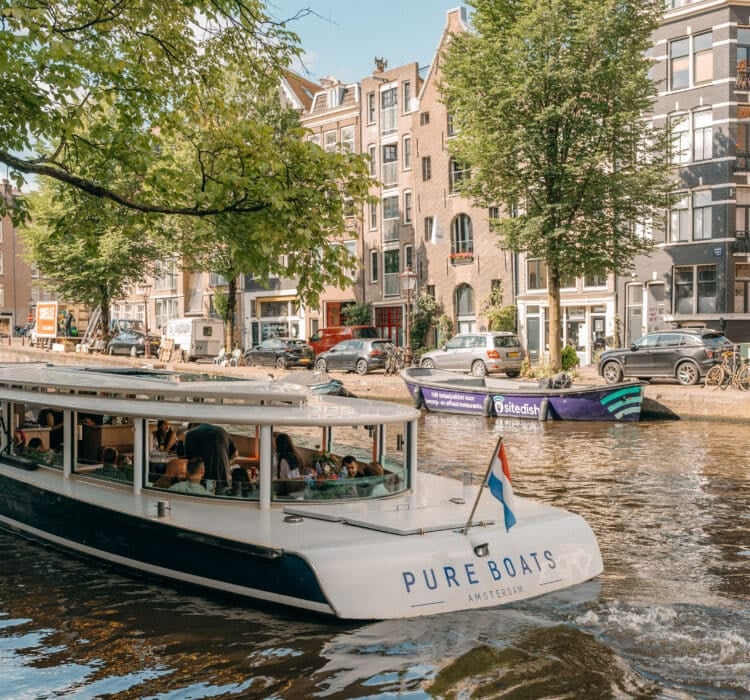
We designed our canal experiences specifically to reveal the Amsterdam that most visitors miss. Our smaller, fully electric boats access narrow waterways where larger tour vessels cannot navigate, bringing you closer to hidden courtyards, intimate neighbourhood stretches, and architectural details that deserve unhurried attention.
What sets our approach apart:
- Captains who customize routes based on what you want to see, with genuine conversation replacing scripted commentary
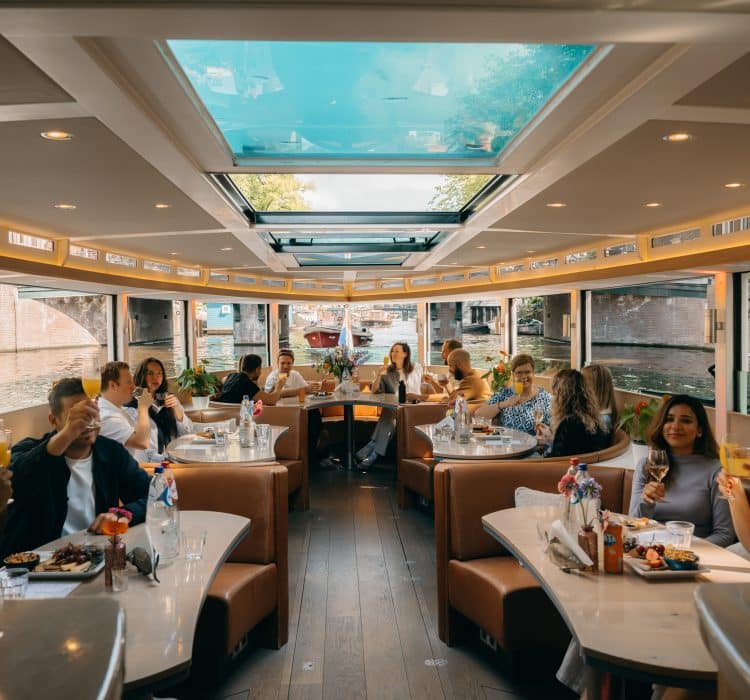
- Small group sizes of 6 to 24 guests, creating the atmosphere of cruising aboard your own private boat
- Locally sourced refreshments, from Dutch craft beers to farmhouse cheeses, reflecting our commitment to authentic Amsterdam
- Fully electric, restored classic boats that let you enjoy the canals in near silence while leaving zero emissions behind
Our semi-private premium cruise from Hotel De L’Europe offers an especially refined experience aboard the Stan Huygens, the vessel once chartered weekly by Freddy Heineken himself. With limited guests, premium drinks, and the option for private booth seating, this 90 minute journey captures everything that makes Amsterdam’s canals extraordinary.
Book your cruise today and discover why the view from the water stays with guests long after they return home.