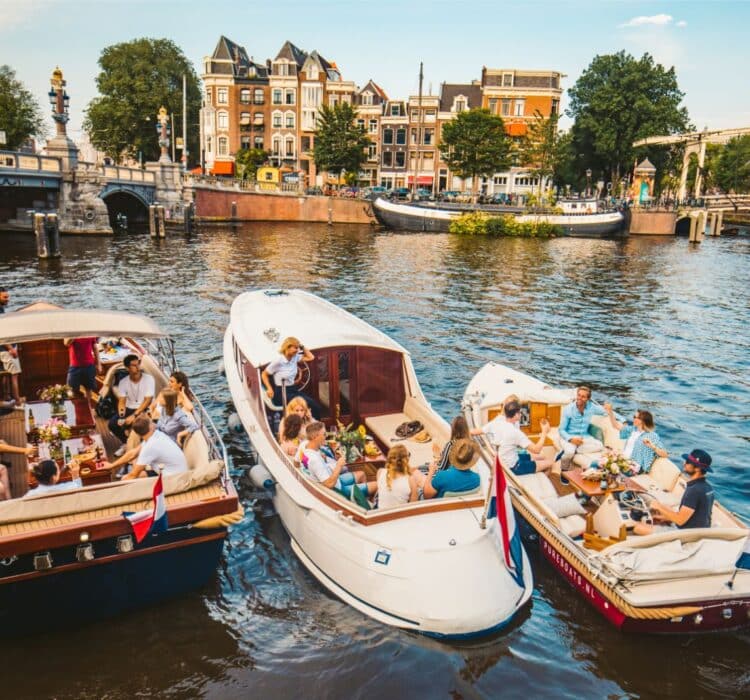
Amsterdam canal cruise guides share stories spanning Golden Age history, architectural secrets, famous residents, and local traditions that bring the city’s waterways to life. From tales of wealthy merchants and hidden churches to quirky facts about why Dutch homes lean forward, these narratives transform a simple boat tour into an immersive journey through centuries of Amsterdam history. Below, we answer the most common questions about what you’ll hear during an Amsterdam canal cruise.
What types of stories do Amsterdam canal cruise guides typically share?
Canal cruise guides weave together four main story categories: Golden Age history, architectural tales, famous resident anecdotes, and local Amsterdam traditions. They blend historical facts with entertaining narratives, explaining how Amsterdam transformed from a modest fishing village into one of the world’s most powerful trading centers during the 17th century.
Expect to hear about the wealthy merchants who built the grand canal houses, the hidden Catholic churches that operated secretly during the Reformation, and the ingenious engineering that created this city on water. Guides often share stories about the Dutch East India Company, which once controlled global trade routes and brought immense wealth to the city’s residents.
The best storytellers connect these historical threads to what you’re seeing in real time. As you glide past a particular building, your guide might explain how spices from Indonesia funded its construction or reveal that its basement once served as a secret meeting place. This approach makes history feel immediate and personal rather than distant and academic.
Why do guides talk about Amsterdam’s unique architecture during canal tours?
Guides focus on architecture because Amsterdam’s canal houses tell fascinating stories through their design. The narrow facades, leaning structures, hoisting beams, and ornate gables each have practical origins that surprise most visitors. Historical tax laws based on facade width explain why buildings are so slender, while the forward lean was intentionally designed to help hoist furniture and goods without damaging walls.
The gables at the top of canal houses served as status symbols and business advertisements. Merchants displayed carved images representing their trade, from grain sheaves to ships, helping illiterate customers identify the right warehouse. Step gables, neck gables, and bell gables each belong to different periods, allowing knowledgeable guides to date buildings at a glance.
During a private Amsterdam canal cruise, guides can slow down to examine particularly interesting examples and explain the subtle differences between a wealthy merchant’s home and a more modest tradesperson’s dwelling. The width of the building, the number of windows, and the quality of the stonework all indicated social standing in ways that remain visible today.
What local secrets and quirky facts do canal boat captains reveal?
Canal boat captains share cultural insights that rarely appear in guidebooks, from explaining why Amsterdam residents traditionally leave their curtains open to describing the hidden communities living on houseboats. These local secrets give visitors a genuine understanding of Dutch daily life and social customs that might otherwise seem puzzling.
The open-curtain tradition, for instance, dates back to Calvinist beliefs about having nothing to hide, though modern explanations also cite the desire to maximize natural light in narrow homes. Captains might point out secret gardens tucked behind canal houses, invisible from the street but visible from the water, where residents have created private green spaces for centuries.
Houseboat communities have their own fascinating stories. Some vessels have been moored in the same spot for generations, with waiting lists stretching years for prime locations. Captains often know which houseboats belonged to artists, which ones survived the war, and which ones were converted from working vessels. On our private Amsterdam boat tours, we love sharing these neighborhood details that larger tour companies simply cannot offer.
How does live commentary differ from audio guides on Amsterdam canal cruises?
Live commentary creates an interactive experience that pre-recorded audio guides cannot match. A knowledgeable captain can answer questions on the spot, adapt the route based on passenger interests, share personal anecdotes, and point out spontaneous moments happening along the canals. This real-time flexibility transforms a scripted tour into a genuine conversation.
When something unexpected occurs, such as a heron landing on a houseboat or a wedding party emerging from a canal-side venue, live guides can incorporate these moments into the narrative. They notice what captures your attention and expand on those topics. Audio guides, by contrast, follow predetermined scripts that cannot respond to the actual conditions of your journey.
The personal connection matters enormously. Our captains have their own favorite stories and customized routes developed over years of sharing Amsterdam with visitors. They might take an unexpected detour down a quiet canal because they know it offers the best view of a particular building, or pause to explain something a guest has noticed. This conversational approach makes each Amsterdam canal cruise feel unique rather than identical to every other tour that day.
What famous people and historical figures feature in canal cruise stories?
Canal cruise stories frequently mention Rembrandt, Anne Frank, Freddy Heineken, and various Dutch royals as guides pass locations connected to their lives. These narratives link specific canal-side buildings and neighborhoods to Amsterdam’s rich cultural heritage, making abstract history tangible through physical places you can see.
Passing Rembrandt’s former home, guides explain how the artist’s fortunes rose and fell, eventually forcing him to sell his grand canal house. The Anne Frank House prompts discussions about Amsterdam during World War II and the Dutch resistance. Freddy Heineken’s story connects to both brewing history and the famous kidnapping that shocked the nation.
We take particular pride in sailing aboard the Stan Huygens, the iconic yacht that Freddy Heineken himself chartered weekly for his own canal journeys. This connection to Dutch celebrity history adds an extra layer of authenticity to our Ultimate Canal Cruise experience in Amsterdam, where guests can experience the same vessel that once hosted one of Amsterdam’s most famous residents.
What makes the stories on smaller canal boats different from large tour vessels?
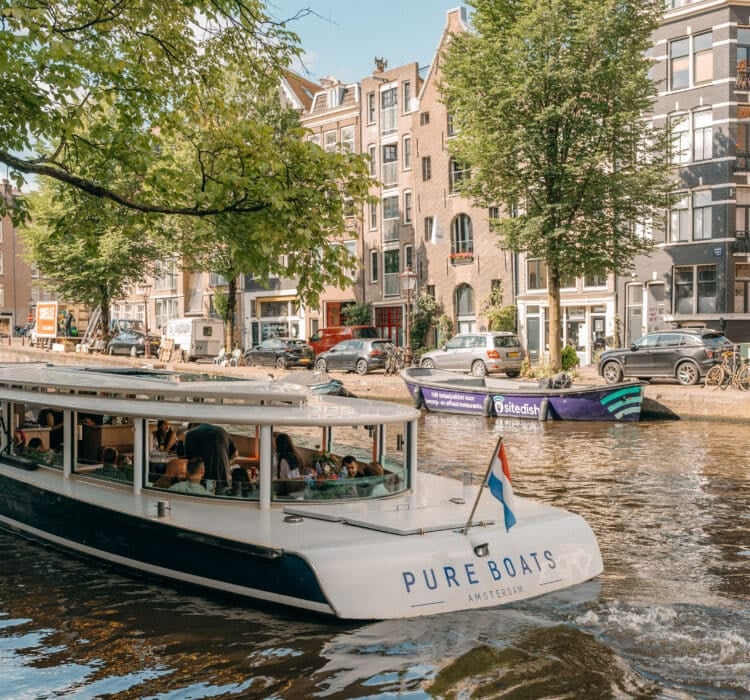
Smaller canal boats access narrow waterways where larger vessels cannot navigate, revealing hidden corners of Amsterdam that most tourists never see. The intimate setting allows for conversational exchanges rather than one-way announcements, and captains can share deeper local knowledge when connecting with fewer guests rather than addressing crowds.
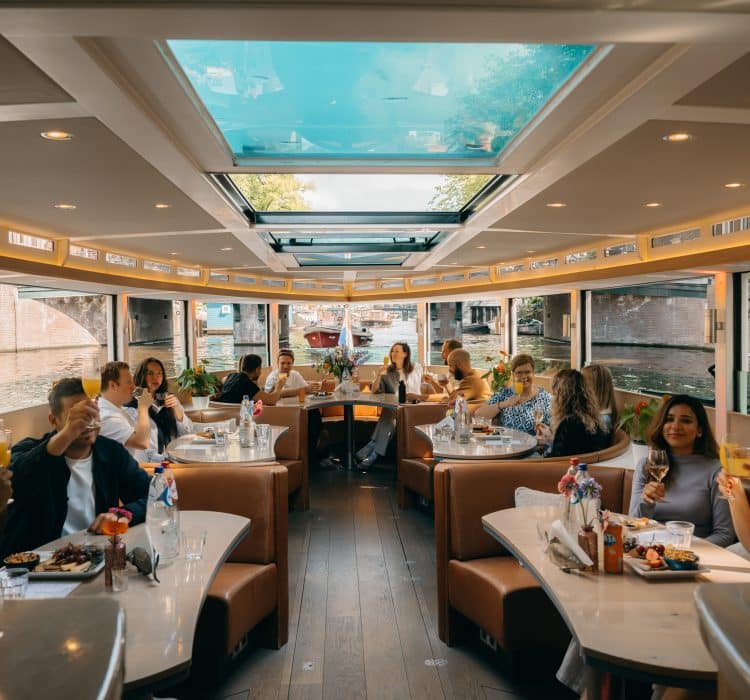
On a private Amsterdam canal cruise with a small group, the storytelling becomes genuinely personal. Captains can gauge interests and adjust their commentary accordingly, spending more time on architecture for design enthusiasts or focusing on culinary history for food lovers. This flexibility simply isn’t possible when addressing dozens of passengers simultaneously.
The route possibilities expand dramatically on smaller boats. We sail through the peaceful canals of the Jordaan, scenic Prinseneiland, and Amsterdam’s oldest districts, areas where large tour boats cannot physically fit. These quieter waterways often hold the most interesting stories, from former industrial sites to hidden residential communities that have barely changed in centuries.
The stories shared during an Amsterdam canal cruise transform a simple boat ride into an unforgettable journey through the city’s past and present. Whether you’re curious about Golden Age merchants, architectural quirks, or local customs, knowledgeable guides bring these waterways to life. For the most immersive experience, consider our Ultimate Canal Cruise, where live commentary, personalized routes, and intimate settings combine to create what many guests describe as the highlight of their Amsterdam visit.