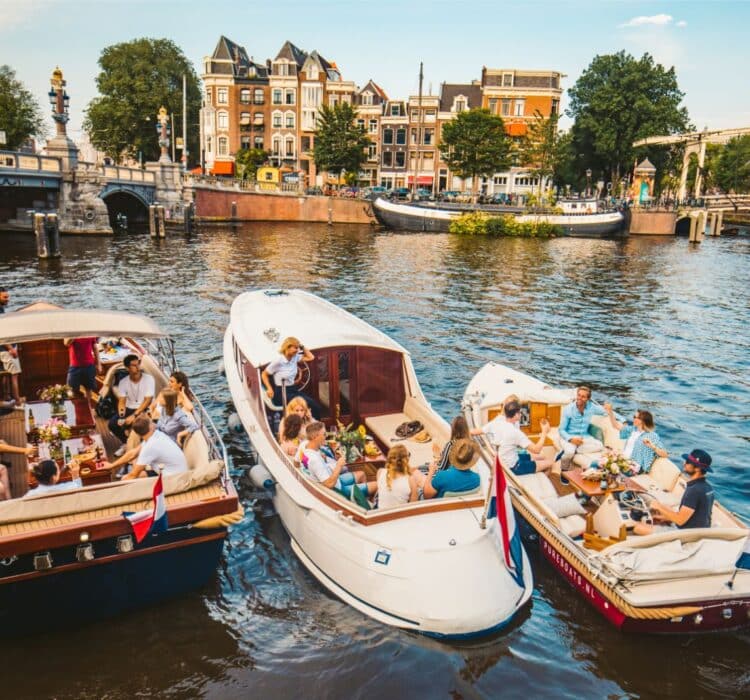
The Jordaan canal district is one of Amsterdam’s most charming and beloved neighbourhoods, famous for its narrow streets, picturesque waterways, and authentic Dutch atmosphere. Originally built as a working-class area during the 17th century, it has transformed into an upscale destination filled with independent boutiques, cosy cafés, and historic canal houses. This guide answers the most common questions about exploring this iconic Amsterdam neighbourhood, including why an Amsterdam canal cruise through its intimate waterways offers the best perspective.
What is the Jordaan canal district and why is it famous?
The Jordaan is a historic neighbourhood in Amsterdam celebrated for its intimate canals, 17th-century architecture, and vibrant local culture. It began as a working-class district built to house labourers and immigrants during Amsterdam’s Golden Age, and has since evolved into one of the city’s most desirable and visited areas, known for its artistic heritage and welcoming atmosphere.
What makes the Jordaan distinct from other Amsterdam neighbourhoods is its sense of intimacy. The streets are narrower, the canals more peaceful, and the pace of life noticeably slower than in the busier tourist areas nearby. You’ll find family-run shops that have operated for generations alongside trendy galleries and vintage stores. The canal houses here tend to be smaller and more modest than those along the grand Herengracht, giving the area a more approachable, residential feel.
The neighbourhood’s fame also stems from its cultural significance. It has long been associated with artists, musicians, and free thinkers. Traditional Dutch folk songs called “Jordaan songs” originated here, and the area maintains strong ties to Amsterdam’s creative community. Visitors come seeking that authentic Amsterdam experience, where locals still chat with neighbours from their doorsteps and corner cafés serve as genuine community gathering spots.
Where exactly is the Jordaan located in Amsterdam?
The Jordaan sits just west of Amsterdam’s city centre, bordered by four historic canals: the Prinsengracht to the east, the Brouwersgracht to the north, the Singelgracht to the west, and the Leidsegracht to the south. This positioning places it immediately adjacent to the famous Canal Ring while maintaining its own distinct character and atmosphere.
Finding your way to the Jordaan is straightforward. If you’re standing at the Anne Frank House on the Prinsengracht, you’re already at the neighbourhood’s eastern edge. Cross any of the small bridges heading west and you’ll find yourself in the heart of the Jordaan within moments. The Westerkerk church, with its distinctive blue-crowned tower, serves as an excellent landmark for orientation.
Despite being so close to Amsterdam’s busiest areas, the Jordaan feels remarkably separate from the tourist crowds. Step away from the main thoroughfares and you’ll discover quiet residential streets where bicycles lean against centuries-old façades and window boxes overflow with flowers. This accessibility combined with tranquillity is precisely why the neighbourhood remains so popular with visitors seeking a more genuine Amsterdam experience.
What can you see and do in the Jordaan canal district?
The Jordaan offers a rich variety of attractions and experiences, from historic landmarks to hidden courtyards. Key sights include the area around the Anne Frank House, the towering Westerkerk church, charming hofjes (secret courtyard gardens), independent art galleries, antique shops, and the beloved Noordermarkt, which hosts organic farmers’ markets and flea markets throughout the week.
The neighbourhood’s café culture deserves special attention. Traditional brown bars, named for their dark wooden interiors stained by centuries of tobacco smoke, are perfect spots to rest and watch local life unfold. Order a Dutch beer or jenever (Dutch gin) and settle in for an afternoon of people-watching. For food lovers, the Jordaan offers everything from traditional Dutch pancake houses to modern bistros serving locally sourced cuisine.
Much of the Jordaan’s appeal lies in aimless wandering. The streets reward curiosity, with unexpected discoveries around every corner:
- Hidden hofjes accessible through unmarked doorways
- Tiny specialist shops selling everything from vintage records to handmade cheese
- Street art and architectural details on canal house façades
- Houseboats decorated with flower gardens and quirky ornaments
- Small galleries showcasing local artists
The Noordermarkt square comes alive on Saturdays with an organic farmers’ market and on Mondays with a textile and antique market. These weekly events capture the neighbourhood’s community spirit perfectly.
Why is exploring the Jordaan by boat the best way to experience it?
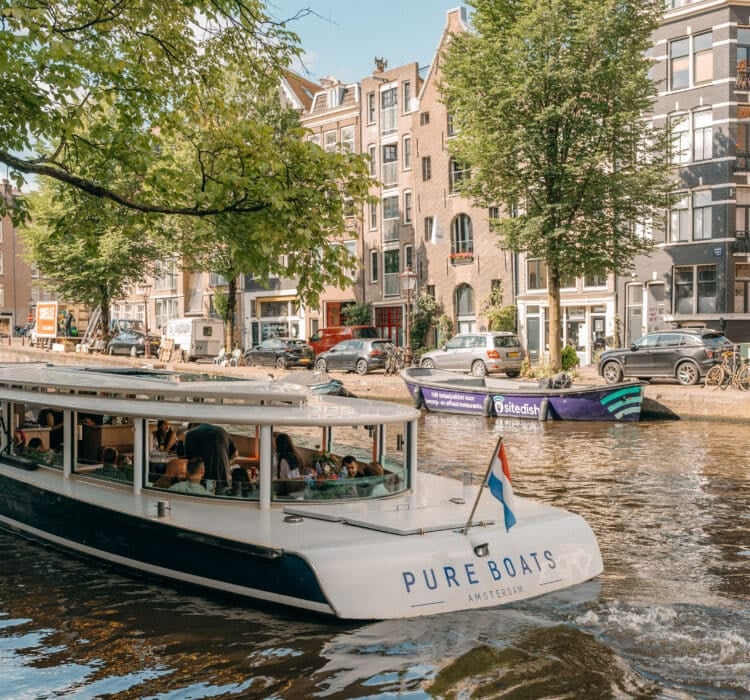
Viewing the Jordaan from the water reveals perspectives impossible to appreciate from the streets. The neighbourhood’s narrow, historic canals offer intimate glimpses of 17th-century canal houses, hidden gardens, and charming houseboats that remain invisible to pedestrians. Smaller boats can navigate these tight waterways where larger tour vessels simply cannot fit.
From a boat, you’ll notice architectural details you’d miss while walking: the distinctive gabled façades that tell stories of merchant wealth, the pulleys still mounted at rooftops (once used to hoist furniture through windows too narrow for staircases), and the subtle tilts of buildings settling into Amsterdam’s soft ground over centuries. The water level provides a unique vantage point that brings you eye to eye with houseboat residents tending their floating gardens.
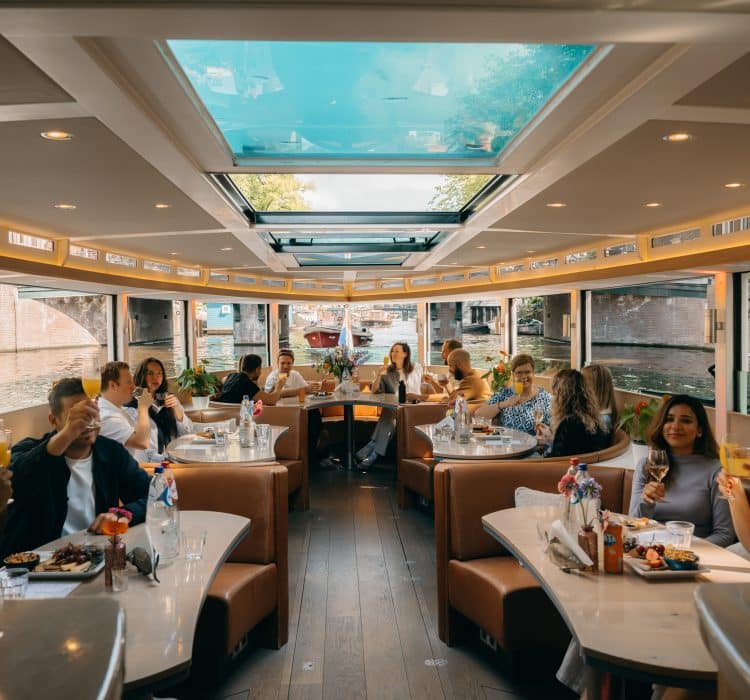
An Amsterdam canal cruise through the Jordaan captures the unhurried, authentic spirit the neighbourhood represents. We sail through these intimate waterways on our Ultimate Canal Cruise, where our experienced captains share stories about why Amsterdammers never close their curtains and point out hidden corners only visible from the water. The two-hour journey aboard our fully electric boats takes you through the Jordaan’s peaceful canals, past the Anne Frank House, and into areas where the large tour boats cannot venture.
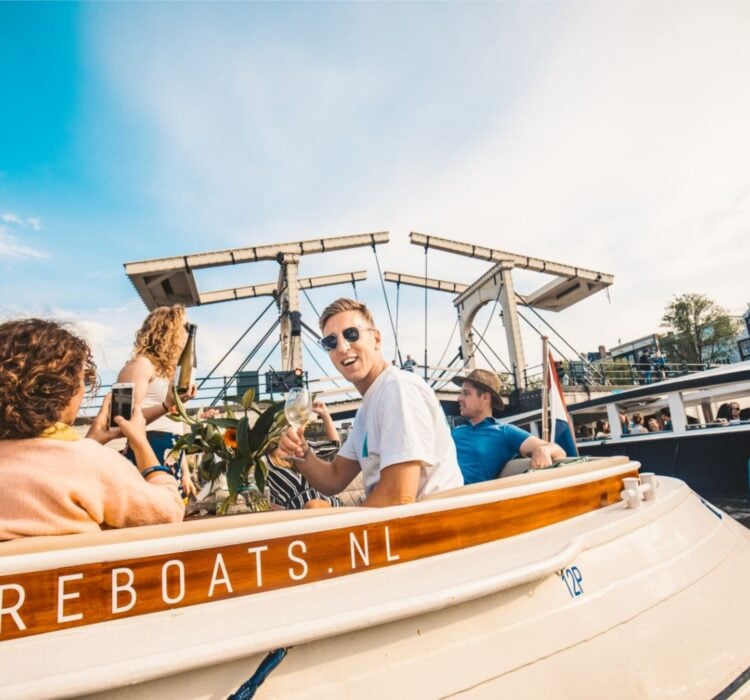
The experience of gliding silently past centuries-old façades while enjoying Dutch farmhouse cheese and local craft beer perfectly embodies what makes the Jordaan special: quality over quantity, connection over consumption, and genuine moments over manufactured experiences.
What is the history behind the Jordaan’s famous canals?
The Jordaan’s canal system was developed during Amsterdam’s Golden Age in the early 1600s as part of the city’s ambitious expansion. Unlike the grand Canal Ring built for wealthy merchants, the Jordaan’s waterways served practical purposes for the working-class residents, providing transportation routes for goods and access to small workshops and tanneries that lined the banks.
The neighbourhood was originally built for workers, artisans, and immigrants, including French Huguenot refugees fleeing religious persecution. This diverse population gave the Jordaan its distinctive character, a mix of cultures and trades that shaped the area’s identity for centuries. The canals functioned as essential infrastructure, allowing materials to flow in and finished products to flow out of the countless small businesses operating here.
Over time, the Jordaan’s character evolved while its canal infrastructure remained remarkably intact. The industrial workshops gave way to residences, and the working-class population gradually shifted as the neighbourhood gentrified during the late 20th century. Today, the canals form part of the UNESCO World Heritage-listed Amsterdam Canal Ring, recognised for their outstanding universal value as an example of large-scale urban planning.
This preserved waterway network connects the Jordaan’s past to its present. The same canals that once carried cargo now carry visitors seeking to understand Amsterdam’s history. The bridges, the quay walls, and the canal houses all tell stories of the people who built and lived in this remarkable neighbourhood over four centuries.
Whether you explore the Jordaan on foot or by water, understanding its canal history enriches the experience. These waterways weren’t designed for beauty alone; they were working arteries of a thriving community. That practical heritage, combined with centuries of organic development, gives the neighbourhood its enduring charm and makes it one of Amsterdam’s most treasured districts to explore. For those wanting to experience the Jordaan’s canals firsthand, the Ultimate Canal Cruise offers an intimate small-group tour through these historic waterways.