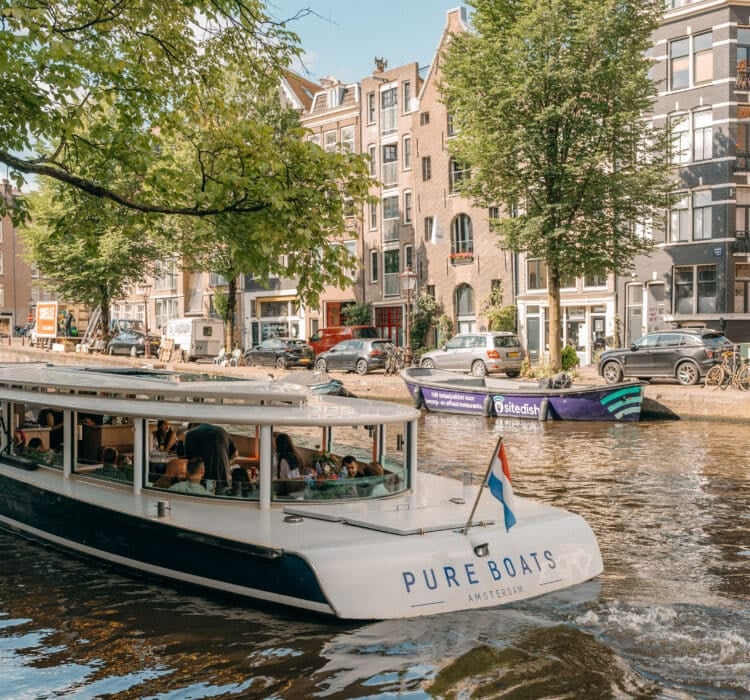
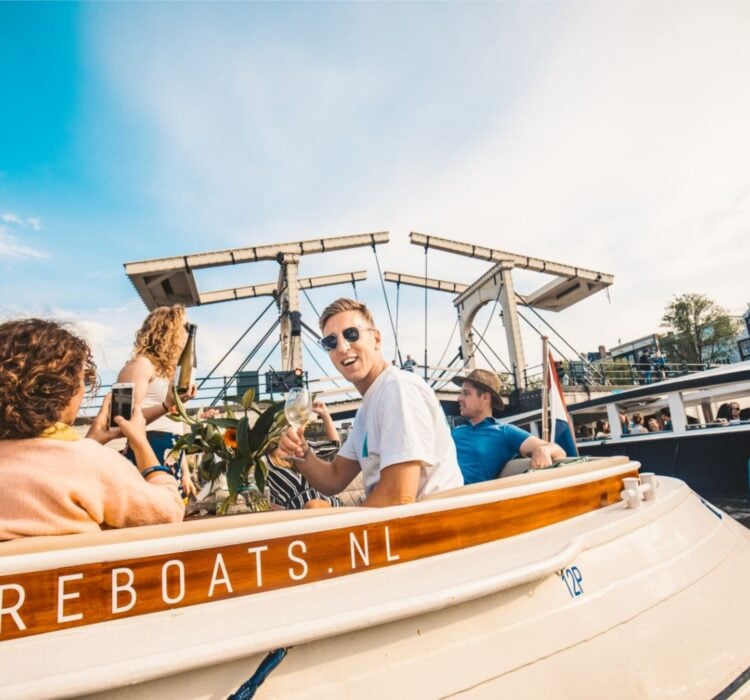
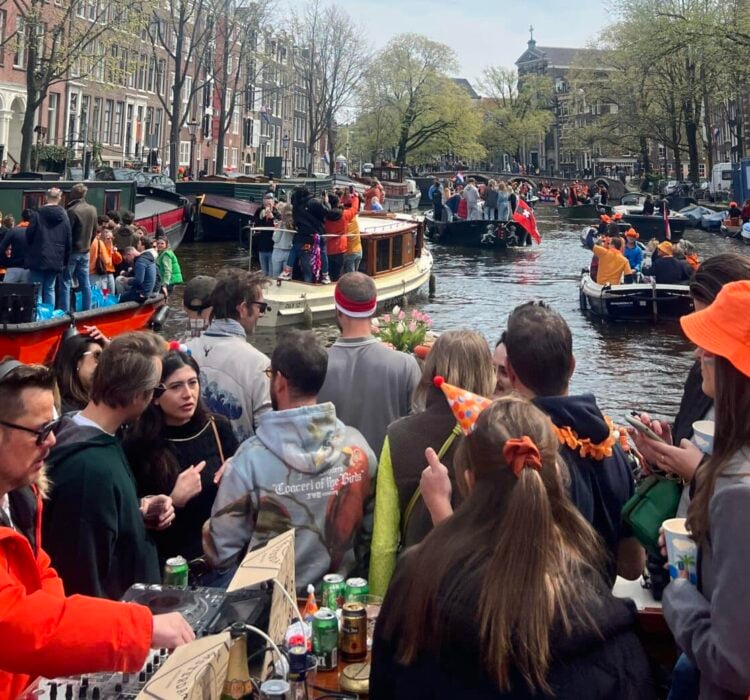
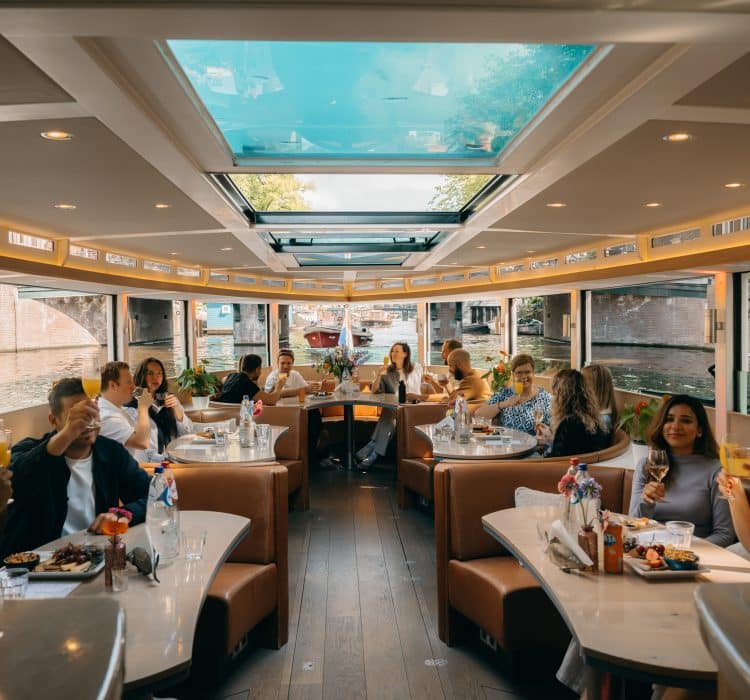
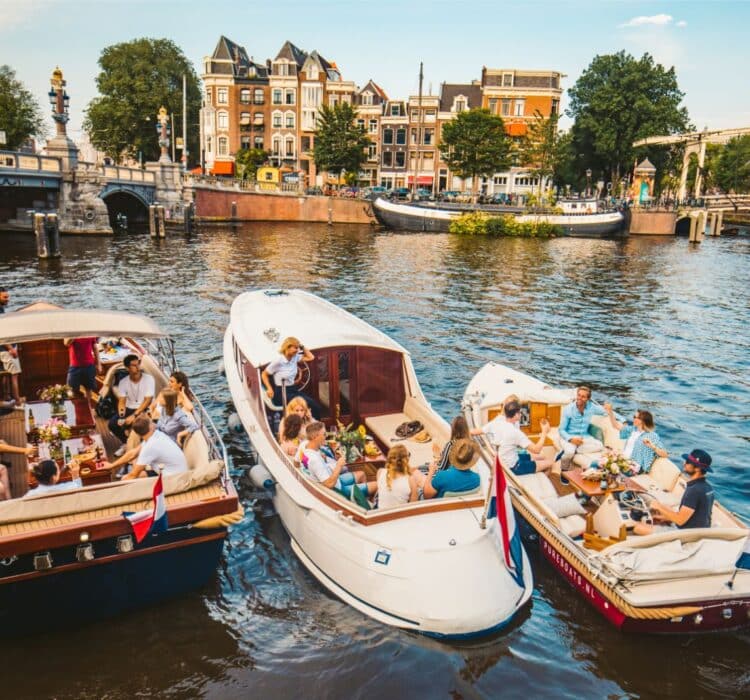
Most visitors choose a canal tour as their first Amsterdam activity because it offers the fastest, most comprehensive orientation to the city’s layout, architecture, and history in a single experience. Within 60 to 90 minutes, you see the major neighbourhoods, understand how the canal ring connects everything, and absorb centuries of context that make every subsequent walk or museum visit more meaningful.
The UNESCO-listed canal system is not just scenery but the city’s original infrastructure, designed in the 17th century to organize commerce, housing, and daily life. Experiencing it from water level reveals Amsterdam the way its builders intended it to be seen. Below, we answer the most common questions first-time visitors ask when planning their introduction to the city.
What makes the canals such an effective introduction to Amsterdam?
The canals serve as Amsterdam’s connective tissue, linking the historic centre, merchant houses, bridges, and cultural landmarks into one coherent visual story. A canal tour introduces visitors to the city’s geography, social history, and architectural evolution simultaneously, providing context that transforms random sightseeing into informed exploration.
Amsterdam’s concentric canal ring was deliberately engineered during the Dutch Golden Age to maximize waterfront access for trade while creating distinct residential zones. From a boat, you witness how the grachtengordel (canal belt) radiates outward from the medieval centre, with each ring reflecting different eras of wealth and development. The Herengracht showcases grand merchant mansions, while the Jordaan reveals former working-class charm now beloved by locals and visitors alike.
This water-level perspective also explains why Amsterdam looks the way it does. You notice how buildings lean forward (intentionally, to hoist goods without damaging facades), why warehouses feature distinctive gables, and how houseboats became permanent fixtures. These details, easily missed on foot, become obvious from a boat where captains can point directly at architectural features and share the stories behind them.
How does a canal tour compare to walking or cycling for first-time visitors?
A canal tour covers more ground with less effort than walking or cycling, while providing continuous historical commentary that self-guided exploration cannot match. Walking the same route would take three to four hours and miss the unique vantage point of seeing the city from water level.
Cycling in Amsterdam requires confidence navigating busy bike lanes, understanding local traffic rules, and knowing where you are going. For newcomers unfamiliar with the city’s layout, cycling can become stressful rather than enjoyable. Pedestrians face similar challenges: the canal ring’s repetitive appearance makes it easy to lose orientation, and the sheer density of attractions can feel overwhelming without context.
A canal tour removes these barriers entirely. You sit comfortably while someone else navigates, absorbing information at a relaxed pace. The experience also reveals hidden details impossible to appreciate from street level: the undersides of historic bridges, the way light reflects off the water onto building facades, and the quiet residential canals where larger boats cannot venture.
Many visitors use their first canal tour as a reconnaissance mission, noting neighbourhoods they want to explore on foot later. This approach transforms the rest of the trip from aimless wandering into purposeful discovery.
What can you actually see from an Amsterdam canal boat?
An Amsterdam canal boat passes merchant houses from the 1600s, over 1,500 historic bridges, houseboats of every style, hidden courtyards, and major landmarks including the Anne Frank House, Westerkerk, and the Skinny Bridge. Smaller boats access narrow waterways where larger vessels cannot go, revealing quieter residential scenes.
The specific sights depend on the route, but most tours cover the main canal ring (Herengracht, Keizersgracht, and Prinsengracht) along with portions of the Amstel River. Along the way, you encounter:
- Golden Age architecture with ornate gable stones that once served as house addresses
- The narrowest house in Amsterdam (just one metre wide at its facade)
- Former warehouses converted into luxury apartments
- Church spires and bell towers that punctuate the skyline
- Houseboats ranging from lovingly restored barges to floating gardens
- Locals going about daily life along the water’s edge
What surprises many visitors is how much wildlife appears on the canals. Herons perch on boat decks, ducks paddle alongside, and during quieter moments, the city feels remarkably peaceful despite its urban density. The canals also reveal Amsterdam’s relationship with water management, from historic locks to modern flood prevention measures that keep this below-sea-level city dry.
When is the best time of day to take a canal cruise in Amsterdam?
Late afternoon and early evening offer the best light for photography and the most pleasant atmosphere, with golden hour illuminating the canal houses beautifully. Morning cruises tend to be quieter with fewer boats on the water, while evening tours during winter months showcase the Amsterdam Light Festival installations.
Each time slot offers distinct advantages:
- Morning (9am to 11am): Calmer waters, fewer tourists, and a chance to see locals commuting by bike along the canals. The light can be flat, but the peaceful atmosphere compensates.
- Afternoon (2pm to 5pm): Prime sightseeing hours with good visibility. Expect more boat traffic, especially on sunny days when everyone has the same idea.
- Golden hour (5pm to 7pm, varies by season): The canal houses glow in warm light, creating the quintessential Amsterdam postcard views. Book ahead during peak season.
- Evening (after sunset): Illuminated bridges and buildings create a romantic atmosphere. Winter brings the Light Festival, transforming the canals into an outdoor art gallery.
Weather matters more than time of day for overall enjoyment. Overcast skies actually produce excellent conditions by eliminating harsh shadows and reducing glare on the water. Light rain rarely stops canal tours, and many boats offer covered seating or blankets.
What should first-time visitors look for when choosing a canal tour?
First-time visitors should prioritize boat size, group capacity, and the quality of commentary over price alone. Smaller boats with fewer guests access narrower canals, offer more personalized experiences, and avoid the shoulder-to-shoulder seating common on large commercial vessels.
Consider these factors when comparing options:
- Group size: Large boats carry 50 or more passengers with audio guides. Smaller operations limit groups to 6 to 24 people with live hosts who can answer questions and adjust routes based on guest interests.
- Boat type: Electric boats run silently, allowing conversation and eliminating diesel fumes. Historic vessels with modern electric motors offer character without environmental compromise.
- Route flexibility: Some captains follow rigid paths, while others navigate based on conditions and guest preferences, ducking into quiet canals when larger boats clog the main waterways.
- Included amenities: Duration, drinks, snacks, and seating arrangements vary significantly. A 90-minute tour with refreshments often provides better value than a bare-bones hour.
- Departure location: Central departures near Dam Square or major hotels eliminate transit time and position you well for post-cruise exploration. For a truly premium experience, consider the semi-private cruise from Hotel De L’Europe that combines convenience with luxury.
Read recent reviews focusing on the host or captain’s knowledge and engagement rather than just the boat itself. The person guiding your tour shapes the experience more than any other factor.
How Pure Boats helps you experience Amsterdam from the water
We designed our semi-private canal cruises specifically for visitors who want an authentic introduction to Amsterdam without the crowded, impersonal feel of mass-market tours. Our approach addresses exactly what discerning travellers look for in their first canal experience:
- Intimate group sizes: Our boats carry 6 to 24 guests maximum, ensuring space to relax and room for genuine conversation with your captain
- Access to hidden routes: Our smaller vessels navigate narrow canals where larger boats cannot go, revealing the Amsterdam that locals love
- Live, personalized commentary: Our captains share stories based on what interests you, not scripted audio recordings
- Premium departure points: Board at Hotel De L’Europe, matching the five-star standard of your Amsterdam stay
- Sustainable, silent boats: Our fully electric fleet means no engine noise or fumes, just peaceful cruising through UNESCO-listed waterways
Whether you choose a 60-minute introduction or our 90-minute experience with drinks and Dutch snacks, you will finish your cruise understanding Amsterdam in a way that enriches every moment of your visit. Book your canal tour and let the city reveal itself from the perspective it was designed to be seen.