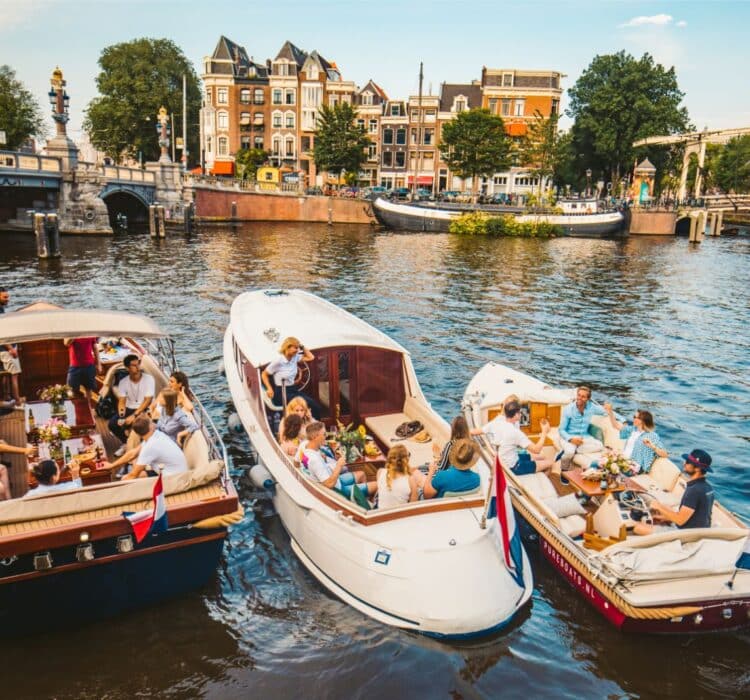
Amsterdam’s hidden highlights, visible only from the canals, include 17th century merchant warehouses with original hoisting beams, secret courtyard gardens tucked behind canal houses, centuries old architectural oddities like tilting facades and narrow doorways, and wildlife habitats in quieter waterways that remain invisible from street level. These treasures reveal themselves exclusively to those traveling by boat through the city’s UNESCO listed waterways.
The 165 canals winding through Amsterdam were designed for water transport, meaning the city’s grandest facades, most intimate gardens, and most intriguing architectural details face the water rather than the street. While millions walk along the canal edges each year, only those aboard a boat discover the perspectives that Amsterdam’s Golden Age merchants intended visitors to see.
Which historic buildings can only be seen from Amsterdam’s canals?
The most significant historic buildings visible only from Amsterdam’s canals are the 17th century merchant warehouses along the Brouwersgracht and Prinsengracht, complete with their original hoisting beams, decorative gable stones, and waterside loading doors. These structures were built to be approached by boat, with their most impressive architectural details facing the water.
Along the Herengracht, often called the Golden Bend, you’ll find the grandest canal houses in Amsterdam. From water level, you can appreciate the full height of their ornate facades, from the decorative cornices at the roofline down to the water gates where goods once entered directly from barges. The perspective from a boat reveals proportions and details that simply disappear when viewed from the narrow pavement above.
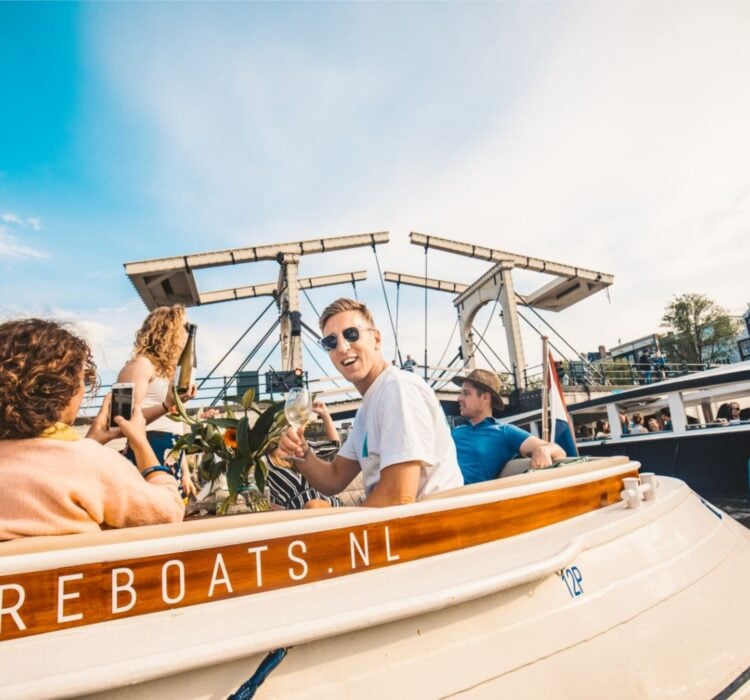
The Amstel River offers views of historic structures, including the Magere Brug and the imposing Amstel Hotel, but the real discoveries lie in the smaller connecting canals. Here, you’ll spot converted warehouses with their original winch wheels still attached, centuries old houseboats that have become permanent fixtures, and the occasional remnant of Amsterdam’s industrial past tucked between residential buildings.
Many of these buildings still display their original gable stones, carved plaques that identified properties before street numbering existed. From the water, you can read symbols depicting everything from brewing barrels to sailing ships, each telling the story of the merchant family who once lived there.
What secret gardens and courtyards are visible from canal boats?
Secret gardens visible from canal boats include the hidden courtyard gardens behind canal houses on the Keizersgracht and Herengracht, where wealthy residents created private green spaces that remain invisible from the street but open beautifully toward the water. These gardens often feature centuries old trees, formal hedging, and ornamental statues.
Amsterdam’s canal houses were built with long, narrow plots extending back from the waterfront. Behind the main residence, many families created elaborate gardens that served as private retreats from city life. Because these gardens back onto the water, they’re designed to be viewed from approaching boats rather than from the street side.
The Hofjes of the Jordaan
The Jordaan neighbourhood contains numerous hofjes, or almshouse courtyards, some of which reveal their greenery through water facing gates and low walls. While the street entrances to these courtyards are often closed to visitors, boat passengers catch glimpses through wrought iron gates and over garden walls that face the smaller canals.
Private Terrace Gardens
Modern residents have continued the tradition of water facing gardens, creating terraced spaces with potted plants, climbing roses, and small trees that cascade toward the canal edge. In spring and summer, these private gardens burst with colour, transforming quiet stretches of canal into floating botanical displays that street level pedestrians never witness.
Why do Amsterdam canal houses have such unusual features?
Amsterdam canal houses have unusual features like tilting facades, extremely narrow doorways, and external hoisting beams because the city’s soft, waterlogged soil and historic tax system shaped construction methods. Buildings lean forward intentionally to allow goods to be hoisted without damaging the facade, while narrow frontages minimized property taxes based on canal width.
The famous forward tilt of Amsterdam’s buildings isn’t structural failure but deliberate engineering. Merchants needed to hoist furniture, goods, and supplies to upper floors using the beams that still project from most canal house rooflines. A forward lean of roughly one degree ensures that heavy loads swing clear of windows and walls during lifting.
The narrow width of canal houses stems from a taxation system that charged property owners based on their canal frontage. Clever merchants built homes as narrow as possible while extending them deep into the plot, creating the characteristic long, thin floor plans that required steep internal staircases and external hoisting systems.
From a boat, you can observe how each house sits on wooden pilings driven into the marshy ground, sometimes visible at the waterline during low tides. You’ll also notice the variety of gable styles, from simple spout gables on older buildings to elaborate bell gables and neck gables that became fashionable during Amsterdam’s wealthiest periods. These details, designed to impress arriving visitors by water, lose their impact when viewed from the cramped pavement above.
Which small canals offer the most exclusive hidden views?
The small canals offering the most exclusive hidden views are the Reguliersgracht with its famous seven bridges, the quiet stretches of the Bloemgracht in the Jordaan, and the intimate Groenburgwal, often photographed but rarely experienced from water level. These narrow waterways are inaccessible to large tour boats, revealing Amsterdam’s most intimate perspectives.
The Reguliersgracht provides one of Amsterdam’s most photographed views: stand at the right spot and you can see seven arched bridges stretching into the distance. From a boat passing underneath these bridges, the perspective shifts entirely. You’re no longer observing the view but moving through it, watching the stone arches frame glimpses of the city above.
The Brouwersgracht, where the main canal ring meets the Jordaan, offers views of converted brewery warehouses that once supplied Amsterdam’s famously thirsty population. The buildings here retain their industrial character, with massive wooden doors opening directly onto the water and original crane mechanisms still visible on some facades.
Smaller electric boats can navigate channels that larger vessels cannot enter, accessing residential stretches where the only sounds are birdsong and the gentle lap of water against hulls. These quiet passages reveal Amsterdam as locals experience it: neighbours chatting from houseboats, children fishing from private docks, and cats sunning themselves on floating terraces. For those seeking an elevated experience, a semi-private premium cruise from Hotel De L’Europe offers access to these intimate waterways with refined hospitality.
What wildlife and nature can you spot from Amsterdam’s canals?
Wildlife visible from Amsterdam’s canals includes grey herons hunting along quiet waterways, coots and moorhens nesting under bridges, kingfishers in the eastern harbour areas, and the occasional cormorant diving for fish. The canal ecosystem also supports abundant plant life, from water lilies in sheltered spots to ancient trees lining the water’s edge.
The canals function as wildlife corridors through the urban landscape, connecting parks and green spaces that would otherwise be isolated islands of nature. Grey herons have become particularly bold, standing motionless on houseboat decks or canal edges waiting for fish. From a quiet boat, you can observe their hunting behaviour without disturbing them.
Spring brings nesting season, when coots construct elaborate floating nests from twigs and debris, often wedged under bridges or against moored boats. Parent birds can be seen ferrying food to their chicks, seemingly unbothered by passing boat traffic. Ducks of various species congregate in quieter stretches, while swans patrol their territories with characteristic elegance.
The trees lining Amsterdam’s canals, predominantly elms and linden, create a green canopy that’s best appreciated from below. In autumn, their falling leaves create golden carpets on the water surface. In spring, their blossoms drift down like confetti. This seasonal display, framed by historic architecture, creates constantly changing natural art that street level visitors simply cannot access.
How Pure Boats helps you discover Amsterdam’s hidden highlights
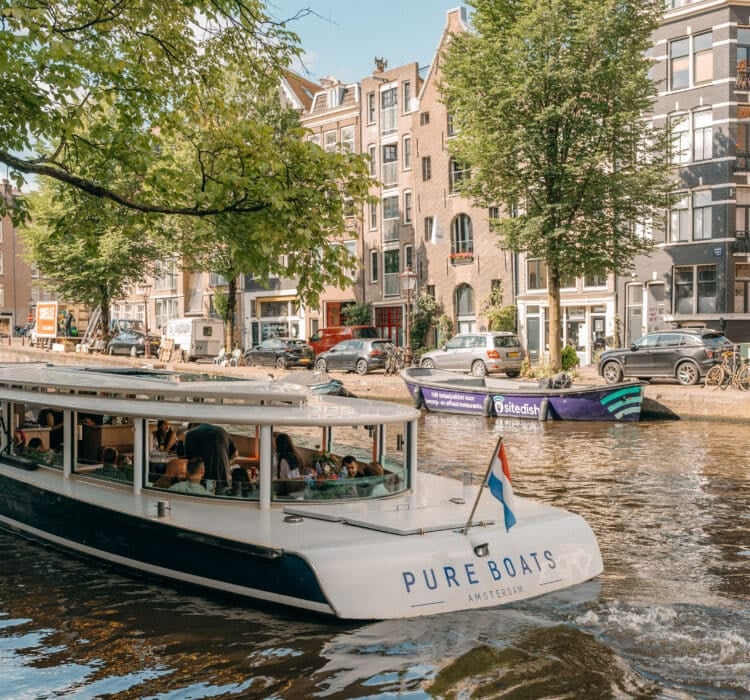
We specialize in revealing the Amsterdam that most visitors never see. Our small electric boats navigate narrow canals inaccessible to larger tour vessels, while our experienced captains share stories and point out details that even longtime residents overlook.
What makes our approach different:
- Small group sizes of 6 to 24 guests mean intimate experiences rather than crowded decks
- Customized routes through quiet residential canals where wildlife thrives undisturbed
- Knowledgeable captains who engage in real conversations rather than scripted commentary
- Fully electric boats that glide silently, allowing you to hear birdsong and neighbourhood sounds
- Flexibility to pause at points of interest or take detours based on what you want to discover
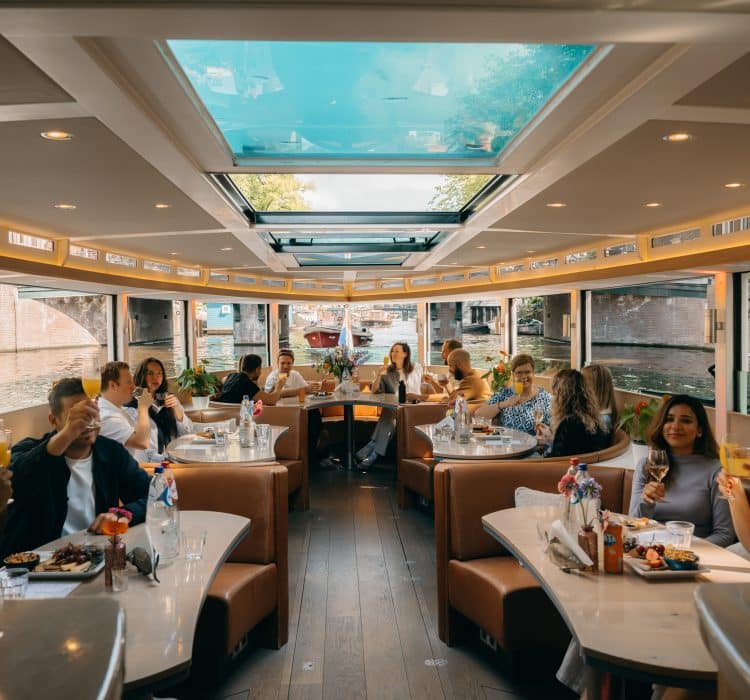
For an experience that combines these hidden Amsterdam highlights with refined hospitality, our semi private cruise departs from Hotel De L’Europe aboard the historic Stan Huygens, once the weekly charter of Freddy Heineken himself. With premium drinks, Dutch nibbles, and the option of private booth seating, it’s the ideal way to discover the Amsterdam that exists only on the water.