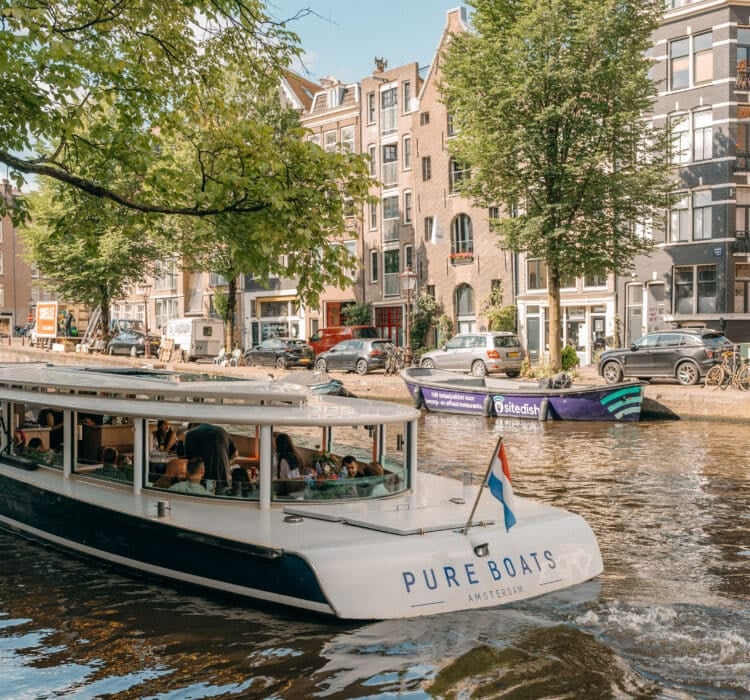
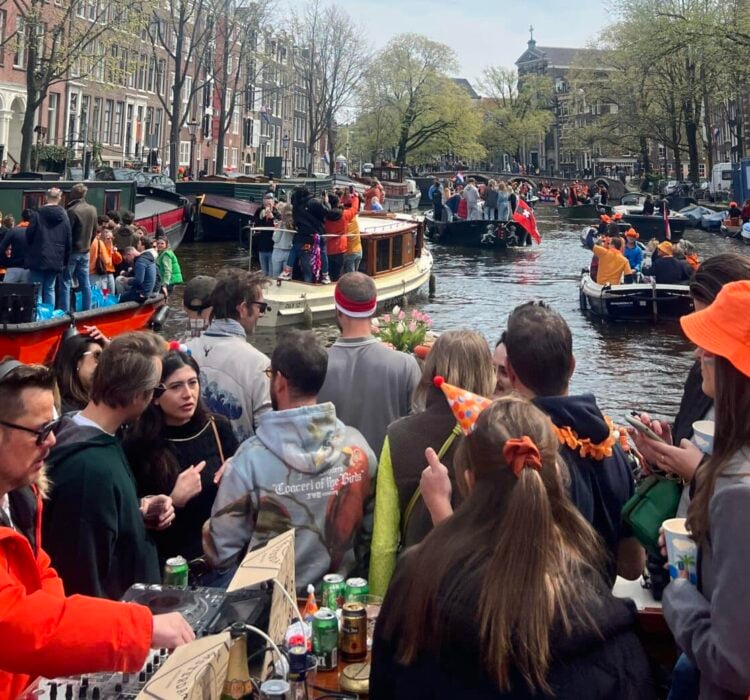
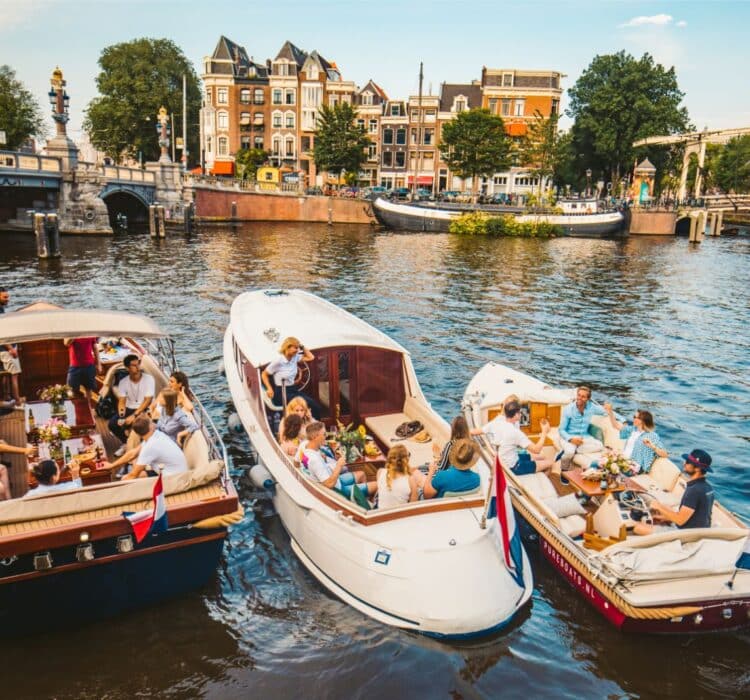
An Amsterdam sightseeing canal cruise reveals a constantly shifting panorama of 17th-century merchant houses, iconic bridges, historic churches, houseboats, and hidden waterside gardens that you simply cannot appreciate from street level. The canal ring itself is a UNESCO World Heritage Site, meaning the entire waterway is essentially a living landmark. Below, we answer the most common questions about what you can expect to see, taste, and experience while cruising Amsterdam’s famous canals.
Which Famous Landmarks Can You Spot From the Water?
From the water, you can spot many of Amsterdam’s most celebrated landmarks, including the Westerkerk tower, the Anne Frank House, the Skinny Bridge (Magere Brug), the Rijksmuseum, grand Golden Age canal houses, and the distinctive facades of the Grachtengordel. Several of these landmarks look entirely different from the canal perspective compared to how they appear from the street.
The Westerkerk, with its striking blue imperial crown atop the bell tower, is one of the first major landmarks most canal routes pass. It is the tallest church tower in Amsterdam and sits right along the Prinsengracht, making it a natural focal point during any Amsterdam canal boat tour. Nearby, the Anne Frank House draws the eye from the water, and knowledgeable captains often share the story of the building’s history as you glide past.
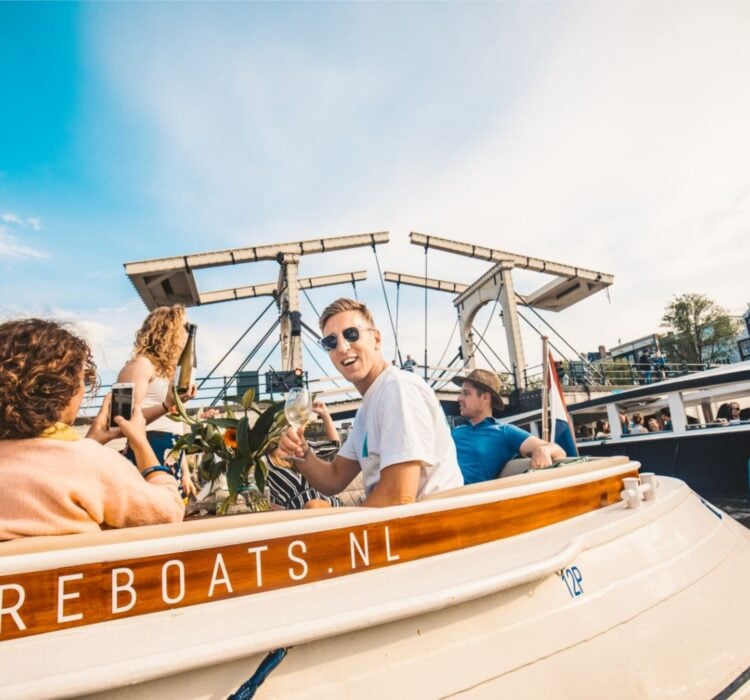
Further along the route, the Magere Brug is one of the most photographed bridges in the city. This white wooden drawbridge spans the Amstel River and dates back to the 1600s, though it has been rebuilt several times. At night, it is illuminated by hundreds of lights, creating an unforgettable scene.
Other notable sights visible from the canals include:
- The Rijksmuseum and its grand archway, visible from the Singelgracht
- The Hermitage Amsterdam along the Amstel River
- Rows of leaning Golden Age merchant houses with ornate gable stones
- The Houseboat Museum on the Prinsengracht
- The Muntplein tower and the flower market along the Singel
What makes an Amsterdam sightseeing canal cruise so rewarding is how the city’s architecture reveals itself gradually. You notice details that pedestrians miss entirely: carved stone tablets above doorways, hidden courtyard gardens glimpsed through iron gates, and the way some canal houses lean forward deliberately so furniture could be hoisted to upper floors without damaging the facade.
What Hidden Canals and Neighborhoods Do Smaller Boats Explore?
Smaller boats can navigate narrow waterways that large tour vessels cannot enter, including the Reguliersgracht, the Brouwersgracht, the Jordaan’s intimate side canals, and quiet stretches through the Plantage and Eastern Docklands neighborhoods. These hidden routes reveal a quieter, more authentic side of Amsterdam far removed from the busy main canals.
The Reguliersgracht is a favorite among those who know Amsterdam well. From a single vantage point on this canal, you can see seven arched bridges lined up in a row, creating one of the most iconic and photogenic views in the city. Large commercial boats cannot fit through here, so this experience is reserved for smaller vessels.
The Brouwersgracht, often called the most beautiful canal in Amsterdam, sits at the northern edge of the canal ring. Its former brewery warehouses have been converted into stunning residential lofts, and the tree-lined banks feel almost village-like in their tranquility. Similarly, the Jordaan’s narrow waterways wind past cozy brown cafés, independent galleries, and centuries-old almshouses called hofjes.
Captains who know the city intimately can make spontaneous detours based on what guests want to see, adjusting the route in real time. This flexibility means no two cruises are exactly alike, and it allows guests to experience the Amsterdam canals as if they were exploring on their own private boat rather than following a rigid, pre-programmed path.
What Wildlife and Nature Appear Along Amsterdam’s Canals?
Amsterdam’s canals are home to a surprising variety of wildlife, including grey herons, coots, moorhens, cormorants, and the occasional kingfisher. During warmer months, you may also spot families of ducks and swans gliding alongside the boat, while canal-side gardens burst with wisteria, climbing roses, and trailing ivy that drapes over the water’s edge.
Grey herons are perhaps the most striking canal residents. These tall, elegant birds stand motionless on the edges of houseboats and canal walls, waiting to catch fish. They have become so comfortable around people that they barely flinch as boats pass by, offering excellent viewing opportunities.
The Plantage neighborhood, near the Artis Zoo, is particularly rich in birdlife. Cormorants can often be seen drying their wings on wooden pilings, and during spring, nesting pairs of coots build floating nests right in the canal. The green canopy of mature elm and linden trees that lines many waterways creates a natural corridor that feels remarkably peaceful for a capital city.
Fully electric boats make wildlife spotting even more rewarding because they produce virtually no engine noise or emissions. Animals are less disturbed by the quiet approach, which means you can get closer to herons, ducks, and other canal creatures than you would on a diesel-powered vessel.
How Does a Canal Cruise Change After Dark?
After dark, Amsterdam’s canal cruise transforms into an entirely different experience. The canal houses glow with warm interior light, bridges are outlined in thousands of tiny bulbs, and the water reflects the illuminated city in shimmering, painterly patterns. During the winter months, the Amsterdam Light Festival adds large-scale light art installations along the waterways, making an evening cruise especially spectacular.
One of the most charming aspects of cruising at night is that Amsterdam residents rarely close their curtains. This cultural tradition means you can glimpse beautifully decorated living rooms, towering bookshelves, and candlelit dinners as you drift past. Captains often share the story behind this custom, which dates back centuries and reflects a Calvinist tradition of having nothing to hide.
The Magere Brug is particularly magical after sunset, when its 1,800 lights create a glowing white silhouette against the dark Amstel River. The bridges along the Herengracht and Keizersgracht also light up beautifully, and the reflections on the water double the visual impact.
During the Amsterdam Light Festival, which typically runs from late November through January, internationally renowned artists install illuminated sculptures and projections along a dedicated boat route. These artworks are designed to be viewed from the water, making a canal cruise the ideal way to experience the festival. Many evening cruises include mulled wine and Dutch snacks, adding warmth and comfort to the nighttime atmosphere.
What Local Food and Drinks Are Served While Cruising?
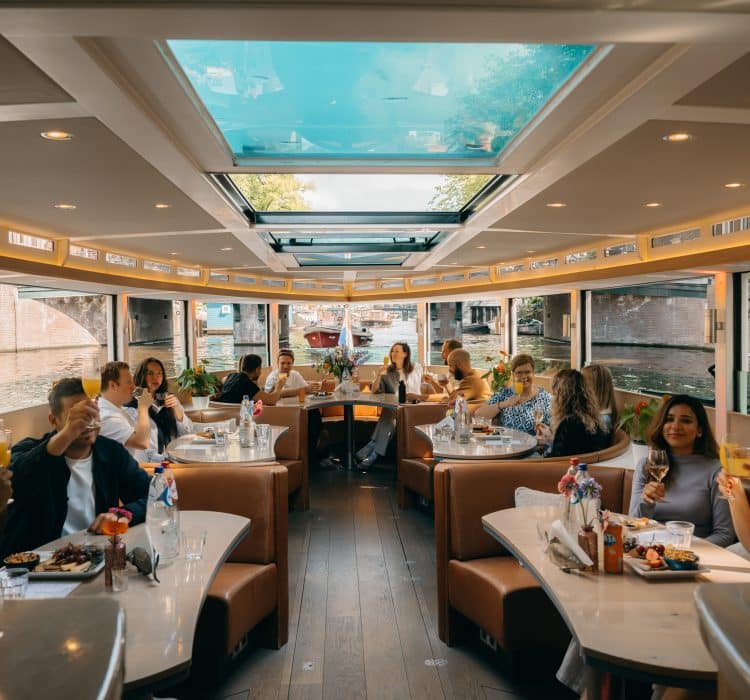
Most quality Amsterdam canal cruises serve locally sourced food and drinks, including Dutch farmhouse cheese, freshly baked apple pie, seasonal craft beers from Amsterdam breweries, curated European wines, and organic juices. The emphasis is on regional, artisanal products that reflect Amsterdam’s food culture rather than generic tourist fare.
Dutch cheese is a staple of the canal cruise experience. Aged Gouda, creamy young cheese, and herb-infused varieties are typically served on sharing platters that encourage a relaxed, social atmosphere on board. Paired with a glass of crisp white wine or a locally brewed IPA, these simple combinations capture the essence of Dutch hospitality.
Freshly baked apple pie, or appeltaart, is another beloved feature. This is not the thin, American-style pie but the tall, dense, spice-rich Dutch version that is practically a national treasure. Enjoying a warm slice while gliding under centuries-old bridges is one of those moments that tends to stay with visitors long after they leave Amsterdam.
Drinks menus on better canal cruises tend to prioritize quality over quantity. Expect to find local gin, seasonal craft beers that rotate throughout the year, and a thoughtful selection of European wines. Some cruises offer self-service open bars, allowing guests to help themselves at their own pace. The focus on local and sustainable sourcing means that nearly everything served on board comes from Dutch producers or nearby European regions.
What Makes Each Canal Cruise Route Different?
Each Amsterdam canal cruise route differs based on the boat’s size, the captain’s expertise, and the specific waterways chosen. Larger vessels are restricted to the main canals, while smaller boats can access narrow side canals, quiet residential stretches, and scenic detours that create a more varied and personal experience. No two routes need to be identical, especially when captains customize the journey based on guest interests.
Standard routes typically follow the main canal ring, passing the Herengracht, Keizersgracht, and Prinsengracht before looping through the Amstel River. These routes guarantee views of major landmarks and are a solid introduction to the city. However, they can feel crowded during peak season when dozens of large tour boats follow the same circuit.
More intimate routes venture into the Jordaan, along the Brouwersgracht, or through the Eastern Islands, where old shipyards and converted warehouses tell the story of Amsterdam’s maritime past. Some captains take guests through the Entrepotdok area, where 19th-century warehouse facades stretch along the water in an unbroken line, or past the windmill at the edge of the De Gooyer brewery.
The time of year also shapes the route. Spring brings blooming tulips in canal-side window boxes and longer daylight hours for extended cruises. Autumn offers golden reflections from turning leaves, and winter routes are often designed around the Light Festival installations. A knowledgeable captain who adapts the journey in real time can make even a familiar stretch of canal feel entirely new.
How Pure Boats Elevates Your Amsterdam Sightseeing Canal Cruise
We created Pure Boats to offer a canal experience that feels nothing like a standard tourist cruise. Our approach combines handcrafted electric boats, intimate group sizes, and captains who genuinely know and love Amsterdam. Here is what sets us apart:
- Small groups of 6 to 24 guests aboard beautifully restored, fully electric vessels designed by our in-house superyacht team
- Customized routes through hidden canals that larger boats cannot access, with captains who adjust the journey based on your interests
- Locally sourced food and drinks including Dutch farmhouse cheese, seasonal craft beers, European wines, and freshly baked apple pie
- A fleet of unique boats including the iconic Stan Huygens, once chartered weekly by Freddy Heineken, and our newest addition, Danique, featuring a custom mahogany and marble bar
- Sustainable, emission-free cruising on upcycled heritage boats in a close-to-zero-waste environment
Whether you are looking for a small group boat tour or a private celebration, we make sure every moment on the water feels personal, luxurious, and unmistakably Amsterdam. Browse our cruises and book your spot today.