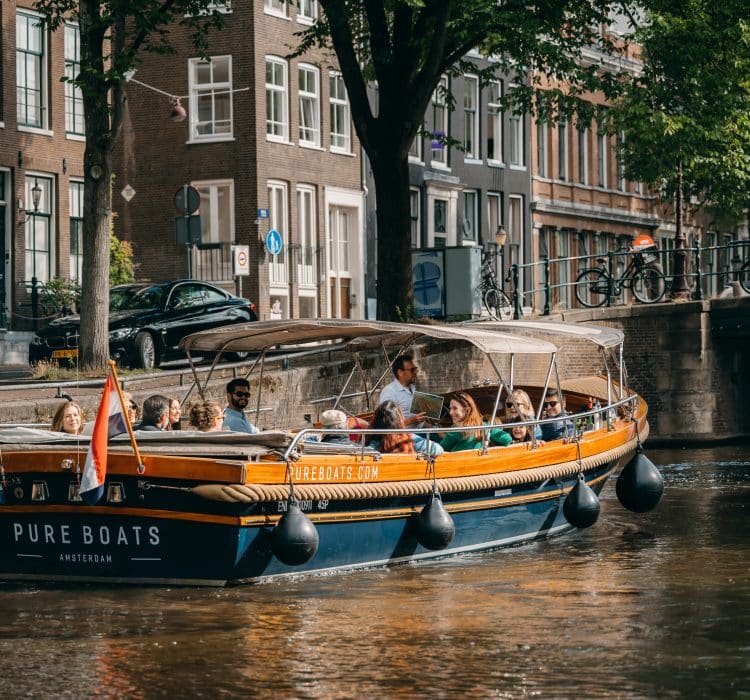
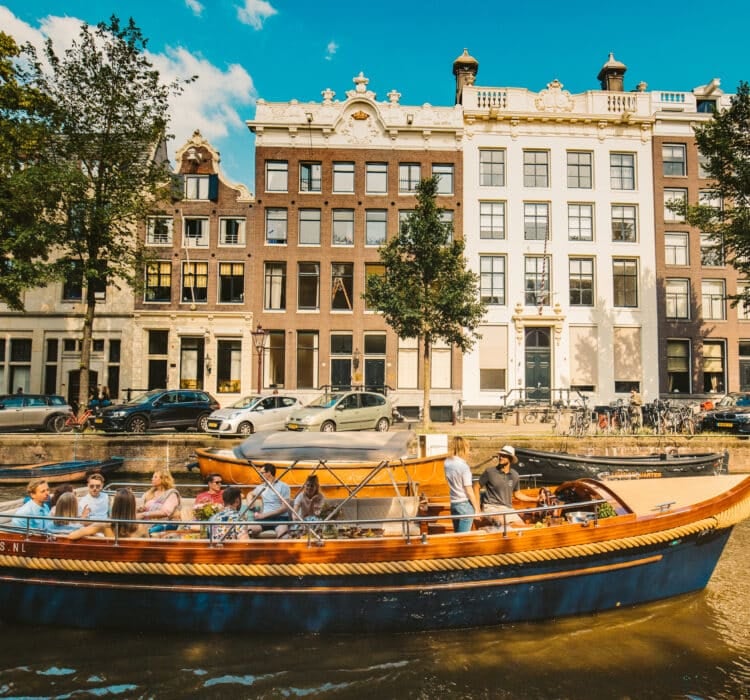
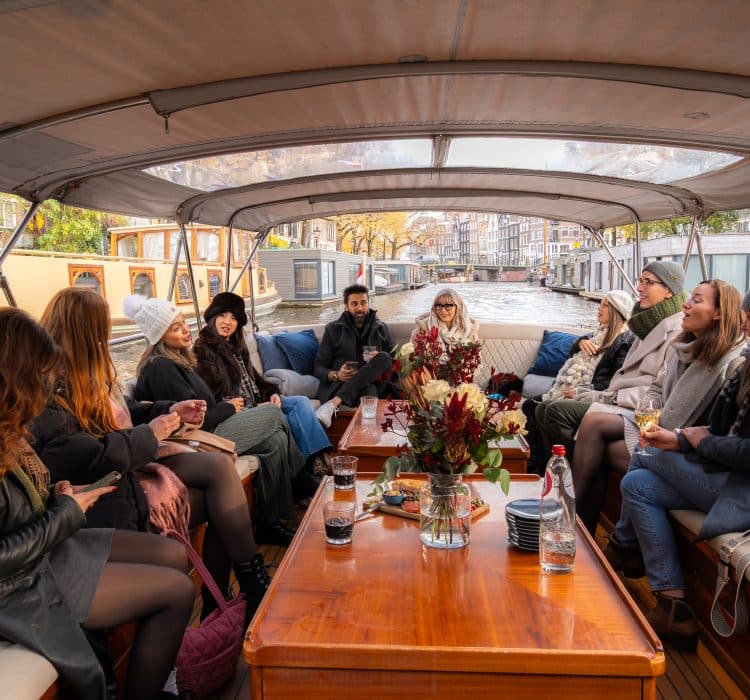
Private canal cruise boats in Amsterdam carry life jackets, fire extinguishers, first aid kits, navigation lights, and communication devices as standard safety equipment. Dutch maritime regulations and the City of Amsterdam require all commercial passenger vessels, including private canal boats, to meet specific safety standards before they can operate on the waterways.
Whether you are planning a romantic evening cruise or a private celebration with friends, knowing what safety measures are in place gives you peace of mind so you can fully relax and enjoy the experience. Below, we break down the specific safety standards, equipment requirements, and emergency procedures that apply to private canal cruise boats in Amsterdam.
What Safety Standards Must Canal Cruise Boats Meet in Amsterdam?
All commercial canal cruise boats in Amsterdam must comply with Dutch inland waterway regulations and local municipal requirements enforced by the City of Amsterdam. These canal cruise safety standards cover vessel construction, maximum passenger capacity, crew qualifications, and mandatory onboard safety equipment. Boats cannot legally carry paying passengers without meeting these requirements and passing regular inspections.
The key regulatory framework includes the Binnenvaartwet (Inland Waterway Act), which governs commercial vessel operations across the Netherlands. For boats operating in Amsterdam specifically, the municipality issues permits that require operators to demonstrate compliance with fire safety, structural integrity, and passenger safety protocols. Inspections are carried out periodically, and operators must maintain valid certification at all times.
Private canal cruise safety requirements also extend to crew qualifications. Captains must hold appropriate navigation licenses for inland waterways and demonstrate knowledge of Amsterdam’s canal system, including bridge heights, speed limits, and right-of-way rules. Many reputable operators go beyond the minimum requirements, investing in additional safety features and crew training to ensure guest comfort and protection.
Electric canal boats, which have become increasingly popular for their sustainability benefits, must also meet electrical safety standards specific to battery-powered vessels. These include proper battery housing, ventilation systems, and emergency shutoff mechanisms.
Are Life Jackets Required on a Private Canal Boat?
Yes, canal boat life jackets are required on all commercial passenger vessels in Amsterdam. Dutch regulations mandate that boats carry enough approved life jackets for every person on board, including crew members. These must be easily accessible and clearly marked so they can be distributed quickly in an emergency.
On Amsterdam’s canals, the risk of capsizing is extremely low because the waterways are calm, shallow, and protected from wind and waves. Canal boats operate at slow speeds, typically around six kilometers per hour, which further reduces risk. However, the legal requirement for life jackets remains firmly in place regardless of conditions.
Adult and Child Life Jackets
Operators must carry appropriately sized life jackets for both adults and children. If you are booking a private canal tour with younger family members, it is worth confirming in advance that child-sized life jackets are available on the specific boat you have reserved. Most reputable operators stock a range of sizes as standard practice.
Where Life Jackets Are Stored
Life jackets on canal boats are typically stored in clearly labeled compartments beneath seating areas or in dedicated safety lockers. At the start of each cruise, the captain or host should point out where safety equipment is located. On well-run boats, this safety briefing happens naturally as part of the welcome, so guests know exactly where everything is without the experience feeling overly formal.
What Fire Safety Equipment Do Canal Cruise Boats Carry?
Canal cruise boats in Amsterdam are required to carry fire extinguishers, fire blankets, and in some cases automatic fire suppression systems in engine compartments. The exact requirements depend on the vessel’s size, passenger capacity, and propulsion type, but every commercial boat must have firefighting equipment that meets Dutch maritime safety standards.
Fire extinguishers must be serviced and inspected regularly, with certification dates clearly visible. Most canal boats carry multiple extinguishers positioned at key points throughout the vessel, including near the engine area, the galley or bar, and in passenger areas. Fire blankets are commonly placed near any cooking or heating equipment.
Electric canal boats present a different fire risk profile compared to diesel-powered vessels. While they eliminate the risk of fuel leaks and engine fires from combustion, battery systems require their own safety measures. Properly maintained electric boats feature battery management systems that monitor temperature and charge levels, along with automatic cutoff switches that activate if any irregularity is detected. This is one of the many reasons fully electric boats are considered a safer and more sustainable choice for canal cruising in Amsterdam.
How Do Canal Boat Captains Handle Emergencies on the Water?
Canal boat captains in Amsterdam are trained to follow established emergency procedures that include passenger communication, vessel stabilization, coordination with emergency services, and if necessary, safe evacuation to the canal side. Licensed captains must demonstrate competency in emergency response as part of their certification, and many operators conduct regular refresher training.
In practice, serious emergencies on Amsterdam’s canals are rare. The waterways are shallow, calm, and surrounded by accessible canal sides, bridges, and mooring points. This means that in most scenarios, a captain can quickly bring the boat to the nearest safe point and assist passengers off the vessel within minutes.
Communication plays a central role in emergency handling. Captains carry mobile phones and often VHF radios to contact emergency services, port authorities, and their own operations team. Amsterdam’s emergency response infrastructure is well-developed, with water police and fire service boats able to reach most canal locations quickly.
On smaller, boutique-style boats where the captain personally interacts with every guest, the intimate group size is actually a safety advantage. With only a small number of passengers on board, communication is immediate and personal, and the captain can account for every guest without delay. This is a meaningful difference compared to large tour boats carrying dozens or even hundreds of passengers.
What Navigation and Lighting Equipment Is Required on Canal Boats?
Canal boats in the Netherlands must carry regulation navigation lights, a horn or sound-signaling device, and appropriate charts or navigation aids for the waterways they operate on. These Amsterdam boat safety requirements ensure that vessels are visible to other water traffic and can communicate their position and intentions, especially during evening and nighttime cruises.
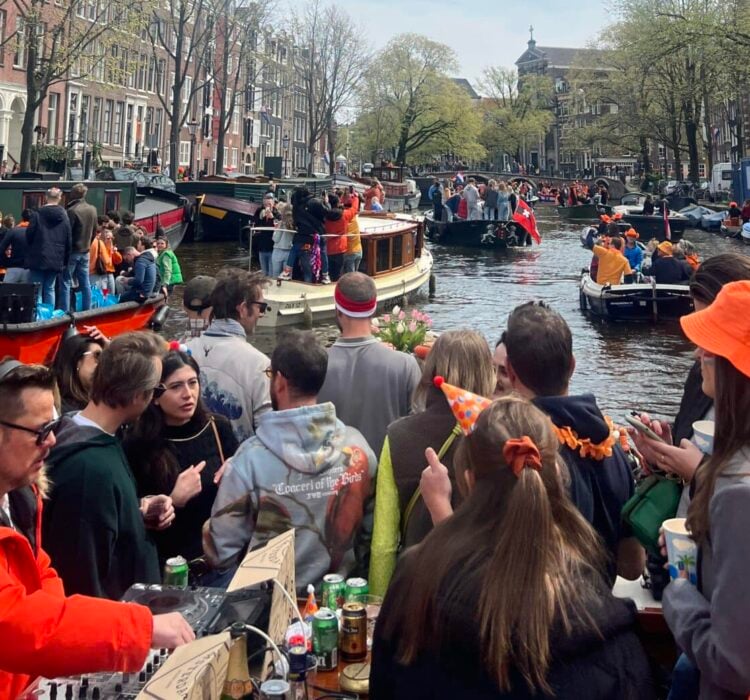
Navigation lighting requirements follow the CEVNI (European Code for Inland Waterways) standards. At minimum, boats must display a white masthead light visible from the front, green and red sidelights to indicate the vessel’s direction of travel, and a white stern light. During special events like the Amsterdam Light Festival, when canal traffic increases during evening hours, proper lighting becomes even more critical for safe operations.
Modern canal boats increasingly use GPS navigation systems alongside traditional knowledge of the waterways. However, on Amsterdam’s canals, an experienced captain’s personal familiarity with the route is arguably the most important navigation tool. Skilled captains know every bridge height, every narrow passage, and every busy intersection by heart. They adjust their routes in real time based on traffic conditions, something no electronic system can fully replicate.
Boats must also carry basic tools and spare parts for minor repairs, along with mooring lines and fenders to secure the vessel safely when stopping. A well-equipped boat ensures that even minor mechanical issues can be addressed without compromising passenger safety or comfort.
Should You Ask About Safety Equipment Before Booking a Canal Cruise?
Absolutely. Asking about boat safety equipment in the Netherlands before booking is a smart practice that any reputable operator will welcome. A trustworthy canal cruise company should be happy to confirm their safety certifications, equipment inventory, crew qualifications, and inspection records. If an operator is evasive about safety questions, consider it a red flag.
Here are practical questions worth asking before you book:
- Is the boat fully licensed and inspected for commercial passenger use?
- Does the captain hold a valid inland waterway navigation license?
- Are life jackets available for all passengers, including children?
- What fire safety equipment is on board?
- Is the boat insured for passenger liability?
- What happens in case of bad weather or an emergency?
Beyond safety basics, the overall quality and maintenance of a boat tells you a lot. Vessels that are well-maintained, clean, and thoughtfully designed reflect an operator who takes every aspect of the guest experience seriously, safety included. Boats that look neglected on the surface may have deeper maintenance issues you cannot see.
Choosing a boutique operator with a smaller fleet often means each vessel receives more individual attention and care. When a company personally restores and maintains every boat in its collection, safety standards tend to be woven into the entire operation rather than treated as a checkbox exercise.
How Pure Boats Ensures Your Safety on Amsterdam’s Canals
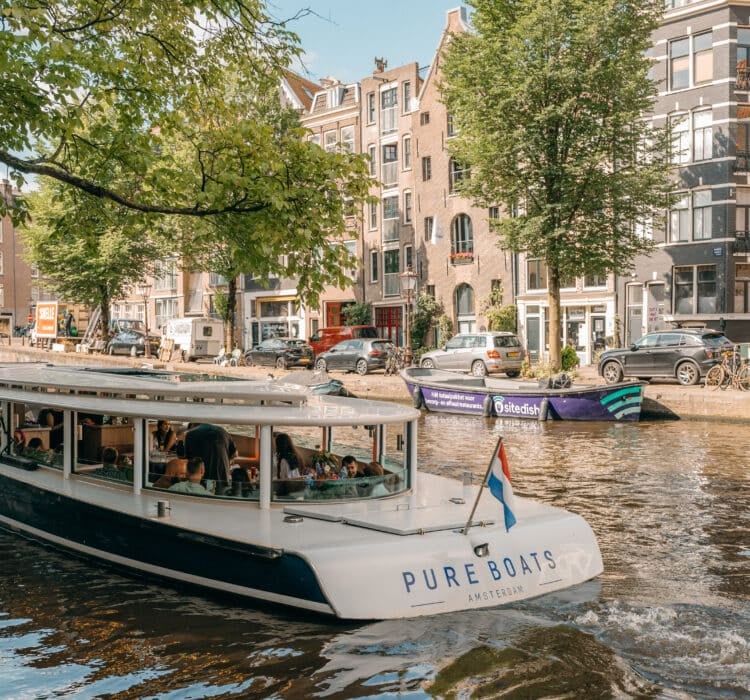
At Pure Boats, we take safety as seriously as we take luxury. Every one of our handcrafted electric canal boats is fully licensed, regularly inspected, and equipped with all required safety gear, so you can relax completely during your cruise. Here is what sets our approach apart:
- Fully electric fleet: Our upcycled, emission-free boats eliminate fuel-related fire risks and feature modern battery management systems with automatic safety cutoffs
- Experienced, licensed captains: Every captain holds a valid inland waterway license and knows Amsterdam’s canal network intimately
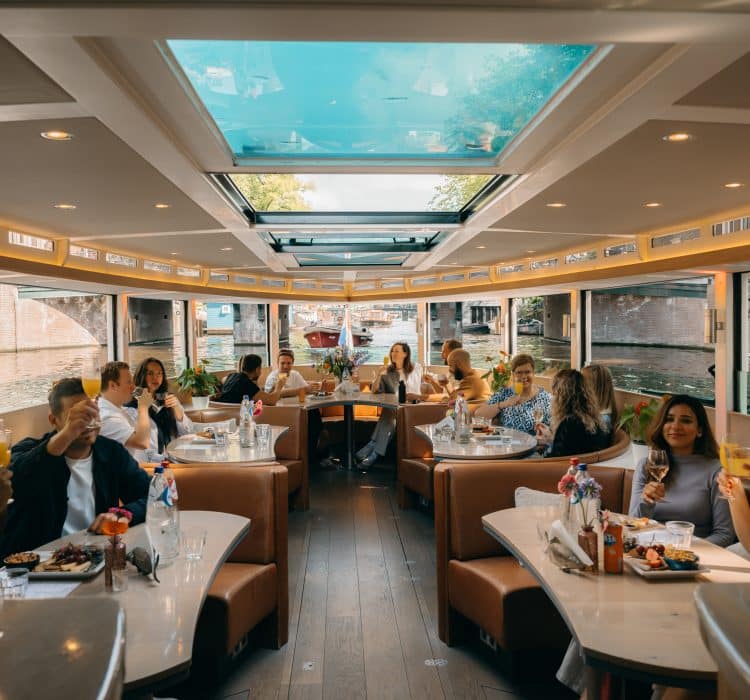
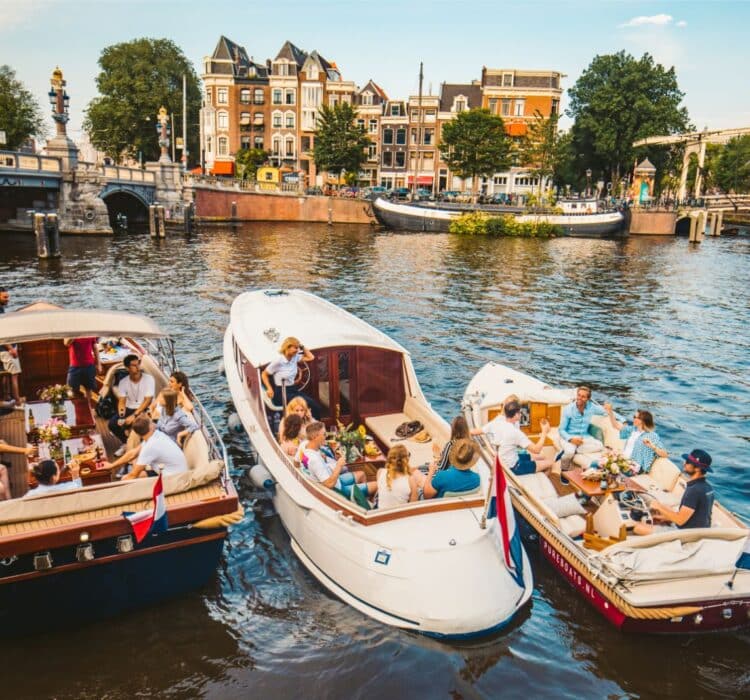
- Small group sizes: With a maximum of 6 to 24 guests per boat, our captains can give personal attention to every passenger’s safety and comfort
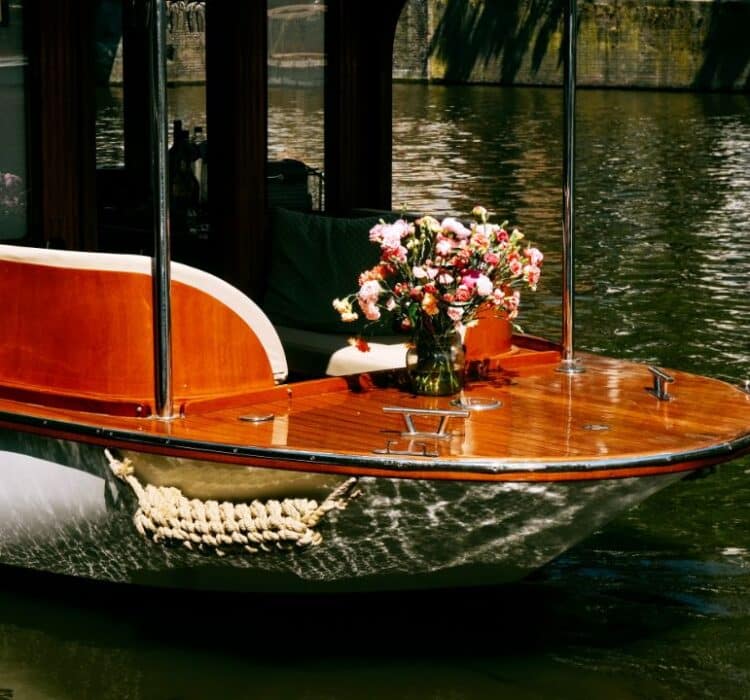
- Superyacht-quality construction: Our in-house design team restores each vessel to the highest standards, ensuring structural integrity and meticulous maintenance
- Complete safety equipment: Life jackets for all passengers, fire extinguishers, first aid kits, navigation lights, and communication devices on every cruise
Ready to experience Amsterdam’s canals aboard one of the safest and most beautiful boats on the water? Book your private canal cruise with us and enjoy the peace of mind that comes with a truly premium boating experience.