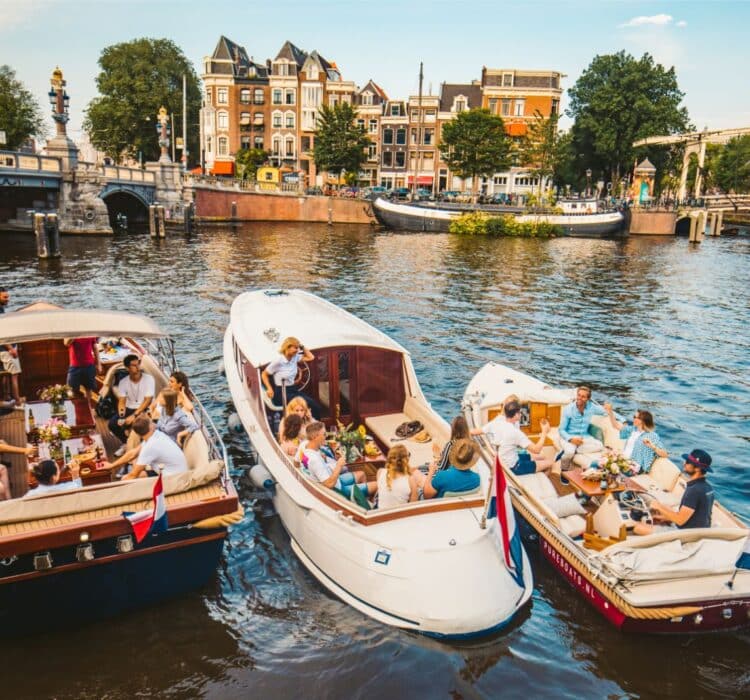
Amsterdam sightseeing cruises reveal secret canals too narrow for large tour boats, hidden courtyard gardens visible only from the water, centuries-old warehouses with ornate gable stones, and tucked-away houseboats that most visitors walk right past. These discoveries are possible because smaller vessels can navigate the quieter waterways beyond the main canal ring, where Amsterdam’s most authentic character lives.
The city’s canal network stretches over 100 kilometers, yet the majority of standard tour boats stick to just a handful of well-known routes. That leaves dozens of intimate waterways, historic landmarks, and local secrets waiting for those who venture off the beaten path. Below, we answer the most common questions about what an Amsterdam canal cruise can truly uncover.
Which Secret Canals Can Only Be Reached by Smaller Boats?
Several of Amsterdam’s most charming canals are physically inaccessible to large cruise vessels due to low bridges and narrow passages. Waterways like the Reguliersgracht, Brouwersgracht side channels, and the tiny canals threading through the Jordaan neighborhood can only be explored by smaller, more agile boats that fit beneath arched stone bridges barely two meters above the waterline.
The Reguliersgracht is often called one of the most beautiful canals in the city. From the water, you get a famous perspective of seven consecutive bridges arching into the distance, a view that simply does not exist from the street. Large tour boats skip this canal entirely because they cannot physically pass through.
In the Jordaan, narrow waterways like the Egelantiersgracht wind past hidden gardens, quirky houseboats covered in flowering plants, and 17th-century almshouses known as hofjes. These courtyard communities were originally built for elderly women and widows, and several still function as quiet residential enclaves. From a small boat gliding past at water level, you catch glimpses through their arched entryways that pedestrians on the street often miss.
The Brouwersgracht, once the heart of Amsterdam’s brewing industry, also has side channels that open up to smaller vessels. Here, converted warehouses still bear the names of the spices and goods they once stored, their gable stones telling stories of the Dutch Golden Age in carved relief.
What Historic Landmarks Are Best Seen From the Water?
Amsterdam’s most iconic historic landmarks gain an entirely different dimension when viewed from the canals. The Anne Frank House, the Westerkerk tower, the Skinny Bridge (Magere Brug), and the grand merchant houses along the Golden Bend on the Herengracht are all best appreciated from water level, where their full facades and reflections come into view without the obstruction of crowds, cars, or trees.
The Golden Bend is a prime example. Walking along the Herengracht, you see elegant front doors and stoops. From the water, you see the full scale of these double-wide mansions, their ornate cornices, and the subtle lean many of them have developed over four centuries. Your captain can point out which buildings were designed to show off wealth and which architectural details reveal the social status of their original owners.
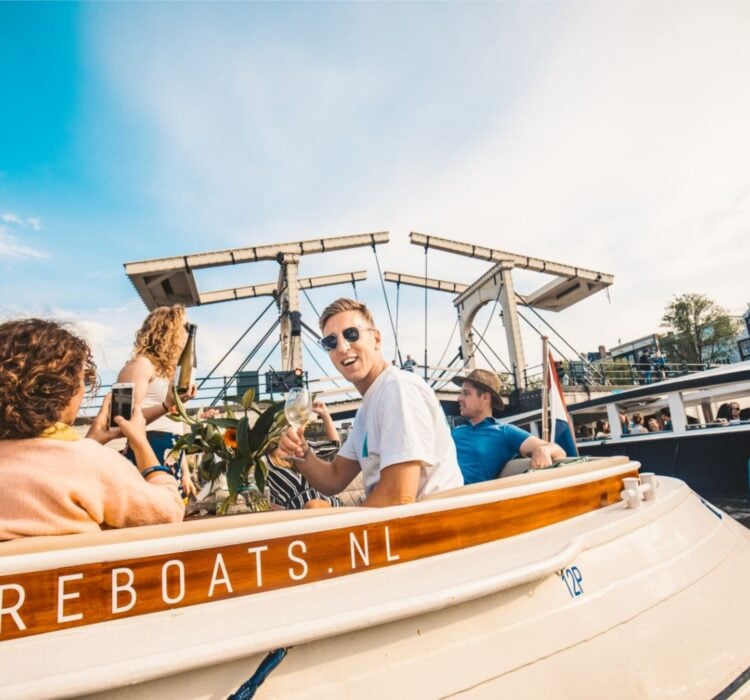
The Magere Brug, Amsterdam’s beloved wooden drawbridge, is another landmark transformed by the canal perspective. At night, its roughly 1,200 lights reflect across the Amstel River, creating a scene that has become one of the city’s most photographed spots. Passing beneath it by boat, you appreciate the mechanical engineering of a bridge that still opens for vessel traffic, just as it has since the late 1600s.
Lesser-known landmarks also emerge from the water. Look for the narrowest house in Amsterdam on the Singel (barely a meter wide), or the tilting houses along the Damrak whose wooden pile foundations have shifted over the centuries. These hidden spots along Amsterdam’s canals tell stories you simply cannot access from the pavement above.
How Do Personalized Canal Routes Differ From Standard Tour Routes?
Personalized canal routes differ from standard tours by adapting in real time to passenger interests, weather, and canal traffic, rather than following a fixed loop. While standard Amsterdam sightseeing cruise operators repeat the same circuit along the Prinsengracht and Amstel River, personalized routes let captains make spontaneous detours through quieter waterways based on what guests want to see.
On a standard route, a large tour boat follows a predetermined path dictated by the vessel’s size and a strict timetable. Commentary is typically prerecorded, covering the same scripted highlights regardless of conditions. If a particular canal is congested with other tour boats, the vessel has no option but to wait in line.
A personalized route works differently in several key ways:
- Captains adjust the itinerary based on real-time conversation with guests, steering toward architecture, nightlife areas, or quiet residential canals depending on the group’s preferences
- Smaller boats can duck into side canals to avoid congestion, ensuring a peaceful experience even during peak tourist season
- Live commentary replaces audio guides, allowing guests to ask questions and hear local stories that never make it into scripted tours
- Routes can extend into the Eastern Docklands, the Maritime Quarter, or even past floating flower markets depending on the time available
This flexibility transforms a canal cruise from a passive sightseeing exercise into an interactive exploration. When a captain notices a rare heron perched on a houseboat or a drawbridge opening for a tall ship, they can pause and let the moment unfold naturally rather than motoring past on schedule.
What Local Food and Drink Experiences Happen on Board?
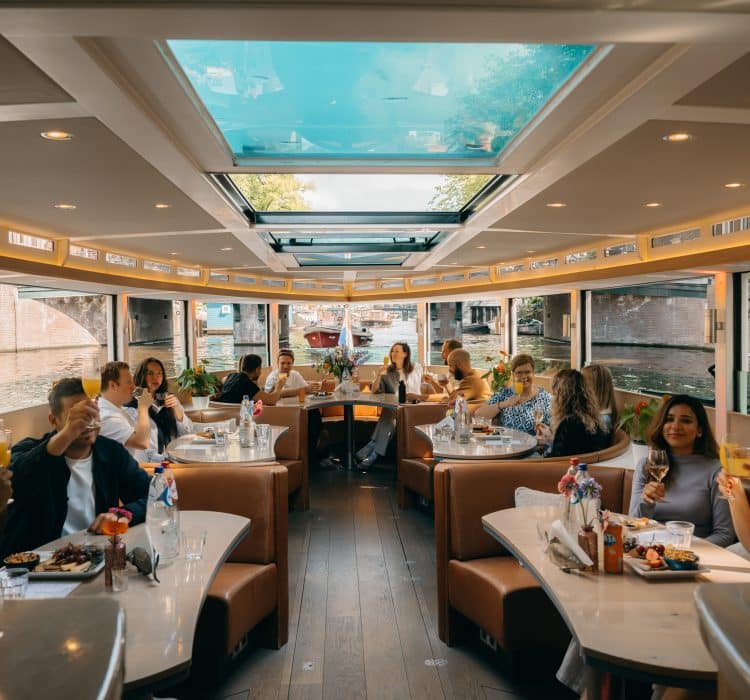
Many Amsterdam boat tours now feature locally sourced food and drink as a core part of the experience, including Dutch farmhouse cheese platters, freshly baked apple pie, seasonal craft beers from Amsterdam breweries, and curated European wines. The best Amsterdam canal cruises treat onboard refreshments as an integral element of the journey rather than an afterthought.
The emphasis on local sourcing means you are tasting products with genuine Amsterdam provenance. Seasonal craft beers rotate throughout the year, reflecting what small Dutch breweries are producing at any given moment. European wines are selected to pair well with the savory cheese boards and snacks served alongside them. Even the gin served on board often comes from local distilleries carrying on a centuries-old Dutch tradition of jenever production.
For many visitors, the combination of gliding past candlelit canal houses while enjoying a glass of wine and a platter of aged Gouda creates a multisensory experience that captures Amsterdam’s character far more vividly than a restaurant meal ever could. The food and drink become part of the scenery, connecting you to the city’s culinary culture while you absorb its visual beauty.
During winter months, particularly around the Amsterdam Light Festival season, mulled wine and warm Dutch snacks replace the lighter summer fare, creating a cozy atmosphere that suits the illuminated canal scenery perfectly.
When Is the Best Time to Spot Amsterdam’s Hidden Canal Gems?
The best time to discover Amsterdam’s hidden canal gems is during the golden hour before sunset in spring or autumn, when soft light illuminates the canal houses, tourist crowds thin out, and the water reflects the city’s architecture in warm tones. Winter evenings during the Amsterdam Light Festival (typically running from late November through January) offer an equally magical but entirely different experience.
Spring and Autumn Golden Hour
From late March through May and again in September through November, Amsterdam’s light takes on a painterly quality that photographers and artists have celebrated for centuries. Cruising during the hour before sunset means catching the canal houses bathed in golden warmth, their window reflections dancing on the water. These shoulder seasons also bring fewer tourists, which means quieter canals and more opportunities for your boat to linger in narrow waterways without competing for space.
Winter and the Amsterdam Light Festival
The Amsterdam Light Festival transforms the canals into an open-air gallery of illuminated art installations from world-class artists. Cruising through the UNESCO-listed canal belt during this period reveals hidden gems that exist only for a few weeks each year. The combination of artwork, historic architecture, and winter atmosphere creates what many consider the most memorable luxury canal cruise Amsterdam experience of the entire year. Warm drinks and blankets make the cold entirely manageable, and the darkness actually enhances the intimacy of the smaller canals.
Summer has its own appeal, particularly for late evening cruises when the sun does not set until after 10 PM. However, the main canals can feel busy during peak July and August afternoons. If you visit in summer, an early morning or evening departure will reward you with calmer waters and better light for spotting architectural details, hidden gardens, and the subtle charm that makes Amsterdam’s waterways endlessly fascinating.
How Pure Boats Helps You Discover Amsterdam’s Hidden Canal Gems
We designed every element of our cruises to help you experience the Amsterdam canals in a way that larger companies simply cannot offer. Our approach makes discovering hidden gems effortless:
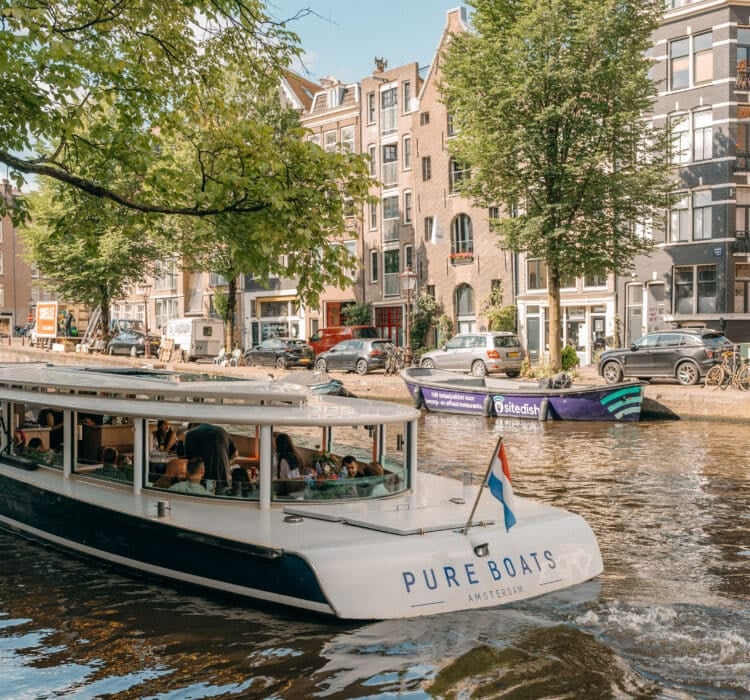
- Small, agile boats: Our fleet of handcrafted electric vessels, including our newest addition, Danique, with her mahogany and marble bar, navigates narrow canals and low bridges that big tour boats cannot reach
- Personalized routes with live commentary: Our captains customize every journey based on your interests, sharing real stories and local insights instead of scripted audio
- Intimate group sizes of 6 to 24 guests: Every cruise feels like your own private boat experience, with space to relax and connect
- Locally sourced food and drink: From Dutch farmhouse cheese to seasonal craft beers, everything on board reflects Amsterdam’s culinary culture
- Fully electric, sustainable vessels: Our upcycled boats cruise silently and emission-free, so you enjoy the canals without disturbing them
Ready to see the Amsterdam most visitors miss? Browse our small group boat tours and book the canal experience that will become the highlight of your trip.